

What Your Check Engine Light Is Really Telling You
If your check engine light just came on, here is what you need to know right now:
| Situation | What It Means | What To Do |
|---|---|---|
| Steady light, car runs fine | Minor issue (e.g., loose gas cap, sensor fault) | Check gas cap first, then book a diagnostic soon |
| Steady light, car runs rough | Moderate issue affecting performance | Reduce speed, avoid heavy acceleration, get it checked today |
| Flashing or blinking light | Severe engine misfire — serious damage risk | Reduce load immediately, get to a shop or call for help |
| Light on with oil or temp warning | Potential engine emergency | Pull over safely and turn off the engine |
You are not alone in feeling that knot in your stomach when a warning light appears. Nearly 1 in 5 U.S. drivers currently has a check engine light on, according to recent industry data. It is one of the most common — and most misunderstood — warning signals on any dashboard.
The check engine light does not always mean disaster. Sometimes it is as simple as a loose gas cap. Other times it points to something that genuinely needs attention before it becomes a much bigger problem.
This guide walks you through exactly what the light means, what triggers it, and what to do next — in plain language, without the jargon.
I’m William Dickinson, and through my work with Bob’s Lil Car Hospital I’ve spent years helping everyday drivers cut through the confusion around check engine light warnings and make confident, informed decisions about their vehicles. In the sections ahead, we’ll cover everything from reading diagnostic codes to knowing when to pull over immediately.
Basic check engine light terms:
- Honda Accord Check Engine Light
- Engine Light Turned On Then Off
- Honda Accord Check Engine Light Reset
Understanding the Check Engine Light: Steady vs. Flashing
When you see that amber or yellow glow on your dash, the first thing to note is how it behaves. The check engine light, formally known as the Malfunction Indicator Lamp (MIL), has two primary modes. Understanding these modes helps you decide if you can finish your commute or if you need to pull over right now.
A steady light is the most common version. It means the vehicle’s computer has detected a problem that needs attention, but it is not an immediate emergency. You might notice a drop in fuel economy, or perhaps the car feels exactly the same. Even if it feels fine, a steady light should be diagnosed soon. Ignoring it can lead to more extensive damage later.

A flashing or blinking check engine light is a different story. This is the car’s way of shouting for help. A flashing light usually indicates a severe engine misfire. When an engine misfires, unburned fuel can enter the exhaust system. This fuel then hits the extremely hot catalytic converter, which can cause it to overheat or even melt.
In some cases, your car might enter “limp home mode.” This is a safety feature where the computer reduces engine power to protect itself from further damage. If your light is flashing, reduce your speed and engine load immediately. If you’re near Longview or Kelso, get to a shop as soon as possible to avoid severe engine failure. For more on why a light might flicker and then vanish, see our guide on check engine light on then off.
Common Causes Behind the Illuminated Dashboard
The check engine light is a general warning, much like a fever in a human. It tells us something is wrong, but we have to dig deeper to find the cause. While there are hundreds of possible codes, a few usual suspects trigger the majority of dashboard warnings.
| Component | Function | Common Symptom of Failure |
|---|---|---|
| Gas Cap | Seals the fuel system | Light comes on shortly after refueling |
| Oxygen Sensor | Monitors unburned oxygen | Poor gas mileage and sluggishness |
| Catalytic Converter | Reduces harmful emissions | Rotten egg smell or failed emissions test |
| Mass Airflow Sensor | Measures air entering engine | Engine stalling or hesitating |
| Spark Plugs/Wires | Ignites fuel mixture | Engine jolting or “shuddering” |
A loose or damaged gas cap is a classic cause. It might seem minor, but the gas cap is part of the evaporative emissions (EVAP) system. If it doesn’t seal, fuel vapors escape, and the computer triggers the light. Always check your cap first!
Oxygen sensors are another frequent culprit. They live in your exhaust and tell the computer how much fuel to use. When they fail, your car might burn too much gas, which eventually clogs your catalytic converter. For owners of specific models, like those in our Honda Accord guide, certain sensors are known to be more sensitive than others.
Lastly, don’t overlook your spark plugs and ignition coils. Worn plugs cause misfires, which lead to that dreaded flashing light. Regular maintenance in places like Castle Rock or Woodland can prevent these components from failing unexpectedly.
Why the check engine light triggers for emissions
Most people don’t realize the check engine light is primarily an emissions monitor. Since the mid-1990s, federal regulations have required cars to monitor systems that affect air quality. When your car detects it is polluting more than it should, it turns on the light to prompt a repair.
Operating or maintaining a vehicle can expose you to chemicals like engine exhaust and carbon monoxide. You can learn more about these risks at http://www.p65warnings.ca.gov/passenger-vehicle. The emissions system works hard to minimize these hazards. For example, the Exhaust Gas Recirculation (EGR) valve lowers nitrogen oxide emissions by recirculating a portion of the exhaust back into the engine.
If you have a vacuum leak, the engine gets too much air and not enough fuel. This “lean” condition makes the engine run hotter and produce more pollutants. The computer catches this imbalance immediately. Keeping these systems in check isn’t just about the light; it is about protecting the environment in our beautiful Southwest Washington communities.
Decoding Diagnostic Trouble Codes (DTCs)
When the light comes on, your car’s computer stores a specific “story” about what happened. This story is told through Diagnostic Trouble Codes (DTCs). These are five-character codes that act as a starting point for any repair.
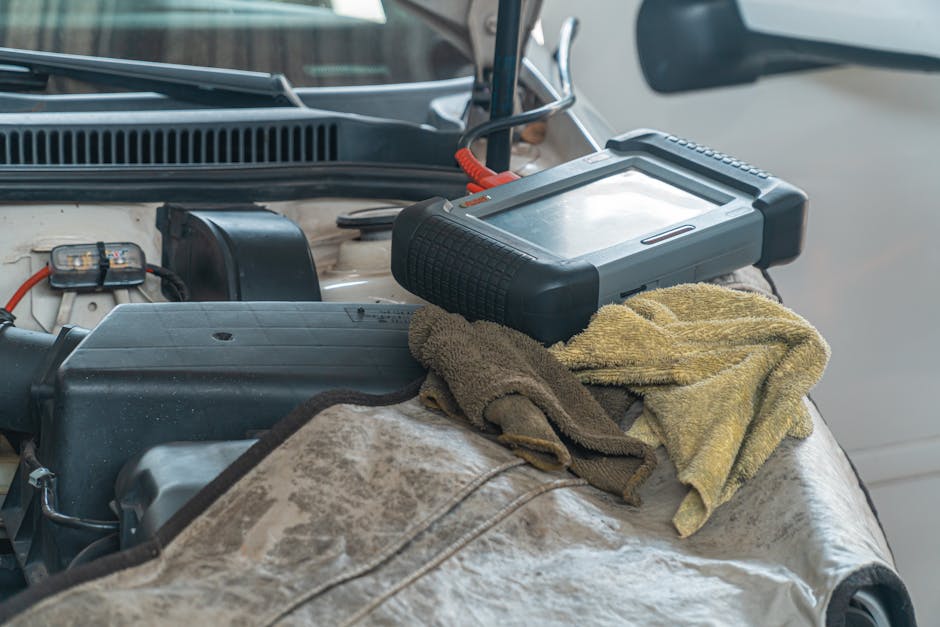
To get these codes, we use an OBD-II scanner. Every car built after 1996 has a standardized 16-pin port, usually located under the dashboard near the steering wheel. When we plug in a scan tool, it communicates with the Powertrain Control Module (PCM) or Engine Control Unit (ECU).
These codes usually start with the letter “P” for powertrain. For example, a P0420 code often points toward catalytic converter efficiency. However, a code doesn’t always tell you exactly which part to replace. It tells you which system is failing. To understand the full process of how we pinpoint these issues, check out the definitive guide to diagnosing car problems. In some rare cases, the issue isn’t a sensor at all, but the computer itself, which you can read about in our article on ECU repair.
Using OBD-II to read the check engine light
The Onboard Diagnostics (OBD-II) system was a step in automotive history. Before this standard was adopted, every manufacturer had their own way of reporting problems. Some older cars would even flash the check engine light in a specific pattern to tell you the code. Today, the system is much more sophisticated.
You can find a basic code reader at many stores in Kelso or Longview. These DIY tools are great for getting a “preview” of the problem. They can tell you if the issue is a simple sensor or something more complex. However, professional-grade scanners do much more than just read codes. They show live data, like exactly how much air is flowing through the intake or the temperature of the exhaust.
Interpreting this data is where the expertise comes in. A code for a lean engine might be caused by a dirty sensor, a cracked hose, or even a failing fuel pump. A professional technician uses the code as a map to find the actual root cause, saving you from “parts cannon” repairs where you replace things unnecessarily.
Immediate Steps and Long-Term Prevention
What should you do the second that light pops up? First, stay calm. If the car is driving normally and no other red lights are on, you have time to finish your trip. Check your other gauges immediately, especially the oil pressure and coolant temperature. If those are normal, your next stop should be the back of your car to check the gas cap.
If the light stays on after tightening the cap, schedule a diagnostic appointment. In the meantime, try to reduce your speed and avoid towing heavy loads. This puts less stress on the engine while it is in a “fault” state.
Long-term prevention is the best way to keep that light off. Routine maintenance is your best friend here.
- Change your oil regularly: Dirty oil can affect variable valve timing systems.
- Replace air filters: A clogged filter can mess with the mass airflow sensor.
- Spark plug intervals: Don’t wait for a misfire to replace your plugs.
- Battery health: Low voltage can sometimes cause “ghost” codes in the computer.
If you have recently had a repair and need to know how to clear the remaining light, our guide on resetting the check engine warning provides the steps for completing a drive cycle.
Frequently Asked Questions
Is it safe to drive with the light on?
If the light is steady and the car feels normal, it is generally safe to drive to your destination or a repair shop. However, you should not ignore it for weeks. If the light is flashing, it is NOT safe to drive. A flashing light means you are potentially damaging your engine or catalytic converter every second the engine is running. Pull over safely as soon as you can.
Can a loose gas cap cause the light?
Yes, absolutely. The EVAP system is designed to trap gasoline vapors before they escape into the atmosphere. If the cap is loose, cracked, or the wrong type, the system will detect a leak. This is one of the most common reasons for a check engine light. After tightening the cap, it may take a few days of driving for the light to reset itself.
How do I reset the light?
The best way to reset the light is to fix the underlying problem. Once the repair is made, the computer will eventually see that the system is working and turn the light off after a few “drive cycles.” You can also clear codes with a scan tool, but if the problem isn’t fixed, the light will come right back on — often within a few miles.
Conclusion
At Bob’s Lil Car Hospital, we know that a check engine light can turn a good day into a stressful one. Our goal is to take that stress away through genuine care and professional expertise. Whether you are in Longview, Kelso, or Castle Rock, we are here to provide an honest diagnosis and get you back on the road safely.
We pride ourselves on exceptional customer service. We don’t just fix cars; we take care of the people who drive them. If your dashboard is glowing and you aren’t sure what to do, don’t guess. You can find more info about our services online or simply stop by one of our locations.
Don’t let a warning light ruin your week. We invite you to call us and ask a question. We are always happy to help our neighbors in Southwest Washington and Northwest Oregon understand their vehicles better.