
Why Family Road Trip Car Preparation Matters
Family road trip car repair preparation is the difference between creating lasting memories and being stranded on the side of the road. Before you hit the highway with your loved ones, understanding what to check—and when to seek professional help—can save your vacation from turning into a nightmare.
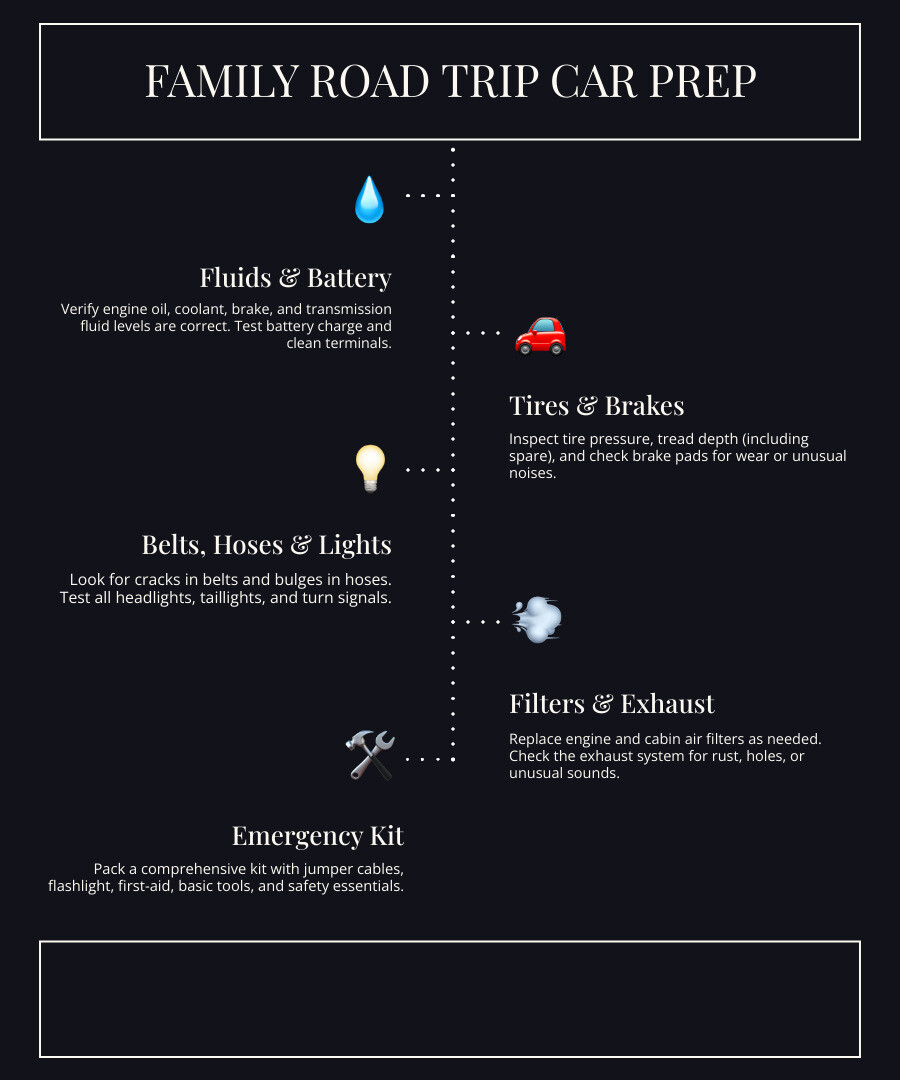
Essential Pre-Trip Car Checks:
- Fluids – Engine oil, coolant, brake fluid, transmission fluid, and windshield washer fluid
- Battery – Test charge, clean terminals, check connections
- Tires – Pressure, tread depth, visible damage, and don’t forget the spare
- Brakes – Listen for noises, check pad thickness, test pedal feel
- Belts and Hoses – Look for cracks, fraying, or bulging
- Lights – Test all headlights, taillights, and turn signals
- Exhaust System – Check for rust, holes, or unusual noises
- Wiper Blades – Replace if streaking or older than 6 months
- Air Filters – Engine and cabin filters for performance and comfort
- Emergency Kit – Jumper cables, flashlight, first-aid, basic tools
The statistics tell a sobering story. AAA expects to receive 8.9 million calls for help from stranded motorists between late June and late September. Meanwhile, 42 percent of people surveyed plan to drive to their vacation destinations, and 43 percent of households chose road trips as their top travel plan. That’s millions of families on the road—and millions of opportunities for preventable breakdowns.
A small problem at home can become a big problem hundreds of miles away. Hot summer days put extra stress on cooling systems. Highway speeds test your tires and brakes. Long driving times reveal issues that might go unnoticed during short commutes around town.
But here’s the good news: most roadside emergencies are preventable with simple checks before you leave. You don’t need to be a mechanic to spot low tire pressure or a worn wiper blade. Some checks take just minutes. Others benefit from professional eyes.
I’m William the Webmaster at Bob’s Lil Car Hospital, and I’ve spent over 20 years helping families understand what keeps their vehicles safe and reliable, including comprehensive family road trip car repair preparation strategies. Through Bob’s commitment to trusted service, I’ve learned that the best repair is the one you never need—because you caught the problem early.
The “Under the Hood” Essentials: Fluids and Battery
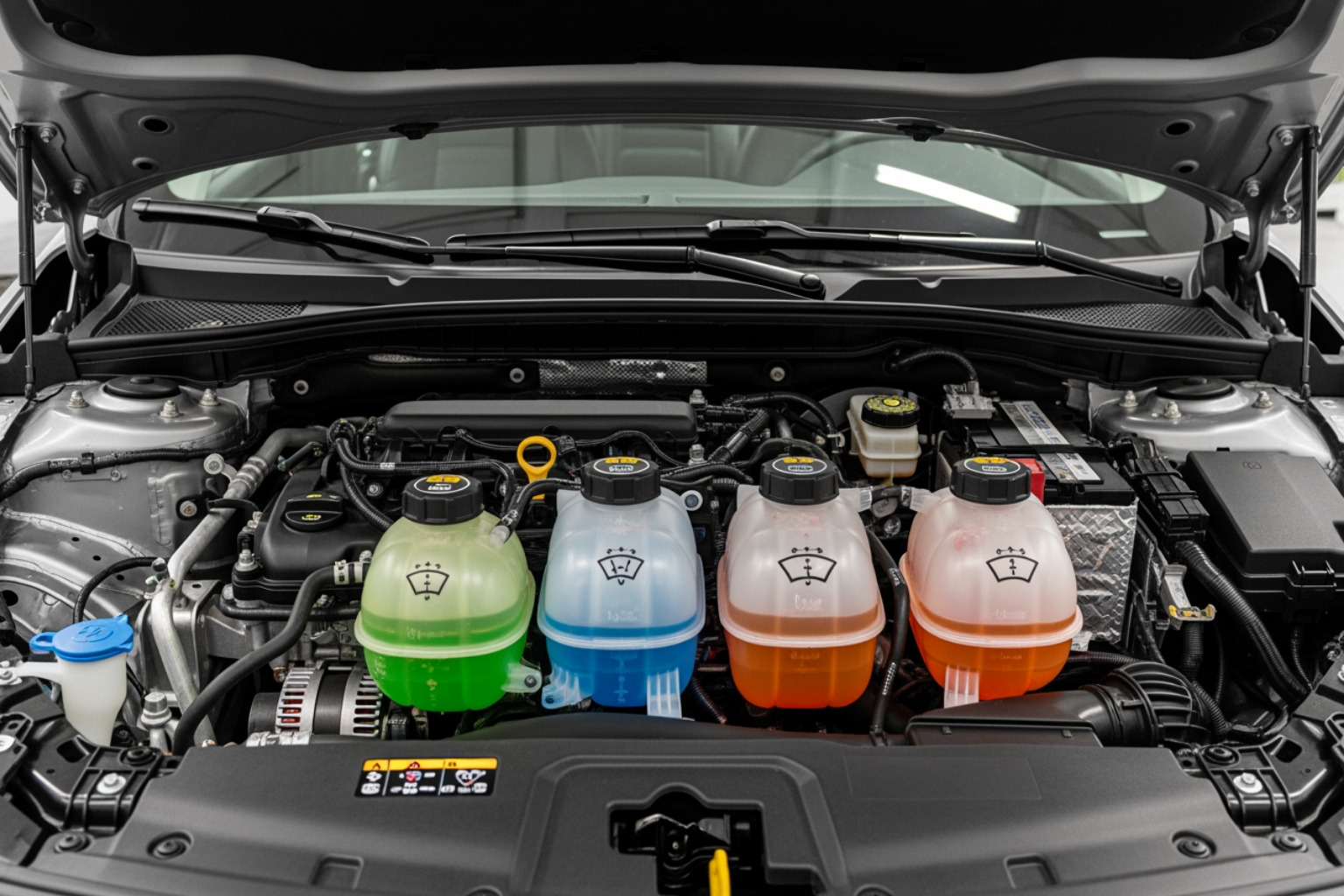
Before any great adventure, we always look under the hood. It’s like checking your backpack before a hike. Your car relies on several vital fluids to run smoothly and safely. These liquids are the unsung heroes of your engine’s health. They prevent overheating, ensure smooth operation, and keep everything lubricated. A quick check here can prevent major headaches down the road.
Engine oil is truly the lifeblood of your vehicle. If it runs low or becomes too dirty, it can cause serious damage. Coolant, on the other hand, keeps your engine from overheating, which is especially important during hot summer drives through Southwest Washington. Brake fluid ensures your brakes respond instantly when you need them. Transmission fluid allows for smooth gear changes, making your ride comfortable. And let’s not forget windshield washer fluid for clear visibility. Beyond fluids, your battery and electrical system are critical. They power everything from your engine start to your GPS. For more in-depth information on keeping your car’s electrical system in top shape, check out our guide on More about car electrical services.
Critical Fluid Levels to Check
Checking your car’s fluids is one of the most critical steps in family road trip car repair prevention. It’s a simple task that yields big rewards. We recommend checking your engine oil first. With the engine cold and not running, raise the hood. Locate the dipstick and pull it out. Wipe it clean, then reinsert it fully. Pull it out again and check that the oil level sits between the upper and lower marks. If it’s low, top it off. If the oil appears thick and dark, it might be time for an oil change. Newer vehicles have longer oil change intervals, sometimes up to 8,000 miles. Synthetic oil can even last up to 15,000 miles. You can learn more about the benefits of Synthetic vs. Conventional oil on our blog.
Once your oil is squared away, move on to the other essential fluids. Consult your owner’s manual to find the locations for your windshield wiper fluid, transmission fluid, brake fluid, and coolant in your radiator. Top off any fluids that appear low. Power steering fluid is another often-overlooked fluid. Ensuring all these levels are optimal prevents many common issues.
Battery and Electrical System Prep
A dead battery can certainly leave you stranded on the side of the road. Most car batteries typically last between three and four years. Before your trip, we always advise a thorough battery check. Inspect the battery terminals for any corrosion. If you see a white or green powdery substance, clean it off with a mixture of baking soda and water. Corrosion can significantly reduce or even stop the flow of electricity.
Next, ensure the battery connections are secure. We also recommend having a load test performed. This test checks the battery’s ability to hold a charge under stress. It’s a great way to gauge its remaining life. Don’t forget to test all your lights: headlights, taillights, turn signals, and even your hazard lights. They are crucial for visibility and safety, especially when driving through rural areas in Rainier, OR, or Kelso, WA. If you notice any signs of a Dead Battery or suspect other Car Electrical Issues, it’s best to have us take a look before you depart.
Ensuring a Safe Stop and a Smooth Ride
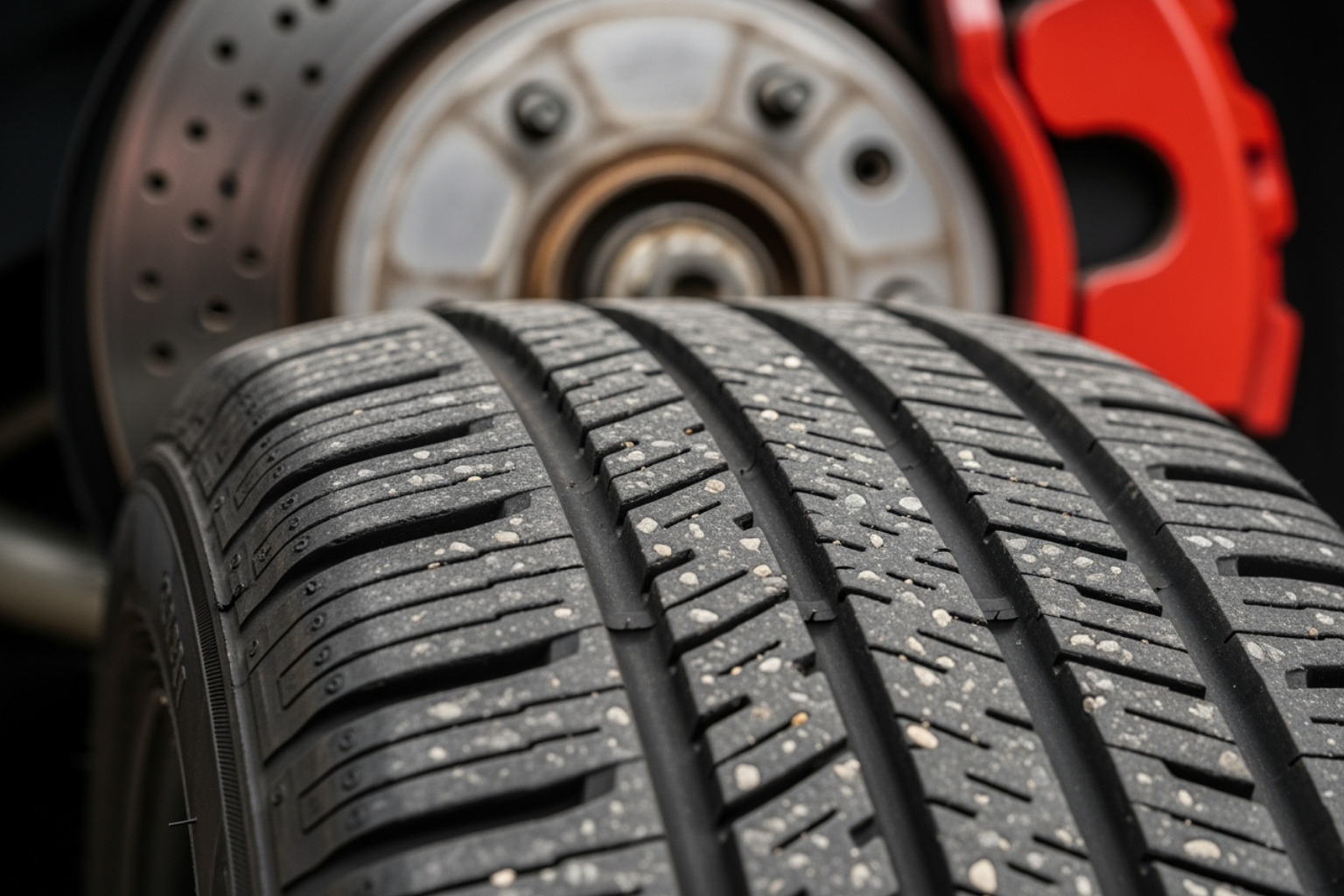
Imagine cruising down the scenic roads of Southwest Washington, enjoying the journey. A safe stop and a smooth ride depend heavily on your tires, brakes, steering, and suspension. These components work together to keep you firmly planted on the road and safely in control. Overlooking them can lead to a bumpy ride or, worse, a dangerous situation. We want your family to experience nothing but comfort and peace of mind. For more tips on achieving a truly Smooth Driving experience, we have additional resources available.
Your tires are your car’s only contact with the road. Proper inflation and adequate tread depth are non-negotiable for safety. Your braking system is your primary safety feature, allowing you to slow down or stop quickly. The steering and suspension systems ensure your car handles predictably and absorbs bumps, keeping your ride comfortable. Checking these systems proactively is a key part of family road trip car repair prevention.
Tire Safety and Inflation
Tire safety starts with proper inflation. Always check your tire pressure when the tires are cold, meaning the car hasn’t been driven for a few hours. The correct PSI (pounds per square inch) is typically found on a sticker inside your driver’s side door jamb or in your owner’s manual, not on the tire sidewall. Incorrect pressure can lead to premature wear, reduced efficiency, and even tire blowouts.
Next, check your tire tread depth. A simple and effective way to do this is with the Lincoln penny test. Insert a penny upside down into a tire groove. If you can see the top of Lincoln’s head, your treads are too shallow, and it’s time for new tires. Also, inspect your tires for any visible signs of damage like bulges, cracks, or embedded objects. Finally, don’t forget your spare tire! Ensure it’s properly inflated and that you have all the tools needed to change it. Regular tire rotation, ideally every 5,000 to 7,500 miles, also helps promote even wear. Our Guide to Tire Rotation provides more details.
Brakes, Steering, and Suspension Inspection
Your braking system is paramount for safety. Before your trip, listen for any grinding or squealing Warning Signs when you apply the brakes. These noises often indicate worn brake pads that need replacement. Also, pay attention to the feel of your brake pedal. If it feels soft or “spongy,” or if your car pulls to one side when braking, it’s a clear sign that your brakes need immediate attention. We’ll inspect your brake pads, rotors, and fluid to ensure everything is in top working order.
The steering and suspension systems provide a comfortable and controlled ride. Signs of potential issues include your vehicle pulling to one side, a shaky or loose-feeling steering wheel, or excessive bouncing after hitting a bump. You can perform a simple “bounce test” by pushing down firmly on each corner of your car. It should bounce once and then stop. If it continues to bounce, your shocks or struts may need replacement. Uneven tire wear can also be a tell-tale sign of alignment issues or worn suspension components.
Your Guide to Family Road Trip Car Repair Prevention
When we talk about family road trip car repair prevention, we often focus on the big, obvious things. But some smaller, less visible components play equally crucial roles. The exhaust system, various filters, and the belts and hoses under the hood are all essential for your car’s performance, efficiency, and safety. Ignoring these can lead to unexpected breakdowns and discomfort. Proactive checks here can truly make a difference in Keeping Your Car Running Strong.
Your exhaust system handles harmful gases, while air filters ensure your engine breathes clean. Cabin filters keep the air inside your car fresh for your family. Belts and hoses power accessories and manage fluid flow. A comprehensive visual inspection ties all these elements together, helping us spot potential problems before they escalate.
Exhaust, Filters, and General Maintenance
The exhaust system is often out of sight, out of mind, until it starts making noise. Listen for unusual sounds like popping, hissing, or a loud rumble. These can indicate leaks, rust, or holes. For vehicles that are five or more years old, we advise having their exhaust system checked by a professional every year or two. You certainly don’t want dangerous fumes entering the cabin or reduced performance on your journey.
Next, consider your filters. The engine air filter is vital for ensuring your engine runs properly by preventing dirt and debris from entering. A dirty air filter can reduce engine performance. We generally recommend replacing air filters at least once a year or every 10,000 miles. The cabin air filter, on the other hand, keeps the air inside your car clean, filtering out pollen, dust, and pollutants. This is a huge comfort boost for allergy sufferers! Replace cabin filters every 12,000 miles for optimal air quality. Lastly, check your wiper blades. If they streak or leave unwiped areas, replace them.
The importance of a visual inspection for family road trip car repair
A thorough visual inspection is like a detective’s work; it can uncover subtle clues about your car’s health. Before you even start the engine, take a moment to look under your car for any signs of fluid leaks. Puddles or drips can indicate a problem that needs addressing.
Under the hood, inspect all belts for cracks, fraying, or glazing. The serpentine belt, in particular, drives many essential accessories. If it snaps, you could lose power steering, the alternator, or even overheat. Also, check all hoses for bulges, softness, or brittleness. These are signs of impending failure. Any visible damage to the exterior of your car, no matter how small, could be a symptom of a larger issue. Finally, pay attention to your dashboard. If any Engine Lights are illuminated, don’t ignore them! We can help with a diagnostic check to pinpoint the problem. You can learn more about Decoding Check Engine Lights on our site.
Packing for Peace of Mind: Your Roadside Emergency Kit
Even with the most meticulous family road trip car repair preparation, the unexpected can still happen. That’s why a well-stocked roadside emergency kit is just as important as a full tank of gas. Think of it as your car’s “just in case” insurance policy. It’s about being prepared, not paranoid. Having the right tools and supplies can turn a stressful breakdown into a manageable inconvenience, keeping your family safe and calm until help arrives.
We’ve seen countless situations where a simple item from an emergency kit made all the difference. From a flat tire on a quiet road in Toutle, WA, to a dead battery in the parking lot of a popular attraction in Longview, WA, being ready saves precious time and reduces anxiety.
Must-Have Emergency Items
Our ultimate emergency kit list includes these essentials:
- Spare tire and tools: Ensure your spare is inflated and you have a jack and lug wrench.
- Jumper cables or portable jump starter: A dead battery is a common issue. Knowing How to Jumpstart Your Car is a valuable skill.
- First-aid kit: For minor scrapes and emergencies.
- Flashlight with extra batteries: Essential for nighttime visibility.
- Reflective triangles or flares: To alert other drivers if you’re pulled over.
- Basic tool kit: Wrenches, pliers, and screwdrivers for small repairs.
- Duct tape: The universal fix-it-all!
- Tire gauge: To check pressure on the go.
Beyond the basics for family road trip car repair
For a family road trip, we like to go a step further. Consider adding:
- Bottled water and non-perishable snacks: Especially crucial if you get stranded in a remote area.
- Blankets: For warmth or comfort during an unexpected stop.
- Phone charger or power bank: A dead phone can’t call for help.
- Rain gear: Ponchos or small umbrellas.
- Pet supplies: If your furry friends are joining, bring extra water, food, and a leash.
- Paper maps: Technology can fail; a physical map is a reliable backup.
- Cat litter or sand: For traction if you get stuck in mud or snow.
Frequently Asked Questions about Pre-Trip Car Checks
How far in advance should I service my car for a road trip?
We recommend scheduling your comprehensive service at least one to two weeks before your planned departure. This timeframe allows us to thoroughly inspect your vehicle, identify any potential issues, and, if necessary, order parts and complete repairs without rushing. Last-minute checks are better than none, but a full service well in advance ensures peace of mind. It prevents the stress of a needed repair delaying your trip.
What is the most overlooked pre-trip car check?
In our experience, the spare tire’s condition and pressure is often the most overlooked item. Many drivers assume their spare is ready, only to find it flat or missing the necessary tools when they need it most. Another frequently forgotten check is the cabin air filter. While not critical for your car’s operation, a clean cabin filter significantly improves interior air quality and comfort, which is important for long drives with family. Lastly, wiper blade effectiveness is often ignored until you’re caught in a downpour.
Can I do these checks myself or do I need a mechanic?
Many basic checks, like fluid levels, tire pressure, and visual inspections, are DIY-friendly. We encourage you to perform these yourself! However, for more complex issues like brake wear, battery load tests, or diagnosing dashboard warning lights, a professional mechanic is best. A comprehensive vehicle inspection by our team at Bob’s Lil Car Hospital provides a thorough assessment and best peace of mind. Engaging in Regular Maintenance with us ensures your vehicle is always in top condition.
Conclusion
Preparing your car for a family road trip doesn’t have to be a chore; it’s an investment in priceless memories. By taking the time for thorough family road trip car repair prevention, you transform potential stress into a smooth, enjoyable adventure. These checks ensure your vehicle is reliable, safe, and ready for whatever the open road, from Kelso to Kalama, throws your way.
At Bob’s Lil Car Hospital, we pride ourselves on exceptional customer service, genuine care, and professionalism. We turn stressful car issues into pleasant experiences. We understand that your family’s safety is paramount. That’s why we’re here to help you drive with confidence.
Have a question about your car’s road trip readiness? Give us a call! We’re happy to provide the answers you need for a safe journey. For a complete pre-trip inspection, schedule your service with us today.