

That Unnerving Shake: Understanding Why Your Steering Wheel Shakes Braking
Steering wheel shakes braking is one of the most common—and nerve-wracking—problems drivers experience. If you’ve felt that unsettling vibration pulse through your hands every time you slow down, you’re not alone. It’s that moment when you need your car to be most stable, yet it feels like it’s fighting against you.
Quick Answer: Top 3 Causes
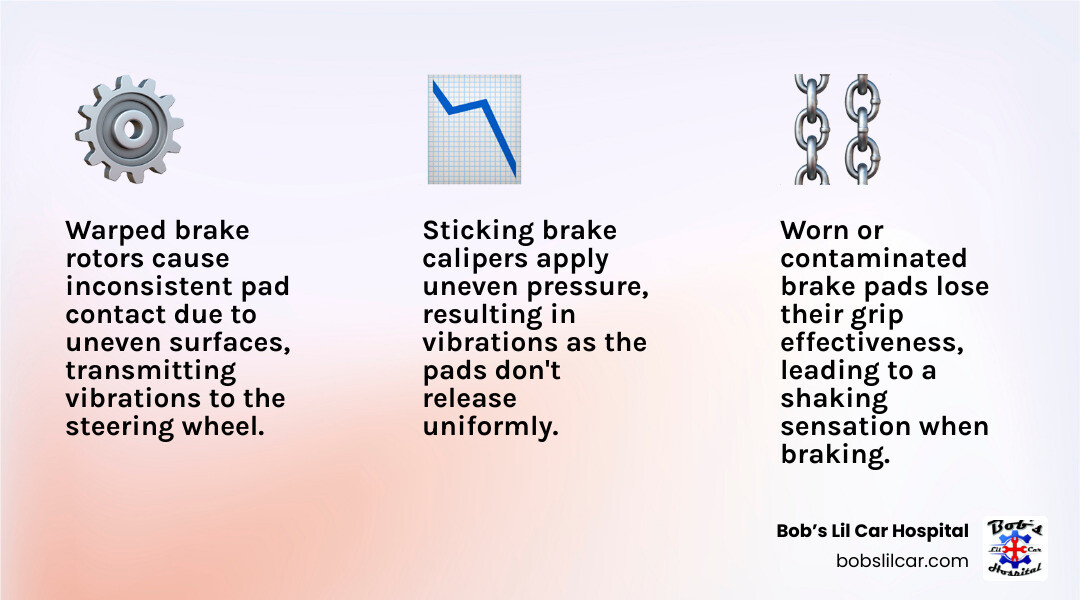
- Warped Brake Rotors – Uneven rotor surfaces from heat and wear cause the brake pads to grip inconsistently, sending vibrations through the steering wheel.
- Worn or Contaminated Brake Pads – Thinned pads or those contaminated with oil, grease, or road debris can’t grip the rotor properly, creating a shaking sensation.
- Sticking Brake Calipers – Dry or corroded guide pins prevent calipers from releasing evenly, causing uneven brake pressure and vibrations.
The good news? This isn’t a mystery you need to solve alone. That shake is your car’s way of telling you something specific needs attention in the braking system.
When you press the brake pedal, you’re creating friction between metal brake pads and metal rotors. This friction generates intense heat—enough to slow down thousands of pounds of moving vehicle. Over time, this constant cycle of heating and cooling can warp the rotors, wear down the pads, or cause caliper components to stick. Any of these issues disrupts the smooth, even contact needed for stable braking.
The vibration you feel isn’t just annoying—it’s a warning sign. Whether you’re a parent shuttling kids to school or someone just trying to get through a stressful commute, ignoring this symptom can turn a relatively simple repair into a costly safety hazard.
The Usual Suspects: Why Your Steering Wheel Shakes When Braking
When your steering wheel starts doing the cha-cha every time you hit the brakes, it’s a clear signal that something in your car’s intricate braking system is out of whack. Our braking system is a marvel of engineering, designed to safely bring us to a stop through the precise interaction of various components. Most conventional braking systems have brakes mounted directly to each wheel, which means your braking system connects to the steering wheel via the suspension and steering linkage. Because of this, any vibrations during braking can be transmitted right to your hands.
At the heart of it, braking relies on friction and heat. When you press the pedal, brake fluid activates calipers, which squeeze brake pads against spinning metal discs called rotors. This action generates immense heat, slowing your vehicle. If any part of this delicate dance is off, you’ll feel it. That shaky feeling is just your car’s way of trying to communicate a problem, often stemming from issues with brake system components, but sometimes extending to other areas like your tires or suspension. Let’s dig into the most common culprits.
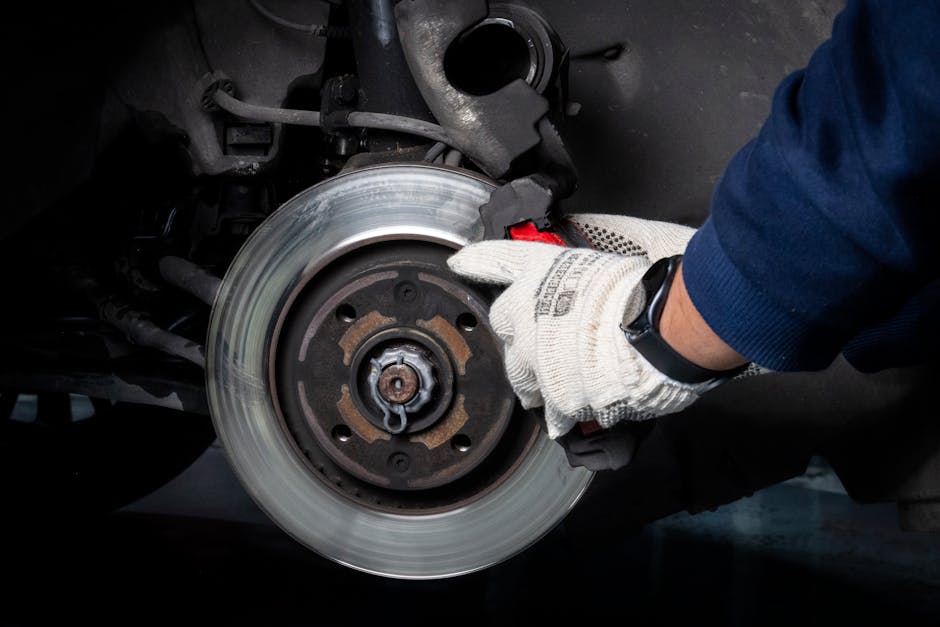
You might be wondering, What are brake rotors? Simply put, brake rotors are the metal discs that your brake pads clamp onto to slow your vehicle. They are usually made of metal and function at a specific width, depending on the make and model of your vehicle. When you apply the brakes, the rotors are exposed to intense heat that must be dissipated evenly across its surface for a smooth stop. If they can’t dissipate heat evenly or if their surface becomes irregular, that’s when the shaking starts. Diagnosing the root cause involves looking closely at these components and understanding their role in the braking process.
Warped Brake Rotors: The #1 Culprit
If your steering wheel shakes specifically when you brake, especially at higher speeds, the most frequent offender we see is often warped brake rotors. Imagine a perfectly flat record spinning on a turntable.
Now imagine that record has a slight wobble or an uneven surface.
That’s essentially what happens with a warped rotor. When your brake pads try to grip this uneven surface, they can’t maintain consistent contact. This causes a pulsating sensation in the brake pedal and a distinct wobble or shake in your steering wheel.
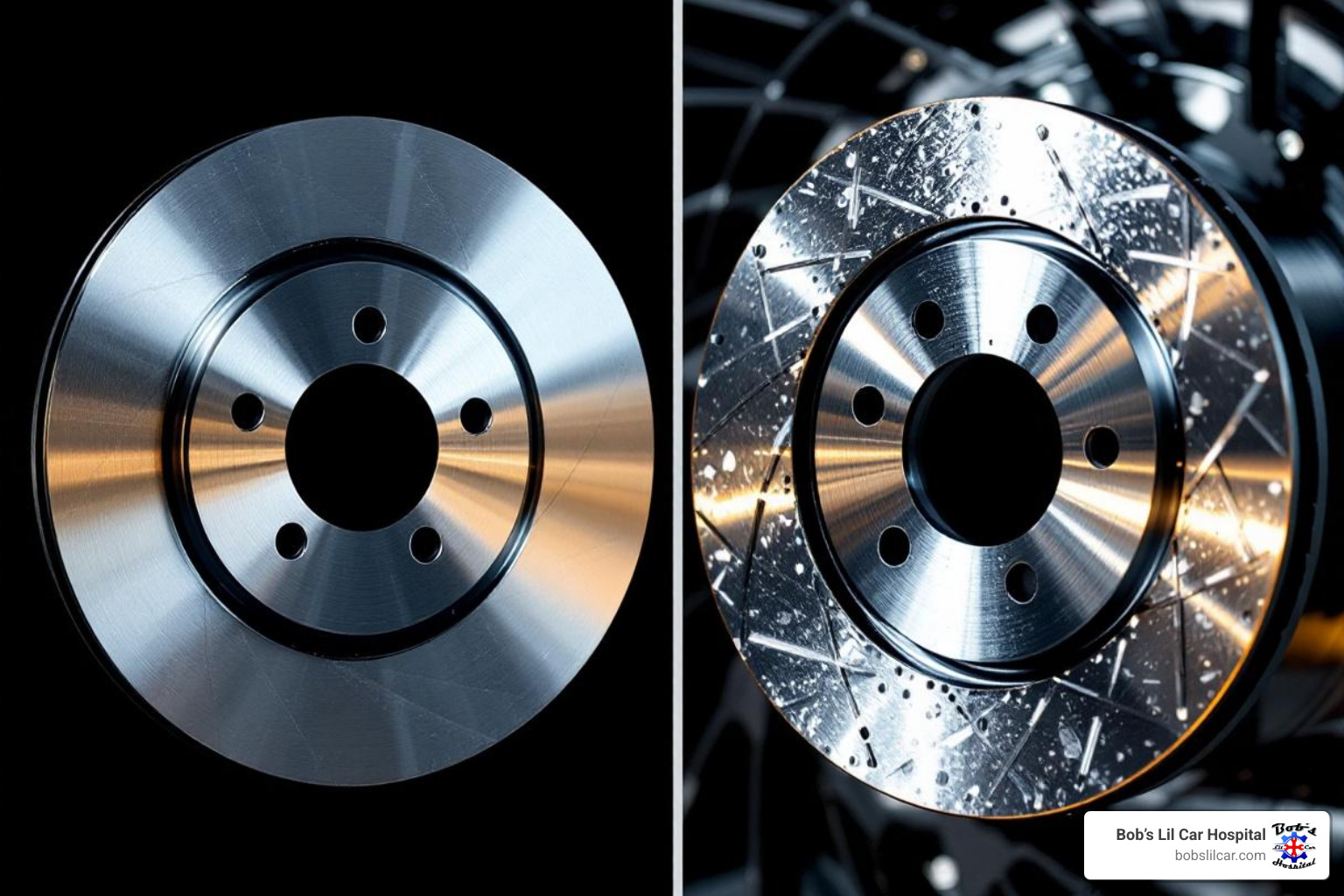
Brake rotors tend to wear down over time.
As this happens, the metal may become thinned out or warped in certain spots. When the brake pads grip the rotor at high speeds, these imperfections cause a rumbling in the brake pedal that’s then transmitted to the steering wheel. This is often referred to as “rotor run-out.” A deviation of more than .003 of an inch (.08 mm), which is about the thickness of a human hair, or a variation across a rotor’s friction surface, or a side-to-side wobble as it rotates, is considered problematic. Newer cars, designed with as little heavy metal as possible to increase fuel economy, can be more prone to warped rotors than older vehicles with their thicker, heavier counterparts.
What causes this warping?
Intense heat from repeated hard braking is a major factor. If you brake hard or long, or too much and too often, the heat will get too high. Warped rotors can occur from exiting the interstate and then stopping for an hour to eat dinner, or from hauling or towing with extreme braking. Rapid cooling, like driving through a cold puddle immediately after heavy braking, can also cause hot rotors to warp. Overtightened lug nuts can also contribute to rotor warping by creating uneven pressure on the rotor assembly.
Worn Brake Pads and Sticky Calipers
While warped rotors often take center stage, worn brake pads and sticky calipers are also key players in the steering wheel shakes when braking drama. These components work hand-in-hand with your rotors, and if one isn’t performing its best, the entire system suffers.
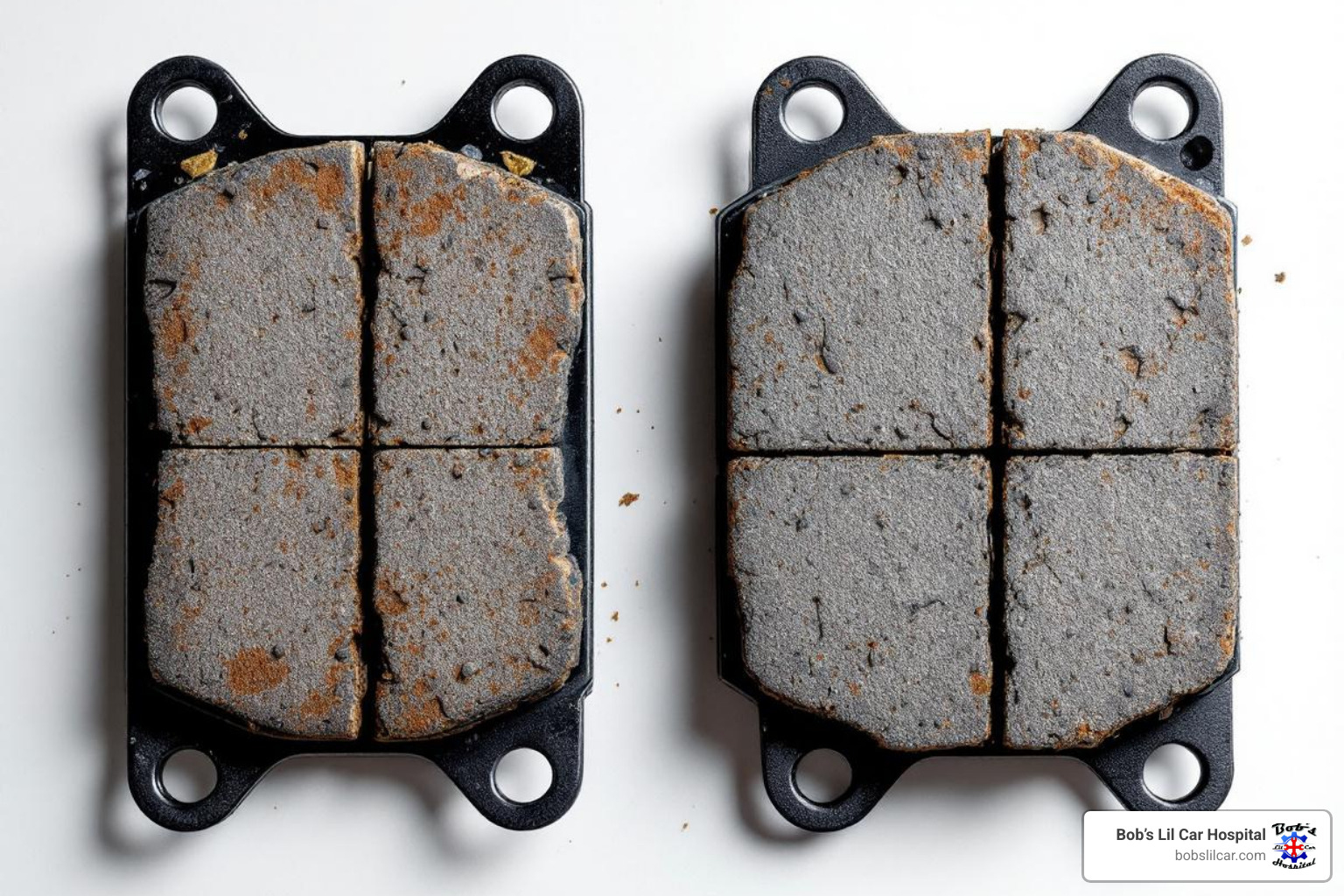
Brake pads are designed to wear down over time. Like tire treads, brake pads have a range of depths in which they’re meant to function correctly. When they’re completely worn down, they’ll have a harder time gripping rotors, which can cause vibration in the steering wheel. Moreover, worn brake pads can lead to squealing or loud grinding noises as the metal backing plate scrapes against the rotor. Contaminated brake pads—perhaps with oil, brake fluid, mud, road salt, or grease—also cannot effectively clamp down on the rotor, leading to vibrations. More about common car problems can give you a heads-up on other issues, but for braking, these are crucial.
Brake calipers are responsible for squeezing the pads against the rotor. Inside the caliper, guide pins allow the pads to move freely and apply even pressure. If these guide pins become dry, corroded, or defective, they can cause the caliper to bind. A stuck or broken caliper can cause the brake pads to press unevenly on the rotors when braking, leading to steering wheel vibration or even the vehicle pulling to one side. This uneven pressure not only causes shaking but can also accelerate rotor wear and generate excessive heat, further compounding the problem. Sometimes, the most common culprit for braking shake is simply dry guide pins that need to be cleaned and lubricated.
Beyond the Brakes: Tires and Suspension
While brake components are the primary suspects when your steering wheel shakes and braking, we can’t ignore the supporting cast: your tires and suspension system. These elements play a crucial role in overall vehicle stability and can contribute to vibrations, sometimes even exacerbating brake-related shakes.
Tires:
Unbalanced or worn tires can certainly cause a steering wheel to shake, though this shake is usually more noticeable when driving at certain speeds (often 50 mph or faster) and might not be exclusively tied to braking. However, if your tires are severely out of balance or have uneven wear, this instability can become more pronounced when the braking system is engaged, especially if the brakes themselves have minor issues. Bent wheels or improperly tightened lug nuts (which should always be tightened in a star pattern to vehicle manufacturer standards) can also introduce vibrations that become more apparent during braking.
Suspension Components:
Your car’s suspension system—including components like ball joints, tie rods, shocks, and struts—is designed to absorb bumps and maintain tire contact with the road. If these parts are worn, loose, or damaged, they can’t do their job effectively. Worn suspension components can cause vibrations that are felt through the steering wheel, and these can intensify when braking, as the weight of the vehicle shifts forward and puts extra stress on these already compromised parts.
Here are some signs of worn suspension components that might cause steering wheel shake:
- Excessive Bouncing or Swaying: After hitting a bump, your car continues to bounce or sway for a while.
- Clunking or Rattling Noises: Especially when going over bumps or turning.
- Uneven Tire Wear: Indicates that the wheels aren’t staying in proper contact with the road.
- Loose or Wandering Steering: The car feels like it’s drifting, or you constantly have to correct the steering.
- Nose Dive During Braking: The front of your car dips excessively when you hit the brakes.
- Visible Damage: Leaking shocks, broken springs, or visibly worn bushings.
If you suspect any of these issues, it’s best to have them checked out. Sometimes, what feels like a brake problem might have roots in your tires or suspension, and we’re here to help diagnose it accurately for our friends in Kelso, Longview, Kalama, Castle Rock, Toutle, and across Southwest Washington.
Is It Safe to Drive? The Risks of Ignoring the Shake
Let’s cut to the chase: “Is it safe to drive with a shaking steering wheel when braking?” The short answer is no, it’s generally not safe. That vibration is your car’s warning system, and ignoring it can lead to serious safety hazards and much more expensive repairs down the road.
When your steering wheel shakes while braking
This means your braking system isn’t performing optimally. This can translate to reduced braking effectiveness and potentially increased stopping distances. In an emergency situation, where every foot counts, this could be the difference between a close call and a collision. Vibrations when applying the brake in a car can be very dangerous. It signals problems within the brake or suspension system, which is a major safety issue. Why brake shudder is dangerous highlights how critical it is to address these issues promptly.
Beyond immediate safety risks
There are significant long-term consequences of ignoring a shaking steering wheel. A problem that starts small, like slightly warped rotors or worn pads, can quickly escalate. The continuous vibration and uneven forces can cause other components to wear out prematurely, including wheel bearings, suspension bushings, and even steering components. We’ve seen instances where neglecting a simple brake issue led to multiple system failures, turning a relatively inexpensive repair into a major overhaul.
For example, the cost of replacing rotors is about $300-$400 with parts and labor.
Rotors and pads are commonly replaced together, running closer to $1,000 with combined parts and labor. If long-term neglect causes surrounding components to fail, then the cost can be several times that much. Ignoring steering wheel vibrations will quickly drive up the cost of what was originally a relatively inexpensive repair. It’s not just about the money; it’s about your peace of mind and the safety of everyone on the road. Don’t let a small shake turn into a big headache (or worse).
Your Diagnostic Checklist: Pinpointing the Problem
When you experience your steering wheel shakes when braking, the more information you can gather about when and how it happens, the better. This isn’t about you becoming a mechanic, but about being an observant driver. Your detailed observations can be incredibly valuable to us as we diagnose the issue, helping us pinpoint the problem faster and more accurately. Think of it as being a detective for your car!
When Does the Shaking Happen?
The conditions under which your steering wheel shakes can provide crucial clues. Ask yourself these questions:
- Only during braking? If the shake only occurs when you press the brake pedal and stops when you release it, this strongly points to an issue within the braking system itself, most likely warped rotors or brake pad problems.
- At high speeds (e.g., above 50 mph) or low speeds? If the shaking is constant at certain speeds, even without braking, it might suggest unbalanced tires or a suspension issue. If it intensifies during braking at high speeds, it could be warped rotors, as the greater kinetic energy puts more stress on the uneven surfaces.
- During turns? If the shake is predominantly felt when turning, especially combined with braking, it could indicate a loose or bad wheel bearing.
- Is it a constant vibration? If the steering wheel vibrates all the time, not just when braking, you might be looking at tire balancing issues, wheel alignment problems, or more general suspension wear.
Noting these specific conditions helps us narrow down the possibilities significantly.
What Other Symptoms Do You Notice?
Beyond the shake itself, pay attention to any other sensations or sounds your car might be making. These additional symptoms are like extra pieces of the puzzle:
- Brake pedal pulsation: If you feel the brake pedal pushing back or vibrating under your foot along with the steering wheel shake, this is a classic sign of warped brake rotors.
- Steering wheel pulling: Does the car pull to one side when you brake? This could indicate a sticking brake caliper on one side, causing uneven braking force.
- Grinding sounds: A harsh, metallic grinding noise when braking often means your brake pads are completely worn down, and the metal backing plates are scraping against the rotors. This is serious and needs immediate attention.
- Squealing noises: A high-pitched squeal when you brake usually means your brake pads are getting low, as wear indicators are designed to make this sound.
- Burning smell: A hot, acrid smell after braking, especially if accompanied by a shake or pulling, can signal an overheated brake, potentially due to a sticking caliper.
- Visual inspection: While not always obvious, sometimes you can spot uneven tire wear or even visibly damaged suspension components.
The more details you can provide, the better equipped we are to quickly diagnose and fix the problem for you, ensuring your safety on the roads of Southwest Washington.
A Simple Visual Check for Steering Wheel Shakes Braking
While a professional inspection is always best, there are a few simple visual checks you can do yourself to get a preliminary idea of what might be causing your steering wheel shakes when braking.
Check Your Tires:
Look at your tire treads. Do they show uneven wear, such as one side being more worn than the other, or bald spots? This could indicate unbalanced tires or alignment issues. Also, visually inspect for any bulges, cracks, or foreign objects lodged in the tire.
Inspect Brake Rotors:
If you can safely look through your wheel spokes (or remove a wheel if you’re comfortable and have the right tools), try to get a glimpse of your brake rotors. Are they smooth and shiny, or do they look rusty, scored with deep grooves, or have obvious blue/black spots from excessive heat? Deep grooves or an uneven surface are strong indicators of rotor problems.
Look for Brake Dust:
While some brake dust is normal, excessive buildup can sometimes hint at issues. Also, check if one wheel seems to have significantly more brake dust than the others, which could point to a sticking caliper on that wheel.
Check for Loose Lug Nuts:
Though less common, if lug nuts are loose, it can cause a vibration that might intensify during braking. Visually ensure all lug nuts are present and appear to be fully tightened. Never try to tighten them without a torque wrench, as overtightening can warp rotors!
These visual checks are not substitutes for a professional diagnosis, but they can give you a starting point and valuable information to share with our technicians at Bob’s Lil Car Hospital.
Prevention and Professional Solutions
Nobody wants to deal with a shaky steering wheel, especially when braking. The good news is that many of the common causes can be prevented or caught early with proactive care and timely professional intervention. At Bob’s Lil Car Hospital, we believe in helping our community in Southwest Washington stay safe and informed about their vehicles.
Proactive Maintenance to Prevent Steering Wheel Shakes when Braking
Prevention is always better than cure, and that certainly applies to keeping your braking system in top shape. Here are some key maintenance steps to help prevent those unsettling steering wheel shakes during braking:
Regular Brake Inspections:
This is paramount. Have your brakes and brake hardware inspected when your vehicle is in for regularly scheduled service or maintenance. Our technicians can spot worn pads, rotor issues, or sticking calipers before they become serious problems. This often includes checking the caliper guide pins for proper lubrication.
Tire Balancing and Rotation:
Unbalanced tires can contribute to vibrations. Get your tires balanced regularly, ideally every 3,000-6,000 miles or with oil changes. Rotating your tires according to your vehicle’s maintenance schedule also promotes even wear.
Avoid Aggressive Braking:
Repeated hard stops generate extreme heat, which is the primary cause of warped rotors. Try to brake smoothly and progressively. If you’ve just made a series of hard stops (e.g., coming off a highway exit), try to drive a little further without braking heavily to allow the rotors to cool more uniformly.
Proper Lug Nut Torque:
If you’ve had your wheels off for any reason (tire rotation, flat repair), ensure the lug nuts are tightened to the manufacturer’s specifications using a torque wrench, and always in a star pattern. Overtightening or uneven tightening can lead to rotor warpage.
Following these Car Maintenance Tips can go a long way in ensuring your ride remains smooth and safe.
Repair Options: Resurfacing vs. Replacing Rotors
Once we’ve diagnosed warped rotors as the cause of your steering wheel shakes when braking, you might wonder about the repair options. Generally, there are two main paths to repair. 1 – resurfacing (or “turning”) the rotors. Or 2 – replacing them entirely.
Rotor Resurfacing (“Turning”):
‘This involves using a specialized machine (a lathe) to shave off a very thin layer of metal from the rotor surface until it’s perfectly flat and smooth again. What is “turning” the rotors? explains this process in detail. It’s often a more economical option if the warpage is minor. However, there’s a catch: every rotor has a minimum thickness specification. If a rotor is already worn down close to this minimum, it cannot be resurfaced, as doing so would make it too thin and unsafe. In some states, it’s legally mandated to replace rotors if they are worn below the minimum thickness specification.
Rotor Replacement:
If the rotors are too thin, severely warped, or deeply scored, replacement is the only safe option. We always recommend replacing rotors in pairs (both front or both rear) to ensure even braking. When replacing rotors, we almost always replace the brake pads at the same time, as new pads will conform better to the new rotor surface.
Here’s a quick comparison:
| Feature | Rotor Resurfacing (Turning) | Rotor Replacement |
|---|---|---|
| Cost | Generally lower (parts + labor for machining) | Generally higher (new parts + labor) |
| Longevity | Reduced, as metal is removed, it might warp again sooner | Full lifespan of new rotors |
| When Appropriate | Minor warpage, rotor thickness well above minimum | Severe warpage, deep scoring, rotor thickness near/at minimum, or as a preventative measure |
| Typical Cost | Varies, but less than replacement | About $300-$400 with parts and labor (per axle) |
| Rotors & Pads | Pads are usually replaced, and guide pins are lubricated | Pads replaced, guide pins lubricated; combined cost closer to $1,000 (per axle) |
Our technicians at Bob’s Lil Car Hospital will assess your specific situation. We will then recommend the safest and most cost-effective solution for your vehicle.
When to Call a Professional Mechanic
While we encourage you to be observant and understand your vehicle. As such, there are definitely times when it’s crucial to call in the professionals. If your steering wheel shakes when braking, it’s a clear signal that something needs attention. Often, that attention requires specialized tools, expertise, and diagnostic equipment.
You should seek professional help immediately if:
- Any brake-related vibration occurs: Even if it seems minor, a shaking steering wheel when braking is not normal. It’s best to have it checked to prevent further damage or more serious safety issues.
- You hear grinding or squealing noises: These sounds are often indicators of severely worn brake pads or other critical brake component failure.
- Your car pulls to one side when braking: This is a strong sign of a sticking caliper or uneven brake wear, which can severely compromise your ability to stop safely.
- You notice a burning smell after braking: This could indicate an overheated brake, potentially from a caliper not releasing properly.
- You’re simply in doubt: If you’re unsure about the cause or uncomfortable performing any visual checks yourself, please don’t hesitate. Your safety is our top priority.
Our expert technicians service Kelso, Longview, Kalama, Castle Rock, Toutle, and across Southwest Washington. We are equipped to perform a comprehensive brake inspection. We can accurately diagnose the issue, whether it’s warped rotors, worn pads, sticky calipers, or even a problem with your tires or suspension. We’re here to turn stressful car issues into pleasant experiences with our exceptional customer service, genuine care, and professionalism. Don’t wait for the problem to get worse; Find professional Auto Repair at Bob’s Lil Car Hospital.
Don’t Wait for the Shake to Get Worse
We’ve explored the shaky truth behind why your steering wheel shakes when braking. The primary culprits are warped brake rotors, worn brake pads, and sticking calipers. To contributing factors like unbalanced tires and worn suspension components. We’ve also emphasized the critical importance of not ignoring these warning signs, as they can quickly escalate from an annoying vibration to a dangerous safety hazard and costly repairs.
A shaking steering wheel is your car’s clear warning sign, a plea for attention that shouldn’t be overlooked. Your safety, and the safety of those around you, depends on a properly functioning braking system. At Bob’s Lil Car Hospital, we are committed to providing exceptional customer service, genuine care, and professionalism. We take pride in helping our community in Southwest Washington keep their vehicles running strong and safely.
For a smooth, safe ride and peace of mind, it’s time to address the issue. Don’t let that shake turn into a shudder. Call us today to schedule a comprehensive brake inspection. Our expert team is ready to diagnose and resolve any issues. This ensures your car is reliable and safe on every journey. Learn more about our services and let us help you get back on the road with confidence.