

Car Electrical Diagnostic Near Me: Expert & Reliable 2026
Why Modern Car Electrical Systems Need Expert Attention
Finding reliable car electrical diagnostic services near me starts with understanding what to look for in a qualified shop. Here’s what you need:
Quick Guide to Finding the Right Shop:
- ASE-Certified Technicians – Look for shops with certified professionals who understand modern electrical systems
- Advanced Diagnostic Equipment – Ensure they use professional-grade scan tools, not just basic code readers
- Transparent Communication – Choose shops that explain findings clearly before starting repairs
- Positive Local Reviews – Check customer feedback about electrical diagnostic accuracy
- Comprehensive Testing – Confirm they perform hands-on testing beyond just reading error codes
Your car’s electrical system is its nervous system, controlling everything from the engine start to safety features like airbags. When something goes wrong, the confusing symptoms can feel overwhelming.
Modern vehicles are more complex than ever. Today’s cars have multiple computers, dozens of sensors, and intricate wiring networks that all need to work together perfectly. According to industry data, a failing battery or bad spark plugs can reduce your fuel economy by up to 30%. That’s why accurate professional diagnostics matter so much.
This guide will help you understand the warning signs of electrical problems, what a proper diagnostic process looks like, and how to choose a shop that will get it right the first time—without unnecessary parts replacement or guesswork.
At Bob’s Lil Car Hospital, we’ve spent over 20 years helping drivers understand complex repair needs. Our goal is to help you make informed decisions when your vehicle needs expert care for issues found in car electrical diagnostic near me searches.
Telltale Signs Your Car’s Electrical System Needs Help
When your car’s electrical system starts acting up, it usually doesn’t do so quietly. It sends out distress signals, hoping you’ll notice before things escalate. Paying attention to these common symptoms can save you a lot of headaches and prevent more significant repairs down the road.
Here are the most common signs that indicate your car’s electrical system needs diagnosis:
- Warning Lights on the Dashboard: This is the most obvious sign. The “Check Engine” light, battery light, or ABS warnings can all point to an electrical issue. While sometimes simple, like a loose gas cap, they can also indicate a serious problem. If your Check Engine Light is on, or any other Engine Lights are lit, it’s a clear call for attention.
- Dim or Flickering Headlights: Weak or flickering headlights could mean your alternator is failing or there’s a wiring issue. This is a significant safety concern, especially at night in Southwest Washington’s varied weather.
- Engine Won’t Start or Cranks Slowly: A classic sign of a battery or starter problem. If the engine cranks sluggishly or not at all, your electrical system is likely struggling to provide enough power to start the engine.
- Clicking or Grinding Sounds When Starting: A clicking noise when you turn the key usually points to a discharged or failing battery. A grinding sound might indicate a problem with the starter motor or flywheel ring gear. These sounds signal an issue with starting power.
- Intermittent Power Loss: Unexpected hesitation or power loss is frustrating and dangerous. It often suggests issues with wiring, connectors, switches, or a faulty starter relay that isn’t delivering power consistently.
- Malfunctioning Accessories: If accessories like power windows, locks, or the infotainment system work erratically or not at all, it’s a strong clue of an electrical fault. The cause could be a simple blown fuse or a more complex wiring or module issue.
- Burning Plastic Smell: This is a serious warning sign that should never be ignored. A burning plastic or rubber smell often indicates an electrical short or overheating wires. Pull over safely and have your vehicle inspected immediately, as electrical fires are a real risk.
- Battery Keeps Dying: Frequent jump-starts or a battery that dies overnight clearly indicates a problem. While batteries age, this could also point to a parasitic draw, a failing alternator, or a bad ignition switch draining power.
- Dashboard Lights Not Working Correctly: Beyond just warning lights, if your speedometer, fuel gauge, or other dashboard illumination is dim, flickering, or completely out, it suggests an electrical problem within the instrument cluster or its power supply.
- Strange Electrical Behavior: This can be a catch-all for any unusual electrical phenomenon, like random lights turning on, the radio cutting out, or wipers moving on their own. These bizarre occurrences are often the result of complex electrical glitches that require professional diagnosis.
If you experience any of these symptoms while driving in Kelso, Longview, or anywhere in Southwest Washington, it’s a good idea to seek professional help. Early detection and diagnosis can prevent minor issues from escalating into major repairs.
The Professional Diagnostic Process: What Technicians Look For
When you bring your vehicle to us at Bob’s Lil Car Hospital for a car electrical diagnostic near me, we don’t just plug in a generic code reader and hope for the best. Our professional diagnostic process is thorough, systematic, and leverages advanced technology alongside our technicians’ expertise to pinpoint the exact root cause of your electrical issues. This comprehensive approach is part of our commitment to exceptional customer service and genuine care for your vehicle.
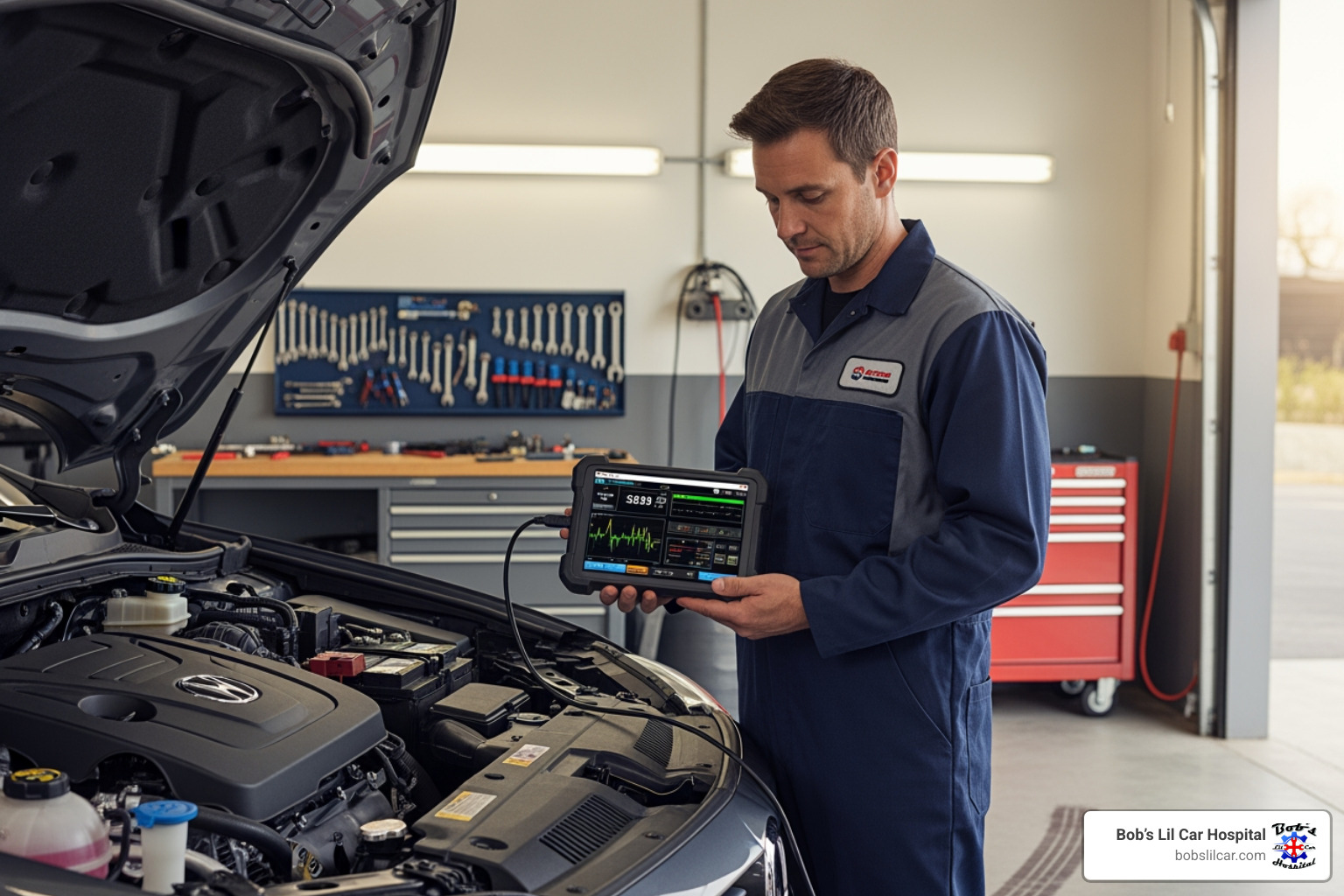
Here’s what our technicians typically check during electrical diagnostics:
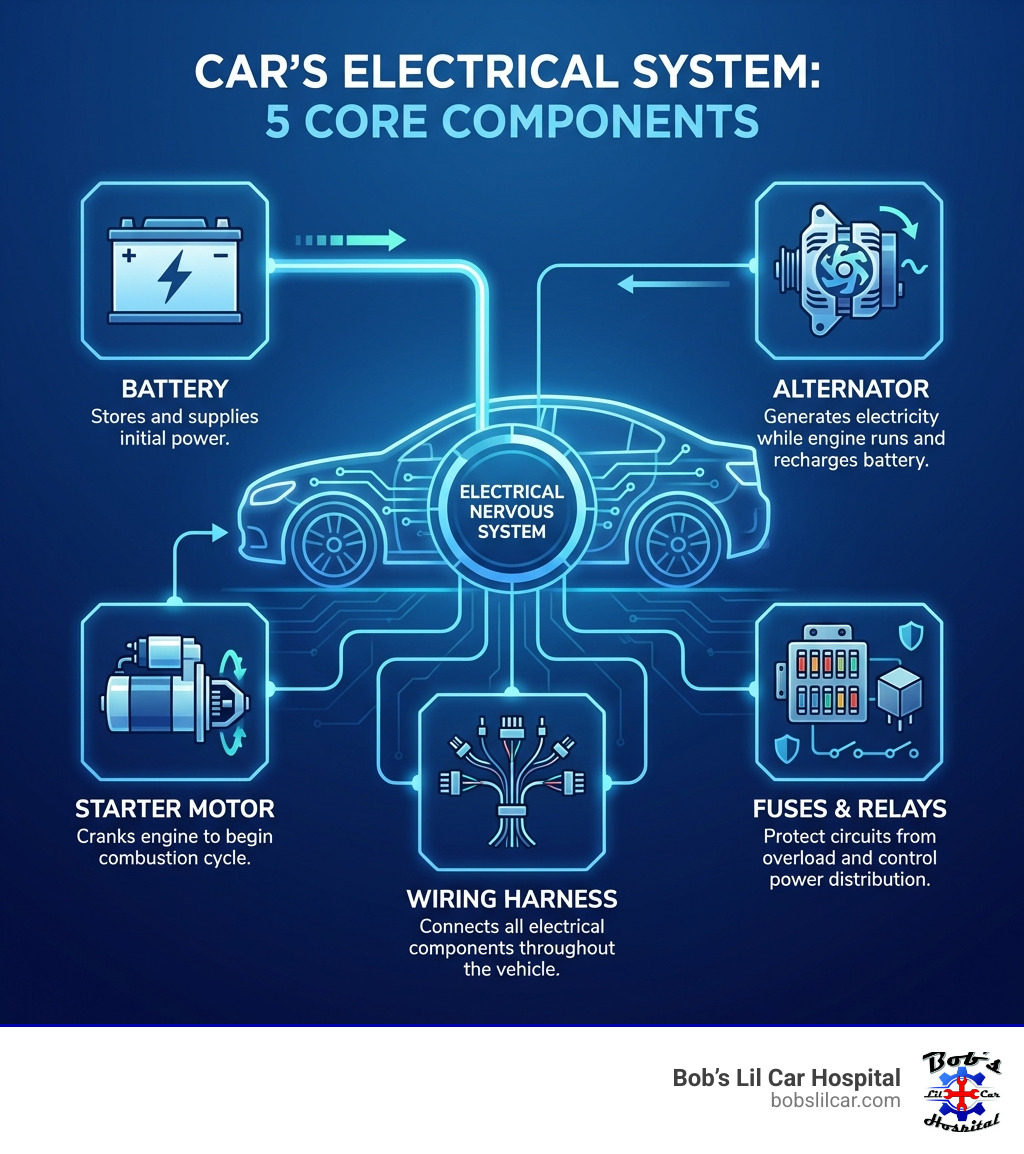
- Key Components of the Electrical System: We start by understanding that your car’s electrical system is a complex network of interdependent parts. The main players include the battery, alternator, starter, wiring harness, fuses, relays, and various sensors and modules. Each plays a crucial role, and a fault in one can impact many others.
- Battery Integrity: Your battery is the heart of your electrical system. We perform a full battery check, assessing its voltage, cold-cranking amps, and overall health. We inspect the battery’s case condition and integrity to ensure it can produce ample power and hold a charge. A dying battery often mimics other electrical problems, so ruling it out first is essential.
- Alternator Function: The alternator is responsible for generating electricity while your engine runs and for recharging your battery. We test its output to ensure it’s providing the correct voltage and amperage. A failing alternator can lead to a constantly drained battery and can cause other electrical components to malfunction due to insufficient power.
- Starter System: When you turn the key, the starter motor kicks the engine into action. We inspect the starter motor, solenoid, and starter relay. If you’re hearing clicking or grinding noises, or if the engine struggles to crank, this system is a prime suspect. We ensure it’s receiving proper power and is engaging correctly.
- Wiring Harness, Fuses, and Relays: The wiring harness is the car’s circulatory system for electricity. We conduct a detailed visual inspection for any signs of corrosion, fraying, or damage that could disrupt electrical flow. Fuses protect individual circuits from overloads, and relays control higher current circuits. We check for blown fuses and test relays to ensure they are functioning as intended. As we always say, replacing a blown fuse without identifying the underlying problem is not a long-term solution!
- Sensors and Modules: Modern vehicles are equipped with numerous sensors and computer modules that control everything from engine performance to safety features. These systems are constantly communicating. We use specialized diagnostic tools to interrogate these modules for fault codes and monitor their real-time data to identify any discrepancies. This falls under our general Engine Diagnostics services.
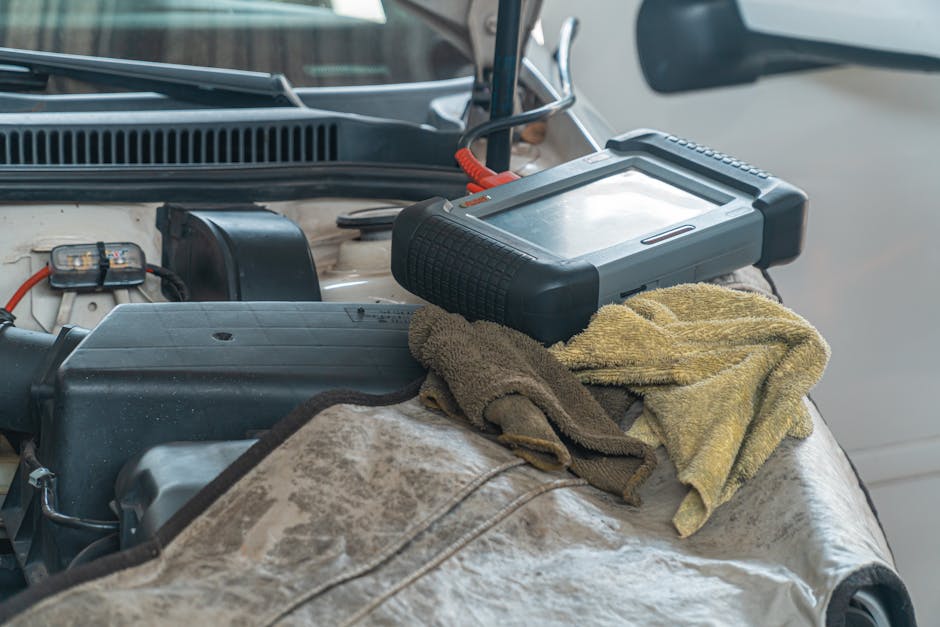
- On-Board Diagnostics (OBD-II): Our technicians use advanced OBD-II scan tools, which are like X-rays for your vehicle. These sophisticated computers collect vital information from the network of sensors, monitoring engine performance, emissions, and other key functions. They read fault codes, monitor system performance, and help us pinpoint specific issues within your vehicle’s electronic systems. This is far more advanced than basic code readers you might find at retail stores.
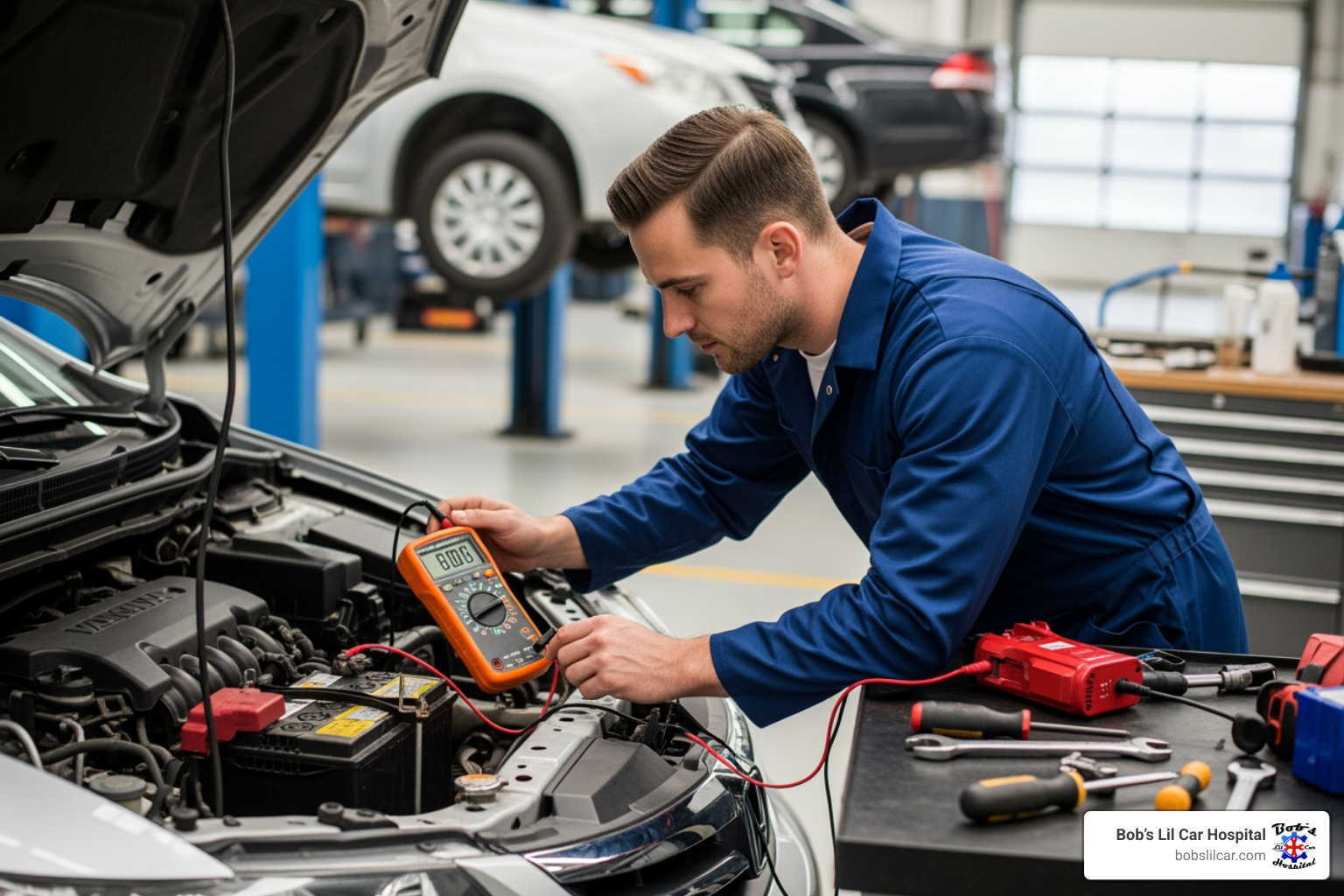
- Voltage and Continuity Testing: Beyond just reading codes, our technicians perform hands-on voltage and continuity testing using multimeters. This allows us to trace electrical paths, identify open circuits, short circuits, or excessive resistance, which can cause intermittent power loss or component failure.
- Diagnostic Duration: A basic electrical diagnostic takes 30-60 minutes. More complex issues requiring extensive tracing or intermittent problem diagnosis can take 2-3 hours or longer. We prioritize accuracy over speed to find the true cause.
Our approach to Electrical Systems Diagnostics is designed to provide you with a precise understanding of your vehicle’s electrical health. We believe in clear communication, explaining our findings in plain language so you’re always in the loop.
Why You Shouldn’t Ignore Electrical Warning Signs
Ignoring electrical warning signs in your car is like ignoring a persistent cough – it might seem minor at first, but it can quickly escalate into a much more serious problem. In the complex world of modern vehicles, the electrical system is deeply intertwined with almost every other function, meaning a small glitch can have far-reaching and dangerous consequences.
Here’s why addressing electrical issues promptly is crucial:
-
Impact on Safety Systems:
Your car’s electrical system powers vital safety features designed to protect you and your passengers. This includes airbags, anti-lock brakes (ABS), traction control, stability control, and even anti-theft systems. If the electrical system is compromised, these life-saving components might not function correctly when you need them most, putting you at severe risk. Imagine driving on a slick road in Southwest Washington, and your traction control fails because of an electrical fault – that’s a scenario we want to help you avoid.
-
Compromised Overall Performance:
Electrical problems can lead to a significant decline in your car’s overall performance. This isn’t just about sluggish acceleration; it can manifest as intermittent power loss, rough idling, engine misfires, or even complete system failures. Your vehicle’s computers rely on accurate sensor data, and if electrical faults disrupt this data, the engine management system can’t optimize performance, leading to a less reliable and less enjoyable driving experience.
-
Reduced Fuel Economy:
Electrical issues can hurt your fuel economy. Bad spark plugs or a faulty battery can reduce it by up to 30%. The engine’s control unit needs stable power and accurate sensor data to operate efficiently. When the electrical system is compromised, your car works harder and consumes more fuel.
-
Drivability Issues:
Beyond performance and fuel economy, electrical problems can simply make your car difficult or unpleasant to drive. This could include issues like erratic gauges, unresponsive power steering (in electronically assisted systems), or even unexpected shutdowns. These “drivability concerns” are not only frustrating but can also be dangerous if they occur at high speeds or in heavy traffic.
-
Preventing Future Repairs:
This is perhaps one of the most compelling reasons to act quickly. Many minor electrical issues, if left unaddressed, can cascade into much larger and more significant problems. A failing alternator can destroy a new battery. A persistent short can damage sensitive electronic control modules. By getting a diagnosis early, we can often identify and resolve the issue before it causes secondary damage. Think of it as preventative maintenance for your entire vehicle, a cornerstone of good Car Maintenance.
-
Avoiding Breakdowns:
No one wants to be stranded on the side of the road, especially not in an unfamiliar area. Electrical issues are a leading cause of sudden vehicle breakdowns. Prompt diagnosis and repair can help ensure your vehicle remains reliable and gets you where you need to go, whether it’s across town in Longview or on a longer trip.
At Bob’s Lil Car Hospital, we believe in empowering our customers to make informed decisions about their vehicle’s health. Ignoring electrical warning signs is never a good strategy. Instead, let us help you understand what your car is trying to tell you, and together, we can keep it running safely and efficiently.
DIY vs. Professional: Why Expert Car Electrical Diagnostics Matter
In the age of online tutorials and readily available tools, it might be tempting to try and tackle a car electrical issue yourself. After all, a quick search for “car electrical diagnostic near me” might bring up basic code readers you can buy. However, when it comes to the intricate electrical systems of modern vehicles, there’s a significant difference between a DIY approach and the expertise offered by professional automotive repair shops like ours.
DIY Limitations
- Basic Code Readers vs. Advanced Tools: Basic OBD-II code readers provide generic fault codes, which are symptoms, not diagnoses. A code might say “Engine Misfire,” but not why—is it a bad spark plug, ignition coil, or wiring? Our professional equipment digs deeper, providing live data and manufacturer-specific codes for a complete picture.
- Risk of Misdiagnosis: Without the right tools, training, and experience, the risk of misdiagnosing an electrical problem is very high. You might end up replacing parts that aren’t actually broken, wasting time and effort, only for the original problem to persist. For example, a failing alternator can cause a battery to die repeatedly, but if you only focus on the battery, you’ll be stuck in a cycle of replacements.
- Incomplete Solutions: As we mentioned earlier, simply replacing a blown fuse without identifying the underlying cause (like a short circuit or an overloaded component) is not a long-term solution. The fuse will likely blow again, leaving you back at square one and potentially causing further damage. True electrical repair requires understanding the entire circuit.
Professional Advantages
- Advanced Equipment: Our shop is equipped with state-of-the-art diagnostic tools, including advanced scan tools, oscilloscopes, multimeters, and specialized software. This equipment allows us to communicate with your car’s complex computer modules, monitor real-time data, and perform in-depth tests that are impossible with basic consumer-grade tools.
- Technician Expertise: Our technicians aren’t just mechanics; they are highly trained and often ASE-certified professionals with years of experience specifically in automotive electrical systems. They understand the intricate wiring diagrams, computer logic, and common failure points of various makes and models. They know how to interpret diagnostic results, identify patterns, and systematically trace problems to their source. This specialized knowledge is crucial for accurate problem-solving.
- Accurate Problem-Solving: The goal of a professional electrical diagnostic is to pinpoint the exact cause of the problem the first time. This means targeted repairs, saving you time by addressing the precise issue without unnecessary parts replacement. We don’t guess; we diagnose. This commitment to accuracy is a core part of our Auto Repair philosophy.
The Pitfalls of Incomplete Diagnostics
Many drivers opt for a “free” basic scan from auto parts stores when a warning light appears. While a starting point, these scans rarely offer a complete picture. The pitfalls of relying on them include:
- Limited Information: Basic scans often give you a general code, but little to no context. For instance, a code might indicate an oxygen sensor issue, but it won’t tell you if the sensor itself is faulty, if its wiring is damaged, or if another component is causing it to send incorrect readings.
- Potential for Misdiagnosis: Interpreting diagnostic data requires trained professionals. A generic code can be misleading, leading to the replacement of a perfectly good part while the real problem remains hidden. This is why we emphasize the difference between reading a code and truly diagnosing an issue.
- Lack of Repair Expertise: Even if a basic scan does point to a specific part, these services typically don’t offer the repair. You’re left with a potential diagnosis but no solution, still needing to find a qualified shop for the actual fix.
- Incomplete Picture: Modern electrical issues often impact multiple systems simultaneously. A basic scan might only show one symptom, while a professional diagnostic uncovers the underlying cause affecting several areas of your car.
The Value of a Professional Car Electrical Diagnostic Near Me
Choosing a professional for your car electrical diagnostic near me means investing in a comprehensive analysis that offers true value. In locations like Kelso, Longview, and throughout Southwest Washington, we offer:
- Comprehensive Analysis: We look at the entire electrical system, not just isolated components. Our technicians perform a systematic approach involving visual inspection, advanced diagnostic scans, voltage and continuity testing, and individual component testing.
- Pinpoint Accuracy: Our state-of-the-art equipment and experienced technicians work together to pinpoint the exact source of the problem, leading to efficient and effective repairs. This accuracy prevents guesswork and ensures we fix what’s truly broken.
- Hands-on Testing: We combine the power of diagnostic tools with practical, hands-on testing. This includes checking connections, inspecting wiring harnesses, and testing components under various operating conditions to confirm the diagnosis.
- Repair Capabilities: Once the problem is accurately diagnosed, we have the expertise and facilities to perform the necessary repairs, from replacing faulty sensors to repairing complex wiring issues or programming new modules.
- Peace of Mind: A professional electrical diagnostic provides peace of mind. You’ll know that your vehicle’s electrical system is thoroughly checked, that any issues are correctly identified, and that the repairs will be done right. This is the core of our Diagnostics approach.
At Bob’s Lil Car Hospital, we understand the complexities of modern vehicle electrical systems. We are committed to providing the highest level of diagnostic accuracy and repair expertise, ensuring your vehicle runs safely and reliably.
Frequently Asked Questions about Car Electrical Diagnostics
We often hear similar questions from our customers in Southwest Washington who are experiencing electrical issues with their vehicles. Here are some of the most common ones, along with our expert insights.
I hear a clicking noise when I turn the key. What could it be?
A clicking sound when starting your car usually indicates a discharged or failing battery. The sound is often the starter solenoid trying to engage without enough power. However, it could also point to a failing starter motor or an issue with the flywheel ring gear, especially if you hear grinding. A professional diagnostic is needed to pinpoint the exact cause.
Why shouldn’t I just replace a blown fuse myself?
While it’s tempting to replace a blown fuse yourself, know why it blew. Fuses are safety devices that protect circuits from excessive current. A blown fuse signals an underlying issue like a short circuit or overloaded component. Simply replacing the fuse is a temporary fix that doesn’t solve the root problem. The new fuse will likely blow again, and the persistent fault could damage expensive components or even cause a fire. A professional diagnosis is needed to find and fix the cause for a safe, lasting repair.
What should I look for in a shop that offers “car electrical diagnostic near me”?
When searching for a reliable shop in Kelso, Longview, or anywhere in Southwest Washington for your car electrical diagnostic near me, here are the key qualities we recommend looking for:
- ASE-Certified Technicians: Look for mechanics who hold certifications from the National Institute for Automotive Service Excellence (ASE). This signifies that they have passed rigorous tests and possess the knowledge to diagnose and repair complex automotive systems, including electrical. Our team includes such certified professionals.
- Advanced Diagnostic Equipment: A reputable shop will invest in state-of-the-art diagnostic tools, not just basic code readers. This includes advanced scan tools, oscilloscopes, and specialized software that can communicate deeply with your vehicle’s computer systems and provide detailed data.
- Positive Customer Reviews: Check online reviews and testimonials. Look for consistent feedback highlighting accuracy in diagnosis, professionalism, and clear communication. This gives you insight into the shop’s reputation and customer satisfaction.
- Transparency and Clear Communication: A good shop will explain the problem, the diagnostic process, and the proposed solution in plain language, without resorting to confusing jargon. They should also be transparent about their findings and answer all your questions.
- Membership in Reputable Networks: Look for shops that are part of recognized industry networks, such as the AAA Approved Auto Repair network. These affiliations often indicate a commitment to higher standards of service, quality, and customer satisfaction.
At Bob’s Lil Car Hospital, we pride ourselves on embodying these qualities, offering you peace of mind and expert care for all your automotive electrical needs.
Your Next Step to a Healthy Electrical System
We’ve covered a lot today about the intricate world of car electrical diagnostics, from recognizing the telltale signs of trouble to understanding the comprehensive process of professional diagnosis and the critical reasons why you shouldn’t ignore those warning signals. Modern vehicles are marvels of engineering, but their complexity means that when electrical issues arise, they require specialized knowledge, advanced tools, and genuine expertise to resolve correctly.
Choosing the right partner for your car electrical diagnostic near me is not just about fixing a problem; it’s about ensuring your safety, maintaining your vehicle’s performance and fuel efficiency, and preventing future, more significant repairs. It’s about finding a team you can trust.
At Bob’s Lil Car Hospital, we believe in turning stressful car issues into pleasant experiences. We combine expert diagnostics with the genuine care and professionalism you deserve, whether you’re in Kelso, Longview, Kalama, Castle Rock, Toutle, or anywhere in Southwest Washington. Our commitment is to provide clear explanations, accurate solutions, and exceptional customer service every step of the way.
If you’re experiencing electrical issues with your vehicle or have questions about its electrical health, don’t hesitate to contact us at 360-577-1187. We are here to help and provide expert advice.
Find out more about our services and let us help keep your car running safely and reliably.