

Why Every SUV Owner Needs to Know About Oil Maintenance
An oil change for SUV engines is one of the simplest ways to protect a very expensive investment — and most drivers are either doing it too often, not often enough, or with the wrong oil entirely.
Here’s a quick answer to get you started:
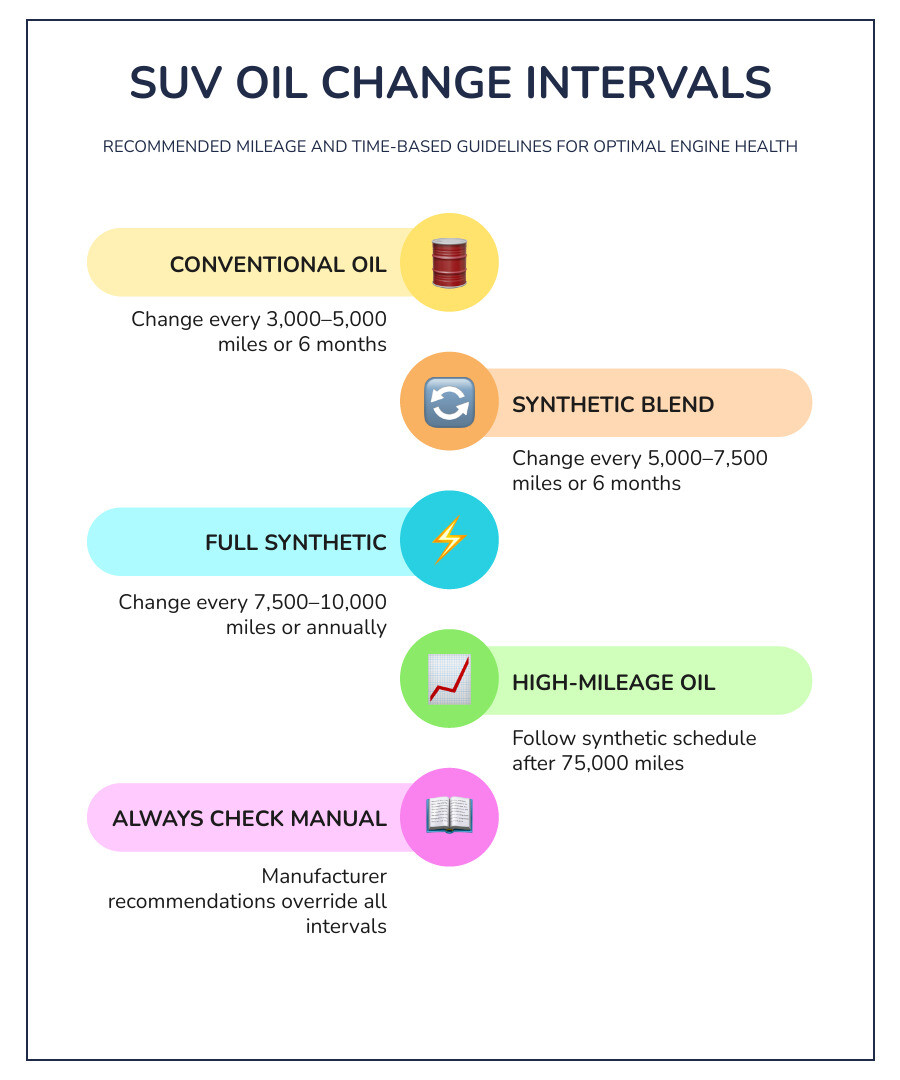
| Oil Type | Recommended Interval |
|---|---|
| Conventional | Every 3,000–5,000 miles |
| Synthetic Blend | Every 5,000–7,500 miles |
| Full Synthetic | Every 7,500–10,000 miles |
| High-Mileage (75k+ miles) | Follow synthetic schedule, check manual |
| Time-Based Rule | At least once per year, regardless of mileage |
Always check your owner’s manual — your SUV’s manufacturer has the final word.
Think about it this way: your SUV’s engine has hundreds of moving metal parts. Without clean oil, those parts grind against each other, build up heat, and wear out fast. Fresh oil lubricates, cools, and cleans the engine all at once.
The stakes are higher with an SUV. Bigger engines, heavier loads, and frequent towing all put more stress on your oil than a typical sedan. That means the rules are a little different — and ignoring them is a costly mistake.
This guide covers everything: how often to change your oil, which oil type fits your SUV, warning signs to watch for, and how to do it yourself if you’re up for it.
I’m William Dickinson, webmaster for Bob’s Lil Car Hospital, and my 20-plus years helping vehicle owners navigate reliable maintenance — including understanding the right oil change for SUV schedules — shapes everything in this guide. Let’s get into what actually matters for keeping your SUV healthy for the long haul.
Related content about Oil change for SUV:
Determining the Ideal Oil change for SUV Frequency
In the “old days,” everyone lived by the 3,000-mile rule. Today, modern engineering has changed the game. Most newer SUVs, like a 2025 Chevy Equinox or Tahoe, go much further between services. For these vehicles, a 7,500 to 10,000-mile interval is standard when using full synthetic oil.
However, mileage isn’t the only factor. We always advocate for the “Time-Based Rule.” Even if you only drive your SUV to the grocery store once a week in Kelso or Longview, you must change the oil at least once a year. Oil degrades over time and can trap moisture from short trips, leading to engine sludge.
Manufacturers equip most modern SUVs with an Oil Life Monitoring System (OLMS). This isn’t just a simple odometer. It tracks your driving habits, engine temperature, and idle time to calculate when the oil is actually worn out. According to Edmunds, these systems help prevent premature changes. If your dashboard light comes on before your mileage milestone, listen to it!
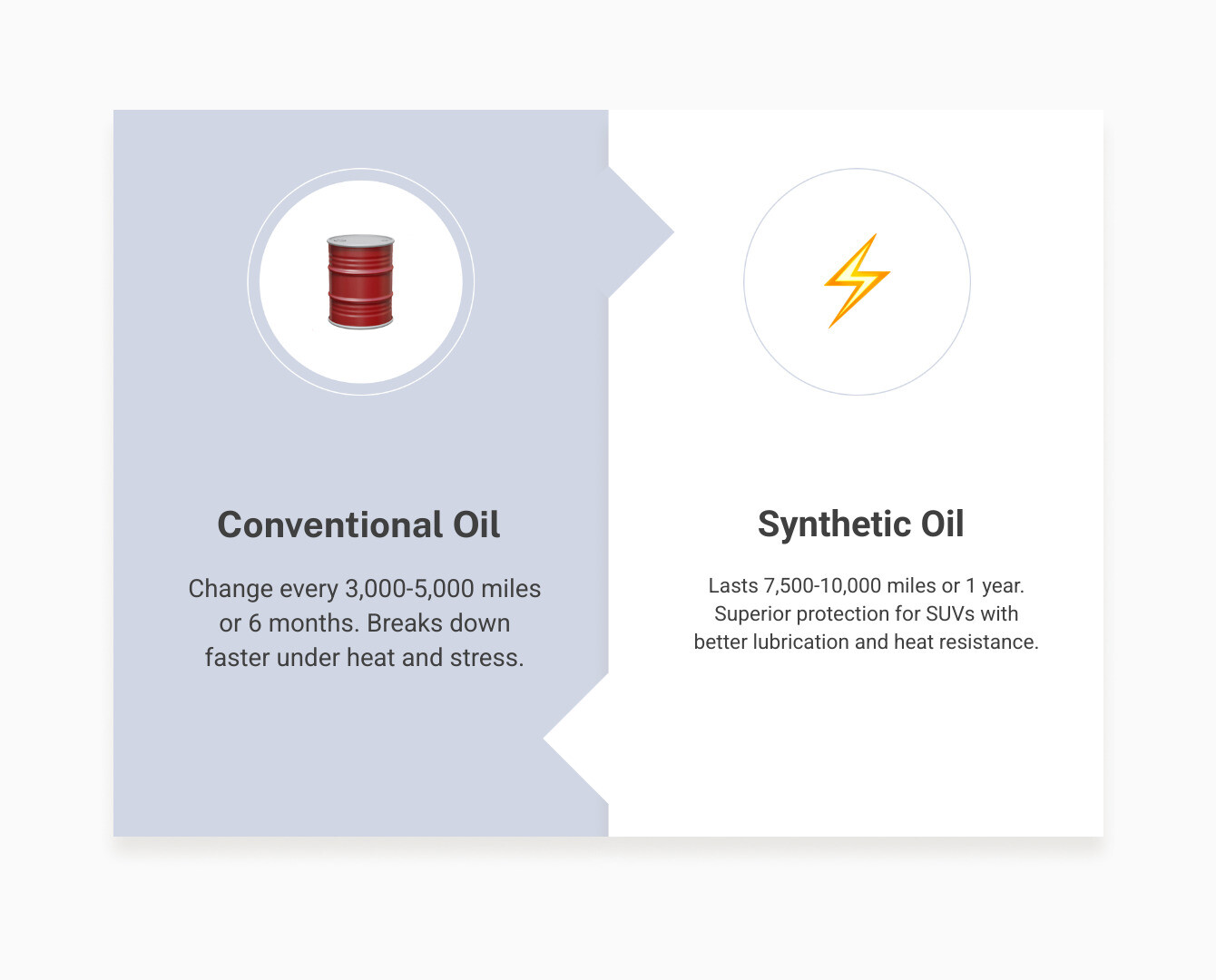
To dive deeper into why modern engines prefer longer-lasting lubricants, check out our more info about synthetic oil benefits. Following these manufacturer recommendations ensures your warranty stays valid and your engine stays quiet.
Choosing the Right Oil Type for Your SUV
Choosing the right “juice” for your SUV is vital. SUVs often have larger oil capacities than sedans. For example, a Chevy Traverse might require six quarts or more of full synthetic motor oil.
- Full Synthetic: This is the gold standard. It offers the best protection against heat and friction. It is almost mandatory for newer SUVs and turbocharged engines.
- Synthetic Blend: A mix of conventional and synthetic. It offers better protection than conventional at a lower price point.
- High-Mileage Oil: If your SUV has crossed the 75,000-mile threshold, this is for you. It contains special additives to swell seals and prevent the leaks common in older engines.
Viscosity grades like 5W-30 or 0W-20 are also crucial. These numbers tell you how the oil flows in cold and hot weather. Using the wrong viscosity can trigger a check engine light or cause poor fuel economy.
For a complete breakdown of what your vehicle needs, see your go-to list for engine care. Using the right oil provides the ultimate engine protection for those long drives through Southwest Washington.
Factors That Shorten Your Oil change for SUV Interval
Not all miles are created equal. If you use your SUV for “severe driving,” your oil wears out faster. This includes:
- Towing and Heavy Loads: Pulling a boat or trailer increases engine heat significantly.
- Stop-and-Go Traffic: Constant idling in Woodland or Castle Rock traffic prevents oil from circulating efficiently.
- Extreme Temperatures: Very hot summers or freezing winters in the Pacific Northwest stress the oil’s chemical bonds.
- Short Trips: Driving less than 5–10 miles doesn’t allow the engine to reach full operating temperature. This causes moisture to build up in the crankcase.
If these conditions sound like your daily commute, consider a more frequent oil change for SUV schedule—perhaps every 5,000 miles. You can find more tips to find service in Longview to help manage these intervals.
Warning Signs Your SUV Needs Immediate Attention
Sometimes your SUV will tell you it’s thirsty for fresh oil before the sticker says so. Don’t ignore these red flags:
- Dark, Gritty Oil: Fresh oil is amber and translucent. If it looks like black coffee or feels gritty on the dipstick, it’s full of contaminants.
- Engine Knocking or Grinding: Oil keeps metal parts from touching. If you hear metallic sounds, your lubrication is failing.
- Exhaust Smoke: Blue or gray smoke often indicates an oil leak being burned in the engine.
- The Smell of Burning Oil: This usually points to a leak dripping onto hot engine components.
Regular dipstick inspections are your best defense. If you’re worried about what a professional might find, read our guide to fair maintenance prices to stay informed.
DIY Maintenance Procedures
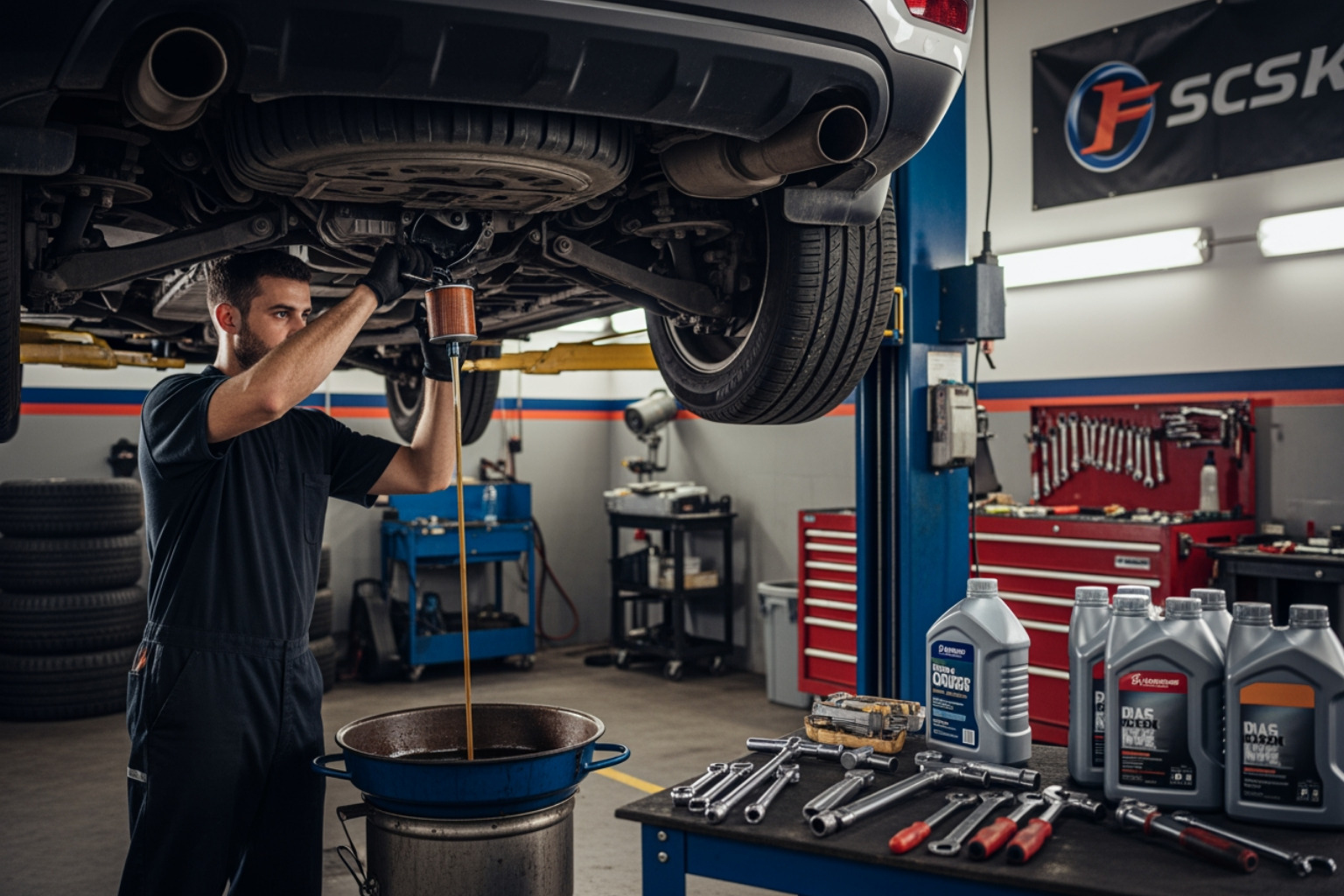
If you’re handy with a wrench, you can perform an oil change for SUV models in your own driveway. You’ll need some basic tools:
- A socket wrench set.
- An oil filter wrench.
- A sturdy drain pan.
- A funnel.
- Safety gear (gloves and eye protection).
- The correct amount of new oil and a fresh filter.
Proper disposal is part of the job. Never pour used oil down the drain or into the ground. Most shops in Kelso and Longview will accept used oil for recycling.
If DIY feels a bit overwhelming, you can explore our full range of services to see how we handle the dirty work for you.
Step-by-Step Guide: Performing an Oil change for SUV at Home
Ready to get your hands dirty? Here is how to do it safely:
- Warm the Engine: Run the SUV for 5 minutes. Warm oil drains faster and carries more debris out with it.
- Raise the Vehicle: Use a jack and jack stands. Never work under a car supported only by a jack.
- Drain the Old Oil: Remove the drain plug and let the oil flow into your pan.
- Replace the Filter: Unscrew the old filter. Smear a little fresh oil on the rubber gasket of the new filter before screwing it on hand-tight.
- Refill: Pour in the manufacturer-recommended amount of oil.
- Check Levels: Run the engine for a minute, then check the dipstick.
- Reset the OLMS: Use your dashboard menu to reset the oil life percentage.
For more detailed guides on specific models, read more on our blog.
Frequently Asked Questions about SUV Maintenance
How often should I check my SUV oil level?
We recommend checking the dipstick at least once a month. Even new SUVs can consume a small amount of oil between changes. It’s better to catch a low level early than to wait for a warning light.
Can I switch from synthetic back to conventional oil?
Yes, you can. Modern oils are compatible with each other. However, if your manufacturer requires synthetic, switching to conventional could damage the engine or void your warranty.
Does towing a trailer require more frequent changes?
Absolutely. Towing is considered “severe service.” The engine works harder and runs hotter, which breaks down the oil’s additives much faster. We recommend shortening your interval by about 2,000–3,000 miles if you tow frequently.
Conclusion
At Bob’s Lil Car Hospital, we believe that a well-maintained SUV is a reliable SUV. Whether you are driving through Kalama, Castle Rock, or Woodland, your engine relies on that thin film of oil to survive. Taking the time for a regular oil change for SUV maintenance isn’t just a chore; it’s an investment in your vehicle’s longevity.
We pride ourselves on exceptional customer service and genuine care. We want to turn your maintenance needs into a pleasant experience. If you’re unsure which oil is best for your specific model or if you’ve noticed a strange noise under the hood, don’t wait.
Call us today to ask any questions about your SUV maintenance needs. We are here to help you keep your vehicle on the road for years to come. Visit our homepage to learn more about our team and our commitment to your car’s health.