
Keeping Your Car Running Smoothly in Longview
An oil change longview service is one of the most critical steps you can take to maintain your vehicle’s engine health and ensure its longevity. Regular oil changes do more than just keep your engine lubricated; they are a powerful defense against the four major causes of engine breakdown: heat, deposits, sludge, and friction. Fresh oil helps your engine perform at its best, protects vital parts from grinding against each other, and removes harmful contaminants before they can cause serious damage.
Whether you steer downtown Longview’s stop-and-go traffic or make longer trips through Southwest Washington, your vehicle needs consistent, high-quality care. Finding a trustworthy provider for this essential maintenance is key. A great oil change service isn’t just about speed; it’s about thoroughness, expertise, and catching potential problems early.
As William the Webmaster at Bob’s Lil Car Hospital, I’ve spent over 20 years helping drivers understand the importance of preventive maintenance. We know that services like an oil change longview are fundamental to keeping your vehicle running reliably. In this guide, I’ll share practical tips for understanding what your vehicle requires, recognizing when it needs attention, and choosing a service provider that puts your car’s health first.
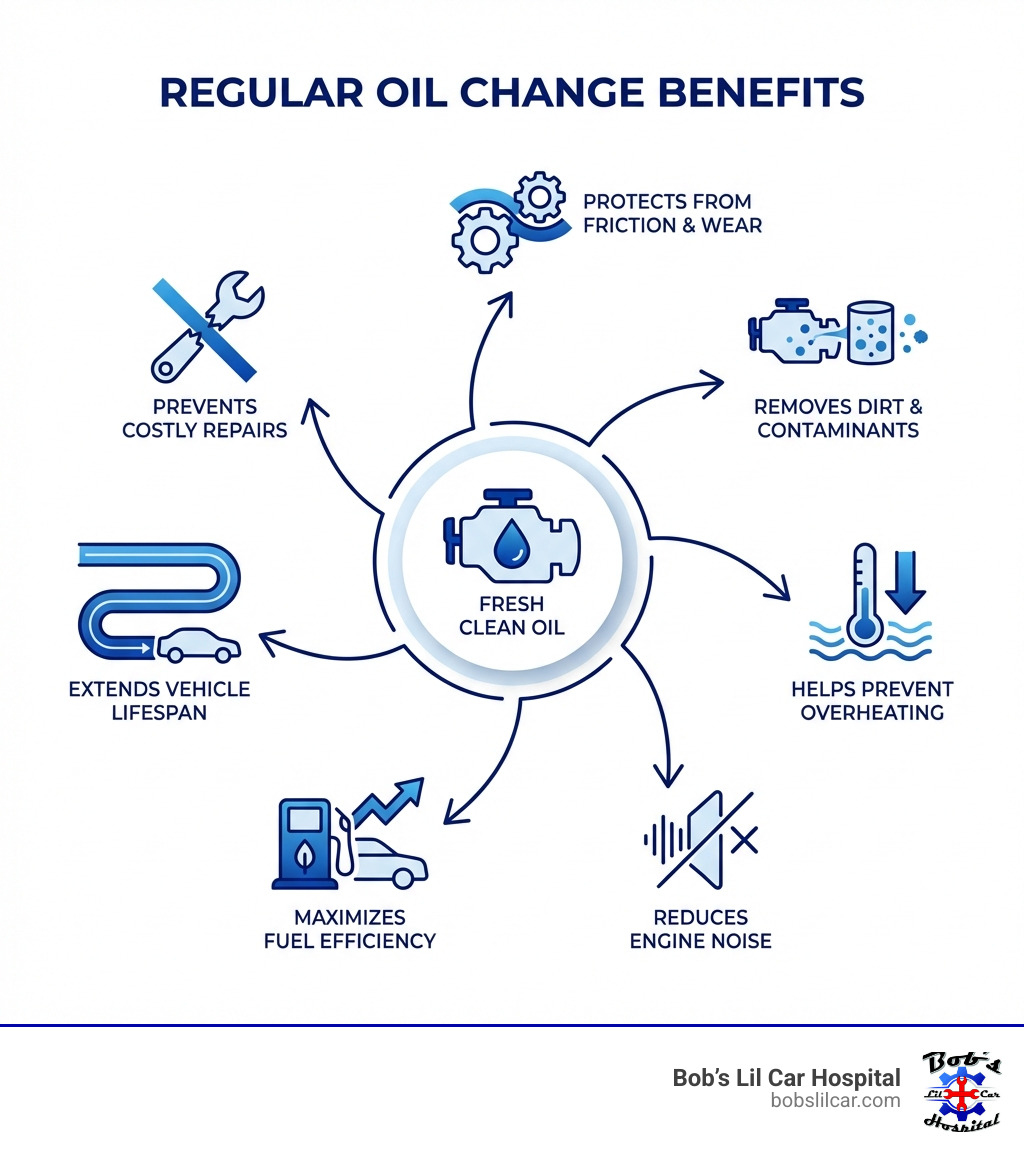
Tip 1: Know Your Vehicle’s Specific Oil Needs
Just like we all have unique nutritional needs, your car has specific requirements when it comes to oil. Understanding these needs is the first step toward ensuring a long and healthy life for your engine. Choosing the right oil and changing it at the right time can make all the difference, preventing unnecessary wear and tear.

When to Get an Oil Change
The age-old question: “How often should I change my oil?” isn’t as simple as it used to be. Gone are the days of a universal 3,000-mile rule. Today, the answer depends on a few key factors:
- Manufacturer Recommendations: Your car’s owner’s manual is your best friend here. It provides the precise intervals recommended by the engineers who designed your vehicle. Modern cars often suggest intervals between 5,000 and 7,500 miles, and sometimes even higher, especially if they use synthetic oil.
- Vehicle Age: Older vehicles, particularly those manufactured before the last decade, might still benefit from more frequent oil changes, sometimes every 3,000 miles. Their engines might not be designed to handle the longer intervals that newer, more advanced engines can.
- Driving Conditions: This is a big one, and often overlooked! What kind of driving do you do in our Southwest Washington area? Are you often in stop-and-go traffic in Longview, WA? Do you regularly tow heavy loads, or drive in dusty conditions around Kelso, WA? These are all considered “severe driving conditions.” Research suggests that roughly 70% of drivers fall into this category. Severe conditions put extra stress on your engine and oil, meaning you might need an oil change more frequently than your manual’s standard recommendation.
- Dashboard Reminders: Many newer vehicles come equipped with smart oil life monitoring systems. These systems don’t just count miles; they analyze your actual driving conditions, engine temperature, and other factors to tell you precisely when an oil change longview service is due. Pay attention to these reminders – they’re there to help!
Regular oil changes are one of the most important preventive maintenance services you can perform for your vehicle. It’s all part of a solid Regular Maintenance plan.
Choosing the Right Type of Motor Oil
Selecting the correct motor oil is crucial for optimal engine performance and longevity. It’s not a one-size-fits-all situation, and using the wrong type can lead to premature engine wear.
- Conventional Oil: This is derived from crude oil and contains various additives. It’s generally suitable for older vehicle models and those with simpler engine designs.
- Synthetic Blend Oil: A mix of conventional and synthetic base oils, offering improved performance and protection compared to conventional oil.
- Full Synthetic Oil: Created from artificial components with advanced additives, full synthetic oil provides superior protection, especially in extreme temperatures (both hot and cold). It resists breakdown better and allows for longer oil change intervals, often recommended for high-performance engines and many newer vehicles.
- High-Mileage Oil: Specifically formulated for engines with 75,000 miles or more, this oil contains special conditioners and anti-wear additives to help reduce oil consumption, leaks, and sludge in older engines.
Always consult your vehicle’s owner’s manual to determine the manufacturer-recommended oil type and viscosity. Using the right oil is a fundamental aspect of proper Car Maintenance.
Signs Your Car is Due for an Oil Change
Your car is pretty good at telling you when it needs something, if you know how to listen. Ignoring these signs can lead to bigger, more serious problems down the road.
- Dark or Gritty Oil: The easiest way to check this is with your dipstick. Fresh engine oil is transparent and typically a light brown or amber color. As it ages and collects contaminants, it turns dark brown or black and becomes opaque, sometimes even gritty. If your oil looks like black coffee, it’s time for a change.
- Engine Noise: If you start hearing grinding, knocking, or tapping noises from your engine, it could be a serious warning sign that your oil level is too low or the oil is too degraded to properly lubricate moving parts. The oil prevents metal-on-metal friction, so unusual noises mean that protection might be failing.
- Exhaust Smoke: Blue smoke coming from your exhaust could indicate that oil is burning in your engine, often due to an oil leak or worn engine components. This is a clear sign something is wrong and needs immediate attention.
- Oil Smell Inside the Car: A burning oil smell inside your vehicle often points to an oil leak, where oil is dripping onto hot engine parts and burning off. Not only is this unpleasant, but it can also be a fire hazard.
- Check Engine Light or Oil Pressure Warning: Modern cars have sensors that monitor oil pressure and quality. If your check engine light comes on, or specifically an oil pressure warning light illuminates on your dashboard, it’s a direct signal that your car needs attention. Don’t delay!
Tip 2: Understand the Full Service: More Than Just Oil
When you bring your car in for an oil change longview service, especially to a place like Bob’s Lil Car Hospital, you’re getting more than just new oil. We believe in comprehensive care that ensures every part of your engine and chassis is looked after. It’s about peace of mind, knowing your vehicle is running as smoothly and safely as possible.
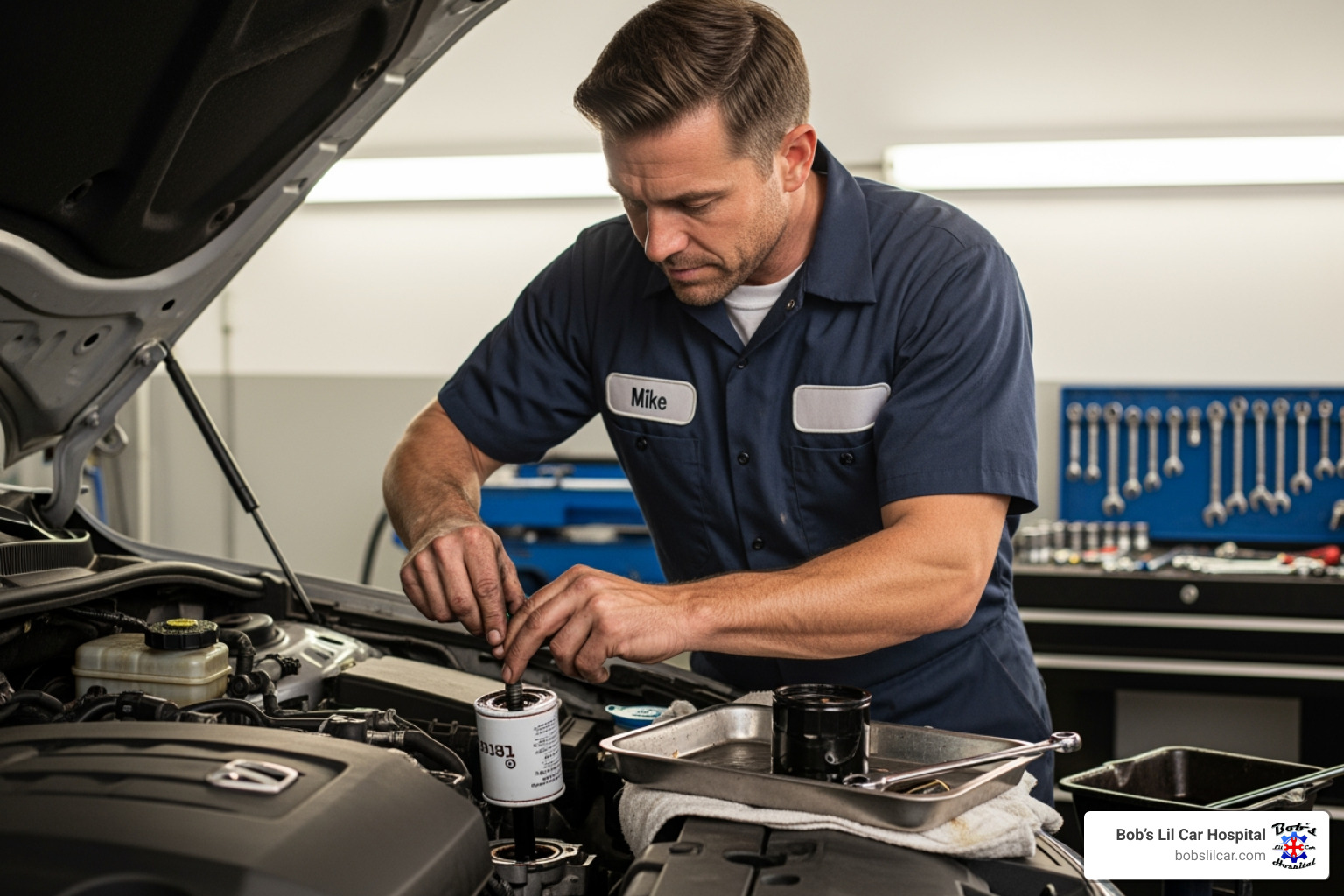
What Happens During a Lube and Oil Change?
A thorough lube and oil change service involves several critical steps to keep your engine in top condition:
- Draining Old Oil: The old, dirty, and degraded engine oil is completely drained from your engine. This oil has accumulated dirt, dust, and debris, and has lost its lubricating effectiveness due to engine heat.
- Replacing the Oil Filter: The oil filter acts as a safeguard, collecting debris and contaminants to prevent them from circulating through your engine. A fresh filter ensures that the new oil stays cleaner for longer and provides optimal filtration.
- Adding New, Clean Oil: We then add the manufacturer-recommended type and amount of fresh, clean oil, ensuring your engine gets the lubrication it needs to operate efficiently.
- Service Duration: While some express services can get you in and out in as little as 15 minutes, a comprehensive lube and oil change service, which includes additional checks and chassis lubrication, typically takes around 30 minutes to an hour. This allows our technicians to perform a more thorough inspection and address any immediate concerns. For more information about our broader auto repair services, check out More info about our auto repair services.
The Importance of Chassis Lubrication
The “lube” in a “lube and oil change” is often overlooked, but it’s incredibly important, especially for vehicles that see a lot of varied terrain or heavy use around areas like Longview, WA, or Castle Rock, WA.
- Lubricating the Chassis: This involves applying grease to various moving components in your vehicle’s suspension and steering systems, such as ball joints, tie rod ends, and U-joints. These parts are constantly moving and under stress, and without proper lubrication, they can wear out quickly.
- Internal Framework: Beyond the engine, many parts of your car’s internal framework benefit from lubrication to reduce friction and prevent corrosion. This helps ensure smooth operation of components that might not be directly part of the engine’s oil system but are crucial for your car’s overall function and comfort.
- Reducing Friction: Just like engine oil reduces friction between internal engine parts, chassis lubrication minimizes friction in critical steering and suspension components. This leads to a smoother ride, better handling, and less strain on these parts.
- Protecting Moving Parts: Regular lubrication protects these components from premature wear, rust, and corrosion caused by moisture, dirt, and road grime. This preventative measure can save you from major repairs down the line. You can learn more about this in The importance of chassis lubrication.
Tip 3: Evaluate Local Oil Change Providers in Longview
When it comes to finding an oil change longview service, you have options. Whether you’re in Longview, WA, Kelso, WA, or any of the surrounding Southwest Washington communities, it’s wise to consider not just the basic oil change but also the comprehensive care a service center can provide. We believe in providing thorough, professional service that goes beyond the basics.
Key Services to Look for Beyond a Basic Oil Change
A truly great oil change experience isn’t just about draining old oil and pouring in new. It’s about a holistic approach to your vehicle’s health. Here are some additional services we recommend looking for, and that we often include or offer during your visit:
- Comprehensive Vehicle Checks: A good service will include a multi-point inspection. This typically covers fluid levels (transmission, brake, power steering, coolant), belts, hoses, and tire pressure. This “Closer Look Vehicle Check” can catch small issues before they become big problems.
- Tire Rotation: Often, you can get a tire rotation bundled with your oil change. Regular tire rotation ensures even wear, extending the life of your tires and improving handling.
- Fluid Services: Beyond engine oil, your vehicle relies on a host of other fluids. Look for providers who can also check and offer services for transmission fluid exchange, radiator fluid exchange (coolant), and power steering fluid service. These are vital for your car’s overall health.
- Filter Replacements: Engine air filters, cabin air filters, and fuel filters are all crucial for your car’s performance and your comfort. A good service center will inspect these and recommend replacement if needed.
- Brake Checks: While not always part of a basic oil change, a quick brake inspection can identify early signs of wear on pads or rotors, keeping you safer on the road.
- A/C Service: Regular maintenance helps your car’s A/C system perform more efficiently, cooling your car faster with less energy. This is especially important during our warmer months!
At Bob’s Lil Car Hospital, we offer a full spectrum of services to keep your car running optimally. You can see our full list of offerings at Services.
Finding a Convenient Oil Change in Longview, WA
Convenience is key when it comes to routine maintenance. We know your time is valuable, and we strive to make your experience as smooth as possible in our Longview, WA area.
- Shop Operating Hours: Check the operating hours of service centers in Longview, Kelso, or Castle Rock, WA. Do they fit your schedule? Some shops offer extended hours or weekend appointments.
- Appointment Policies: Do you prefer to schedule an appointment, or do you need a place that accepts walk-ins? Many quick-lube places are designed for no-appointment service.
- Walk-in Availability: For those unexpected needs or busy schedules, knowing where you can drop in for a fast oil change longview is incredibly helpful.
- Neighborhoods Served: We proudly serve the communities of Longview, Kelso, Kalama, Castle Rock, and Toutle, all within Southwest Washington. We’re your local experts, ready to assist our neighbors.
Keeping your car in top shape is part of Maintaining Your Car and ensuring it’s always ready for the road ahead.
Tip 4: Prioritize Convenience and Quality
We understand that getting an oil change longview isn’t always the highlight of your week. That’s why we focus on making the experience as convenient and beneficial as possible. We aim for efficiency without compromising quality.
Understanding Wait Times and Service Speed
Time is precious, and waiting around for car service can be frustrating. We aim for efficiency without compromising quality.
- Service Duration: The time required for an oil change can vary. While a basic service might be relatively quick, a more comprehensive lube and oil change that includes a multi-point inspection will naturally take longer. This thorough approach ensures we don’t miss anything important.
- Scheduling and Walk-ins: It’s always a good idea to ask about appointment policies. Scheduling ahead can secure your spot, but some shops may accommodate walk-ins if their schedule allows. We recommend calling ahead to confirm availability if you’re on a tight schedule.
- Service Efficiency: Our goal is to perform every service efficiently and thoroughly. We respect your time and work hard to get you back on the road safely and promptly, knowing your vehicle has received the highest level of care.
Keeping your car running strong is our mission. Learn more about how we help with Keeping Your Car Running Strong.
Tip 5: Don’t Ignore Red Flags Like Oil Leaks
While regular oil change longview services are proactive, sometimes your car throws a curveball. One of the most serious red flags is an oil leak. Ignoring an oil leak is like ignoring a small crack in a dam—eventually, it can lead to catastrophic failure. We can’t stress enough how important it is to address these issues immediately.
The Dangers of Neglecting an Oil Leak
A small drip might seem harmless, but oil leaks can quickly escalate into major problems, putting both your engine and your safety at risk.
- Engine Damage: Oil is the lifeblood of your engine. Without enough oil, engine components don’t receive proper lubrication, leading to increased friction, overheating, and rapid wear. This can result in severe, irreversible engine damage that requires major repairs or even a complete engine replacement.
- Overheating: A low oil level due to a leak means the engine loses one of its primary cooling mechanisms. This can cause the engine to overheat, leading to warped cylinder heads, blown gaskets, and other serious issues.
- Fire Risk: This is perhaps the most alarming danger. If leaking oil drips onto hot engine components like the exhaust manifold, it can ignite, causing an engine fire. This risk is not to be taken lightly.
- Environmental Impact: Leaking oil pollutes our environment, seeping into groundwater and harming wildlife. Addressing leaks promptly is also a responsible choice for our planet.
Ignoring these issues is never a good idea. Proactive maintenance and quick action on red flags are among the Top 5 Maintenance Tips for 2026.
How to Spot an Oil Leak
Being vigilant can help you catch an oil leak early, potentially saving you a lot of grief and trouble.
- Oil Stains on Driveway: This is the most obvious sign. If you notice dark, oily puddles or spots under your parked car, especially after it’s been sitting for a while, it’s a strong indicator of a leak. The color and consistency can vary, but any new fluid under your car warrants investigation.
- Blue Exhaust Smoke: While black smoke might indicate a rich fuel mixture and white smoke could be coolant, blue smoke from your exhaust almost always means your engine is burning oil. This can happen if oil leaks past seals or rings into the combustion chamber.
- Burning Oil Smell: If you detect a distinct burning oil smell, especially after driving, it often means oil is dripping onto hot engine parts. This is a critical sign that needs immediate attention due to the fire risk.
- Low Oil Level on Dipstick: Regularly checking your oil level with the dipstick is a simple habit that can reveal a leak. If you find your oil level consistently dropping between oil changes, and there’s no visible smoke, you likely have an internal or external leak that needs professional diagnosis.
If you notice any of these signs, don’t hesitate. Bring your vehicle to us for an oil/fluid leak diagnosis. Early detection can prevent minor issues from becoming major headaches.
Frequently Asked Questions about Oil Changes
How often should I get an oil change for driving in Southwest Washington?
Your vehicle’s owner’s manual is always the best starting point. However, many of us in the Pacific Northwest experience what’s known as “severe” driving conditions without even realizing it. This includes frequent short trips, stop-and-go traffic in areas like Longview and Kelso, and driving in our wet, cool climate. These conditions put extra strain on your engine and its oil. If your manual suggests a 7,500-mile interval for “normal” driving, your actual needs might be closer to every 5,000 miles. It’s always best to consult with a professional technician who can recommend a schedule based on your specific vehicle and driving habits.
What is the main difference between conventional and synthetic oil?
The core difference lies in their composition and performance. Conventional oil is refined from crude petroleum, making it a natural product with varying molecular sizes. Synthetic oil, on the other hand, is chemically engineered from artificial components, resulting in uniform molecular sizes. This uniformity gives synthetic oil superior properties: it flows better in cold weather (a big plus for our winters), maintains its viscosity better in high heat, resists breakdown and sludge formation more effectively, and lasts longer. While conventional oil is fine for many older vehicles, synthetic oil provides improved protection and is often required for newer, high-performance engines.
How long does a typical oil change service take?
The duration of an oil change service can vary. A basic oil and filter replacement can be done relatively quickly. However, a more comprehensive service, which we recommend, includes a multi-point vehicle inspection, checking and topping off other vital fluids, and chassis lubrication. This thorough approach might take between 30 to 60 minutes. We believe the extra time spent on a detailed inspection is a valuable investment in your vehicle’s long-term health and your peace of mind.
Conclusion: Your Partner in Vehicle Health
We’ve covered a lot about keeping your car in prime condition, from understanding your vehicle’s specific oil needs and the importance of a comprehensive lube and oil change, to finding convenient services and knowing when to act on red flags like oil leaks. These tips are vital for maintaining your vehicle’s health and ensuring its longevity, whether you’re driving in Longview, WA, or beyond.
Regular, proactive maintenance is the cornerstone of a reliable vehicle. It not only extends the life of your car but also helps prevent unexpected breakdowns and major repairs. At Bob’s Lil Car Hospital, we pride ourselves on providing professional service with genuine care, turning what can often be a stressful experience into a pleasant one. We’re here to be your trusted partner in vehicle health, offering exceptional customer service and expertise to keep you safely on the road.
If you have any questions about your next oil change longview, or any other aspect of your car’s maintenance, our team is here to help. We encourage you to reach out and let us provide the answers and solutions you need. Learn more about our professional auto services and how we can assist you. Call us today with your questions!