

Why Understanding Oil and Tire Rotation Costs Protects Your Family
Oil and tire rotation services are two of the most fundamental maintenance tasks that keep your vehicle safe and reliable—but pricing can vary wildly from shop to shop. Here’s what you need to know:
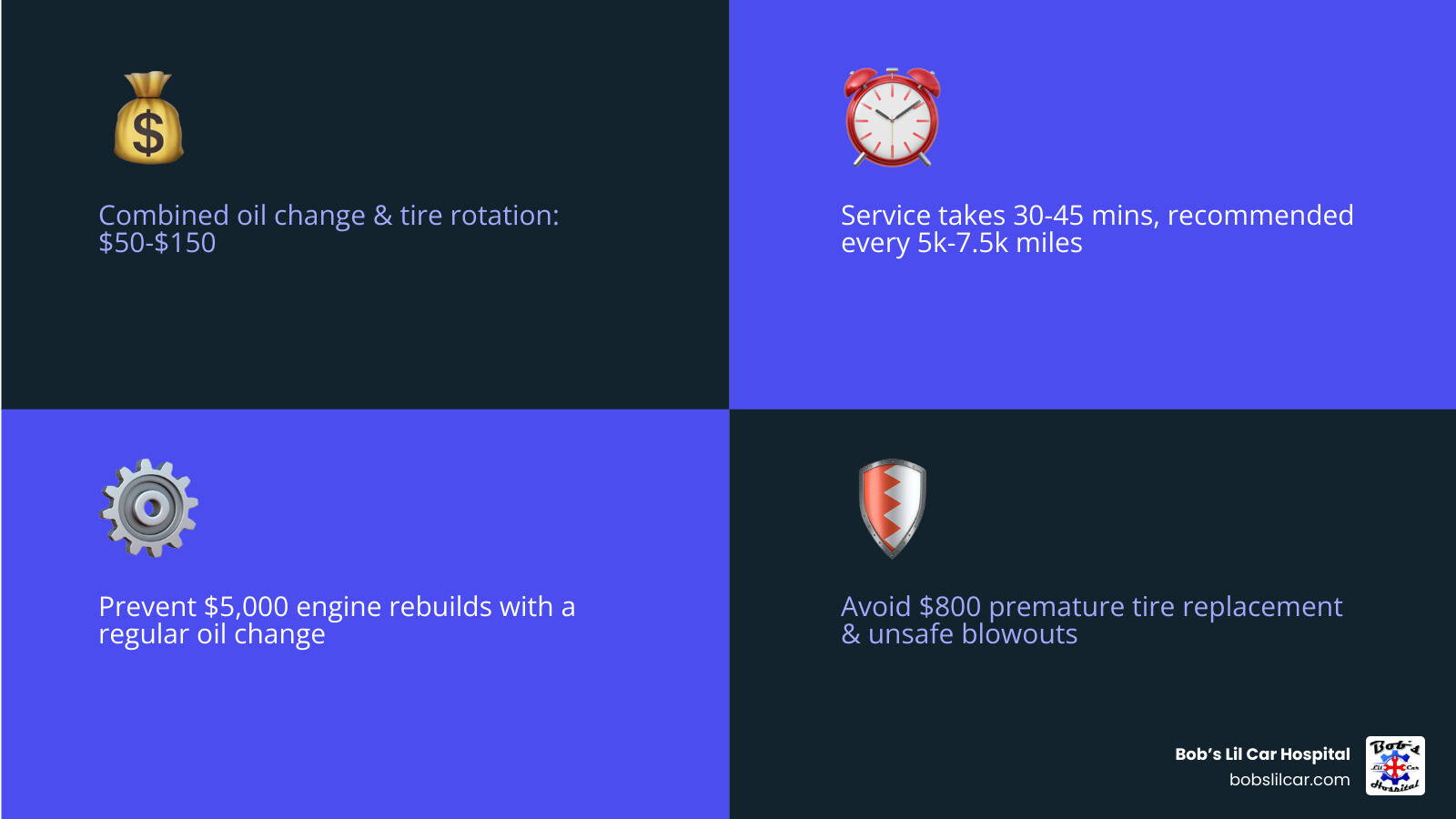
Fair Price Ranges for Combined Service:
- Conventional Oil Change + Tire Rotation: $50-$100
- Synthetic Oil Change + Tire Rotation: $80-$150
- Service Time: 30-45 minutes total
- Recommended Frequency: Every 5,000-7,500 miles
When you’re already stressed about car maintenance, the last thing you need is confusion about what you should actually pay. Many shops bundle these services together because they happen on similar schedules—and that’s actually good news for your wallet and your time.
Think of oil changes and tire rotations as preventative measures, like regular dental checkups. According to industry data, a $50 oil change today can prevent a $5,000 engine rebuild tomorrow. Regular tire rotations extend tire life and prevent uneven wear that could leave you stranded with a blowout—especially dangerous when you’re traveling with family.
The global oil change services market continues to grow because these services work. Vehicles last longer when properly maintained. But you shouldn’t overpay for essential care, and you definitely shouldn’t skip it because you’re worried about getting ripped off.
This guide will help you understand exactly what you’re paying for, what questions to ask, and how to recognize when a shop is treating you fairly. Because when you know what’s reasonable, you can make confident decisions about your family’s safety on the road.
Why These Two Services are a Package Deal
At Bob’s Lil Car Hospital, we often talk about oil and tire rotation as a package deal. It’s not just a clever way to bundle services; it’s a symbiotic relationship that maximizes your vehicle’s health, safety, and longevity. Aligning these maintenance schedules offers incredible convenience and ensures you’re getting the most out of your car. By addressing both at once, we help keep your car running strong, preventing bigger headaches down the road.
The Critical Role of Engine Oil
Your engine is the heart of your vehicle, and engine oil is its lifeblood. The role of engine oil is multifaceted and absolutely crucial for your vehicle’s performance and lifespan:
- Engine lubrication: Oil creates a protective film between moving metal parts, preventing friction that would otherwise cause rapid wear and tear. Without proper lubrication, your engine parts would grind against each other, leading to catastrophic failure.
- Heat reduction: As the engine operates, it generates immense heat. Oil helps to dissipate this heat, carrying it away from critical components and preventing overheating.
- Cleaning contaminants: Engine oil also acts as a cleaning agent, picking up dirt, metal particles, and sludge that accumulate during combustion. It carries these contaminants to the oil filter, where they are trapped.
- Preventing engine sludge: Over time, oil breaks down and can form thick, tar-like sludge. Regular oil changes remove this old, degraded oil and replace it with fresh oil that can effectively lubricate and clean.
Consequences of neglecting regular oil changes:
Neglecting regular oil changes is like asking your body to run a marathon without hydration. The consequences can be severe and costly:
- Engine wear and premature failure: Old, dirty oil loses its lubricating properties, leading to increased friction and accelerated wear on vital engine components. This can result in costly repairs or even a complete engine seizure.
- Reduced fuel efficiency: An engine struggling with poor lubrication has to work harder, consuming more fuel.
- Damage to key components: Insufficient lubrication can drastically shorten the life of your turbocharger. Moreover, worn piston rings due to lack of lubrication can allow oil to coat the catalytic converter, hindering its effectiveness and potentially leading to a failed emissions test or an expensive replacement.
Recommended intervals for oil changes, and how driving conditions affect them:
Gone are the days of the rigid “3,000-mile” oil change rule for every car. Modern vehicles and advancements in oil technology mean intervals vary significantly. Your owner’s manual is your best friend here, but generally, driving conditions play a huge role:
- Normal use: Commuting, highway driving, flat roads, no extended idling. Intervals typically range from 7,500–10,000 miles or 12 months.
- Severe use: Moderate to heavy loads, towing, mountainous or off-road conditions, frequent short trips (5-10 miles), extensive idling, extreme temperatures. Intervals shorten to 5,000–7,500 miles.
- Extreme use: Maximum load, very high or very low temperatures, high sulfur diesel fuels. Intervals can be as short as 2,500–5,000 miles.
- Idling impact: Did you know that one hour of idling is roughly equivalent to 25 miles of driving? This contributes to engine wear and reduces oil change intervals.
How modern vehicles’ oil life monitoring systems work:
Many modern vehicles, especially those we see here in Southwest Washington, come equipped with Intelligent Oil-Life Monitors. These systems don’t just count miles; they use complex algorithms that factor in your driving habits, engine temperature, and other operational data to calculate when an oil change is truly needed. When the system determines it’s time, it will alert you via a message on your dashboard display. This takes the guesswork out of scheduling and helps reduce waste. Just remember, once the oil change is done, the system needs to be reset so it can accurately track your next interval.
The Importance of Tire Rotation
While oil protects your engine, tire rotation protects your grip on the road and your wallet from premature tire replacement.
What is the purpose of tire rotation and why is it important for vehicle maintenance?
Tires wear differently depending on their position, your driving style, and your vehicle’s suspension. For example, front tires often wear faster than rear tires because they handle steering and most of the braking force. Regularly rotating your tires—moving them to different positions on your vehicle—helps to:
- Ensure even tread wear: This is the primary goal. By distributing the wear across all four tires, each tire lasts longer.
- Extend tire life: Even wear means you get the maximum mileage out of your tire set before needing replacements. This is a significant cost saving!
- Improved handling and vehicle safety: When tires wear evenly, your vehicle maintains consistent traction, braking, and steering response. Uneven wear can lead to poor handling, reduced traction, and compromised braking, which is a significant safety concern.
- Fuel efficiency: Evenly worn tires have less rolling resistance, contributing to better fuel economy.
What are the different tire rotation patterns, and how do they apply to different vehicle types?
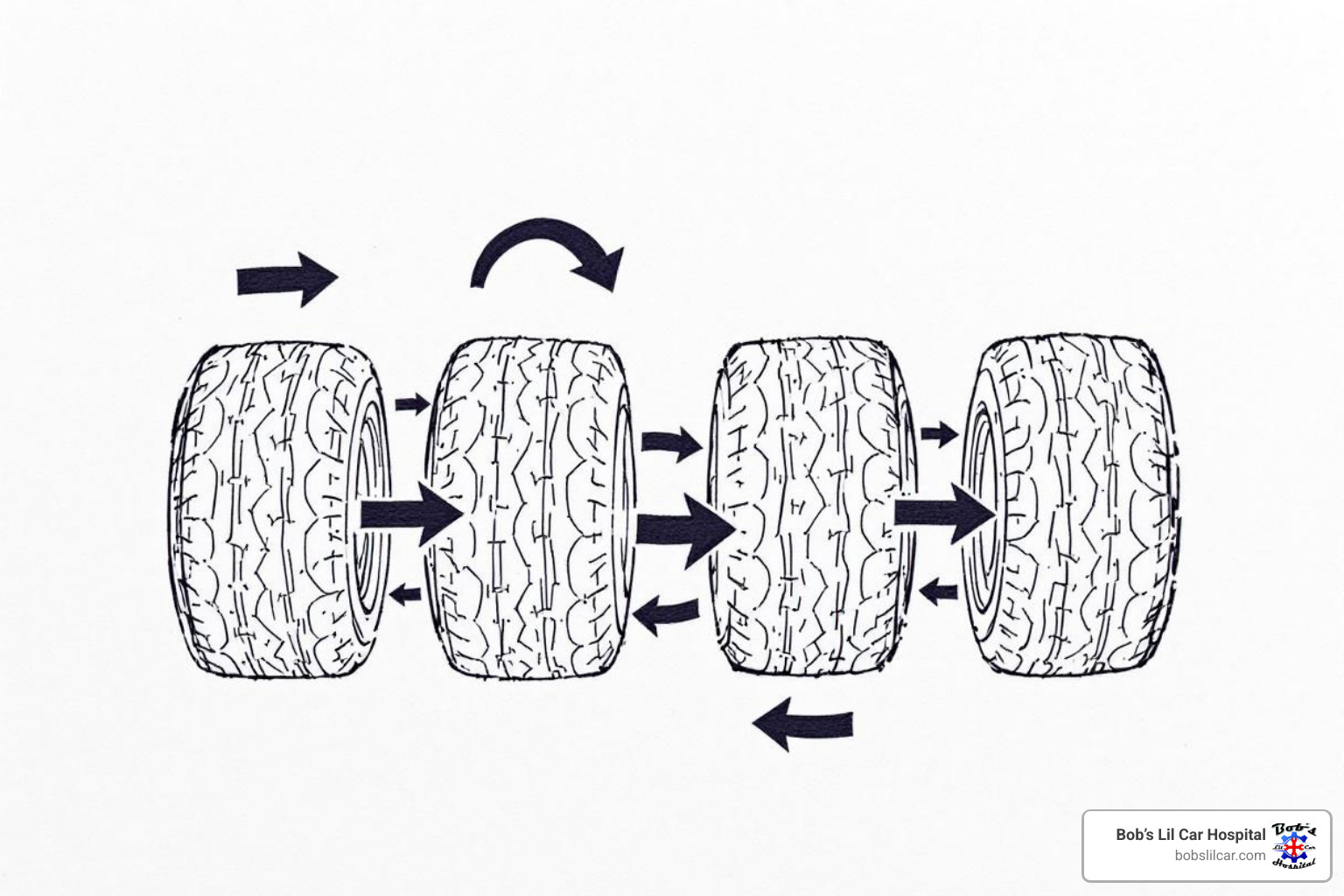
The right rotation pattern depends on your vehicle’s drivetrain and whether your tires are directional (designed to roll in one direction) or non-directional. Here are the most common patterns we use at Bob’s Lil Car Hospital:
- Forward Cross: Typically used for front-wheel drive (FWD) vehicles. Front tires move to the rear on the same side, and rear tires cross to the opposite front.
- Rearward Cross: Common for rear-wheel drive (RWD) and four-wheel drive (4WD) vehicles. Rear tires move to the front on the same side, and front tires cross to the opposite rear.
- X-Pattern: Often used for all-wheel drive (AWD) and some 4WD vehicles. All tires cross positions. For example, front left goes to rear right, front right to rear left, and so on.
If you have a full-sized spare, it can sometimes be included in the rotation to extend the life of all five tires. Our technicians in Kelso, Longview, Kalama, Castle Rock, and Toutle are experts at determining the best pattern for your specific vehicle.
How often should tires be rotated, and what factors influence this frequency?
Most tire manufacturers recommend rotating your tires between 5,000 and 8,000 miles. A good rule of thumb is to rotate them at least once a year or every 6,000-8,000 miles, whichever comes first. Conveniently, this often aligns perfectly with your oil change schedule, making it easy to remember.
Factors influencing frequency include:
- Vehicle type: FWD, RWD, AWD vehicles all have different wear patterns.
- Driving style: Aggressive driving, frequent braking, or quick turns can accelerate wear.
- Road conditions: Driving on rough roads or gravel can impact tire wear.
- Towing/Hauling: Regularly carrying heavy loads puts extra stress on tires.
How does tire rotation differ from tire balancing, and are they often performed together?
It’s a common misconception that tire rotation and balancing are the same, but they are distinct services.
- Tire rotation is about moving tires to different positions on the vehicle to ensure even wear.
- Tire balancing involves optimizing the weight distribution of the tire and wheel assembly so it spins smoothly at high speeds. If a tire is unbalanced, you might feel vibrations in the steering wheel or seat.
While different, they are often performed together because both contribute to even tire wear and optimal vehicle performance. When we rotate your tires, it’s an ideal time to check their balance and make adjustments if needed.
Decoding the Bill: What’s a Fair Price for Oil and Tire Rotation?
Understanding what goes into the cost of your oil and tire rotation can help you evaluate if you’re getting a fair deal. When you come to Bob’s Lil Car Hospital, we believe in transparency. The cost typically covers labor, the parts (oil and filter), and the proper disposal of used fluids.
- Labor costs: While a standalone tire rotation can take about 15 minutes, and an oil change can be quick, a combined service with a thorough inspection usually takes around 30-45 minutes. This labor ensures everything is done correctly and safely.
- Shop overhead: This includes the cost of specialized equipment, maintaining our facilities in Kelso and Longview, and ensuring our technicians are highly trained.
- Geographic location: Prices can vary slightly even within Southwest Washington, but our goal is to offer competitive and fair pricing across all our locations.
What truly makes a quality service isn’t just the oil and rotation; it’s the comprehensive multi-point inspection that comes with it. We don’t just change your oil; we inspect your belts, hoses, fluid levels, and more, catching potential issues before they become expensive problems. For more insights into comprehensive maintenance, check out our section on Car Maintenance.
Factors Influencing Your Oil Change Cost
The price of an oil change isn’t one-size-fits-all, mainly due to the type of oil your vehicle requires.
| Oil Type | Typical Interval (Miles) | Benefits |
|---|---|---|
| Conventional Oil | 3,000-5,000 | Most affordable, suitable for older cars and normal driving conditions. |
| Synthetic Blend | 5,000-7,500 | Offers better protection than conventional at a moderate price. |
| Full Synthetic Oil | 7,500-10,000+ | Best protection, extended intervals, ideal for modern engines, severe driving. |
- Oil type (conventional, synthetic blend, full synthetic): This is the biggest differentiator. Full synthetic oil, while more expensive upfront, offers superior protection, better performance in extreme temperatures, and allows for longer intervals between changes. This can sometimes make it more cost-effective in the long run. Always follow your manufacturer’s recommendation for oil type.
- Oil filter quality: A high-quality oil filter is critical. It works with the oil to protect the engine by effectively removing contaminants. We only use reputable, high-quality filters at Bob’s Lil Car Hospital.
- Engine size: Larger engines require more oil, which naturally increases the cost.
- Disposal fees: Used oil is a hazardous waste and must be disposed of responsibly. A small disposal fee is typically included to cover the environmental costs of recycling.
What to Expect from a Tire Rotation Service
When you bring your vehicle to us for a tire rotation in Kalama or Castle Rock, you can expect a thorough service that goes beyond just moving tires around.
- Tire inspection: Our technicians will carefully inspect each tire for any signs of damage, punctures, or unusual wear patterns.
- Tread depth measurement: We measure the tread depth to ensure your tires still have enough grip for safe driving, especially important for the rainy seasons in Southwest Washington. Replace tires when tread depth reaches 3/32 of an inch.
- Checking tire pressure: Correct tire pressure is vital for safety, tire longevity, and fuel efficiency. We’ll adjust the pressure to your manufacturer’s specifications.
- Rotation process: We’ll perform the appropriate rotation pattern for your vehicle type, ensuring even wear.
- Signs you need a rotation (or other tire-related maintenance):
- Uneven wear: Visibly more wear on the inner or outer edges, or on some tires more than others.
- Vibration: A subtle or noticeable vibration in the steering wheel or seat, especially at higher speeds, can indicate uneven tire wear or an imbalance.
- Unusual noises: A humming or thumping sound that changes with speed.
The High Cost of Neglect
Ignoring routine oil and tire rotation can seem like a way to save money in the short term, but it almost always leads to significantly higher costs and safety risks down the road.
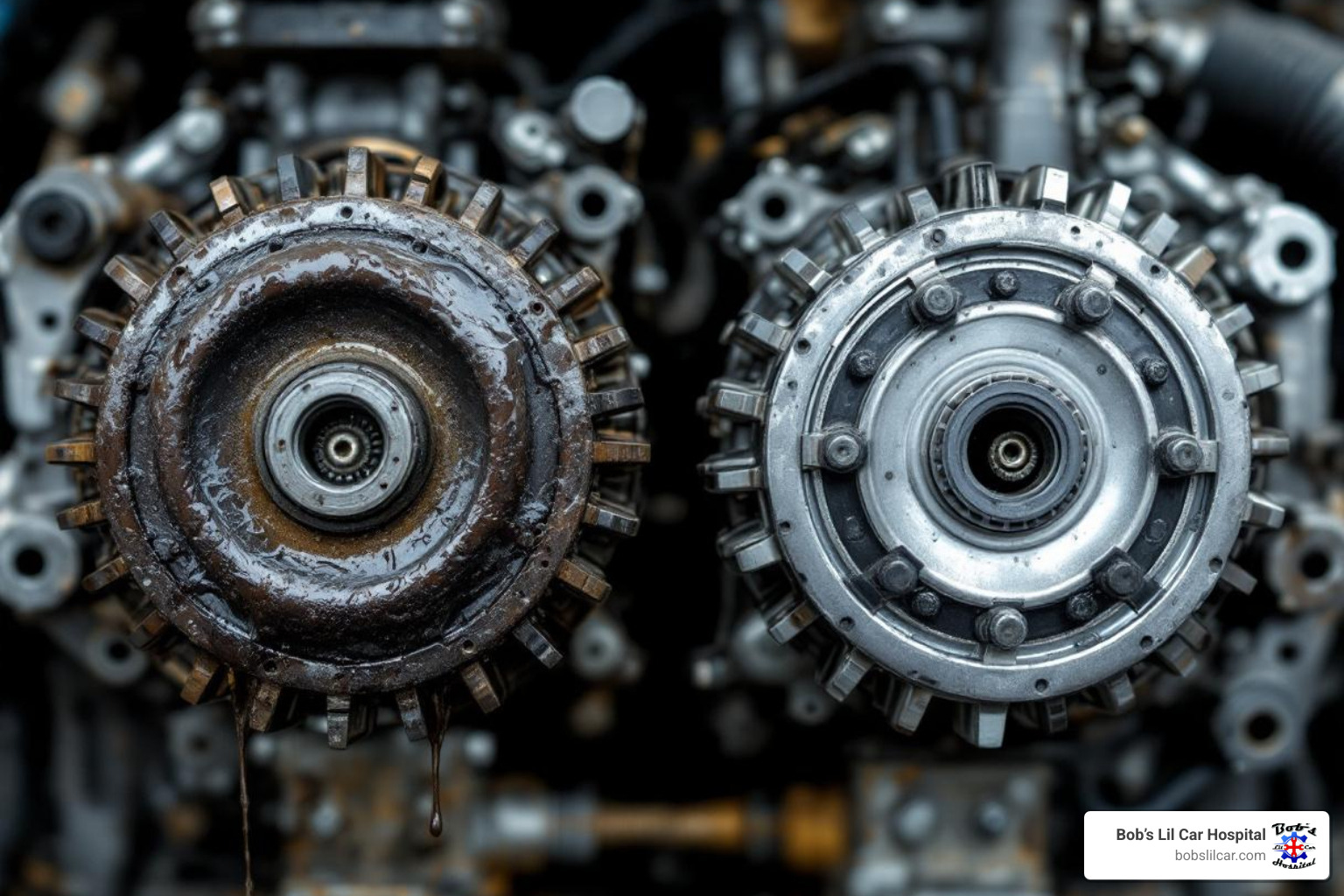
- Engine failure: This is the most dramatic and expensive consequence of neglected oil changes. A $50 oil change could prevent a $5,000 engine rebuild resulting from neglected lubrication.
- Premature tire replacement: If you don’t rotate your tires, they will wear unevenly, forcing you to replace them much sooner than necessary. A full set of new tires can easily cost hundreds of dollars.
- Suspension damage: Uneven tire wear can put undue stress on your vehicle’s suspension components, such as tie rods and ball joints, leading to premature wear and costly repairs.
- Reduced resale value: A vehicle with a poor maintenance history, or one that shows signs of neglect like excessive engine noise or worn-out tires, will fetch a much lower price when you decide to sell it. Detailed service records, showing regular maintenance, significantly boost a vehicle’s resale value.
- Safety risks: Unevenly worn tires compromise traction, handling, and braking, increasing your risk of accidents. An engine that seizes due to lack of oil can leave you stranded in a dangerous situation.
Proper maintenance is an investment in your car’s longevity and your peace of mind.
Why Professional Service Matters
While some routine maintenance tasks might seem simple, when it comes to critical services like oil and tire rotation, professional expertise makes a world of difference. At Bob’s Lil Car Hospital, we understand the complexities of modern vehicles and the importance of precise, careful work. Attempting these services yourself might seem like a cost-saver, but it comes with potential hidden costs, safety risks, and the possibility of voiding your vehicle’s warranty. Our team has the specialized tools and experience to do the job right every time.
The Value of a Professional Technician
Choosing a professional service for your oil and tire rotation offers numerous advantages:
- Expertise and experience: Our ASE-certified technicians have demonstrated automotive repair expertise. They are trained to handle a wide variety of vehicle makes and models, understanding their specific requirements for oil types, rotation patterns, and inspection points. They also know what to look for beyond the obvious.
- Professional equipment: We use specialized lifts, torque wrenches, and diagnostic tools that ensure the job is done efficiently, accurately, and safely. For instance, tightening lug nuts to the manufacturer’s precise torque specifications is crucial for safety and preventing damage, something a professional torque wrench guarantees.
- Comprehensive vehicle inspection: A quality oil and tire rotation service at Bob’s Lil Car Hospital always includes a thorough multi-point inspection. This means our technicians are not just performing the requested service; they are actively looking for early warning signs of other potential issues with your brakes, fluids, belts, and more. This proactive approach can identify potential problems early, preventing costly future repairs.
- Warranty on work: When you have service performed by professionals, you typically receive a warranty on parts and labor. This provides peace of mind, knowing that if something goes wrong related to the service, you’re covered.
- Identifying hidden issues: Our experienced eyes can spot subtle signs of wear or damage that an untrained eye might miss. This could be anything from a slight fluid leak to a worn suspension component, allowing you to address it before it becomes a major problem.
Your Complete Car Care Checklist
Adopting a preventative maintenance mindset is the best way to ensure your vehicle remains reliable and safe for you and your family. Regular maintenance isn’t just about fixing things when they break; it’s about anticipating and preventing problems. For a broader look at maintaining your car, you can explore our resources on Maintaining Your Car.
Seasonal changes, particularly the extreme weather we sometimes experience in Southwest Washington, can significantly impact your vehicle’s needs. Before winter, you might focus on battery health, tire tread, and coolant levels. Before summer, checks on your AC, fluid levels, and tire pressure (as heat increases it) become paramount. For a comprehensive guide, check out this external resource: Your Car Maintenance Checklist .
Key Checks During a Routine Service
When you bring your vehicle to Bob’s Lil Car Hospital for an oil and tire rotation, our comprehensive inspection includes several critical areas:
- Brake system inspection: We check your brake pads, rotors, and fluid. High-pitched squeals or grinding sounds are signs of worn brake pads, and a spongy brake pedal may indicate air in the brake lines or low brake fluid. We ensure your brake fluid is between minimum and maximum levels and inspect for any leaks or damage in the brake lines. Brake fluid should be changed every two years or 25,000 miles.
- Fluid levels (coolant, brake, power steering, transmission): Beyond engine oil, we inspect and top off other essential fluids. We check your engine coolant concentration and level, especially important for preventing freezing in winter and overheating in summer. We also inspect transmission fluid for level and contamination, as slipping gears or hesitation during shifts are red flags.
- Belts and hoses: We inspect all belts for cracks, fraying, or excessive wear, and check hoses for leaks, bulges, or hardening. These components are vital for your engine’s operation and cooling system.
- Battery test: We test your battery’s health, especially before extreme weather seasons. Cold and hot temperatures can significantly impact battery performance, and a failing battery can leave you stranded.
- Air and cabin filters: A clean engine air filter ensures proper airflow for combustion, improving fuel efficiency and performance. A clean cabin air filter improves air quality inside your vehicle. We check these and recommend replacement based on wear and manufacturer guidelines.
Recognizing Early Warning Signs
Your vehicle often “talks” to you, giving subtle hints when something is amiss. Paying attention to these early warning signs can prevent minor issues from escalating into major, expensive repairs.
Here are some common indicators that your car might need attention beyond routine oil and tire rotation:
- Unusual noises:
- Squealing or grinding when braking: Likely worn brake pads.
- Squealing from under the hood: Could be a loose or worn belt.
- Clicking or tapping from the engine: Often indicates low oil pressure or internal engine wear.
- Vibrations:
- Vibrations in the steering wheel or seat, especially at speed: Can indicate uneven tire wear, an unbalanced tire, or alignment issues.
- Vibrating or pulsating brake pedal when braking: May suggest warped brake rotors.
- Warning lights on the dashboard: Don’t ignore your check engine light, oil pressure light, or tire pressure monitoring system (TPMS) light. These are designed to alert you to problems that need immediate attention.
- Changes in performance or fuel economy:
- A sudden drop in fuel efficiency could signal a need for an oil change, a new air filter, or other engine-related issues.
- A noticeable decrease in power or acceleration.
- Rough idling or stalling.
- Smoke from the exhaust, especially if it’s blue (burning oil) or white (burning coolant).
If you notice any of these signs while driving in Kelso, Longview, Kalama, Castle Rock, or Toutle, don’t hesitate to contact us. Early diagnosis is key to preventing more serious problems.
Your Partner in Proactive Car Care
We hope this guide has demystified oil and tire rotation and empowered you to make informed decisions about your vehicle’s maintenance. The key takeaway is simple: regular maintenance isn’t a cost; it’s a wise investment in your vehicle’s longevity, safety, and your peace of mind. By understanding what constitutes a fair price and what a quality service entails, you can confidently steer your car care needs.
At Bob’s Lil Car Hospital, we pride ourselves on exceptional customer service, genuine care, and professionalism. We understand that car issues can be stressful, and our goal is to turn those experiences into pleasant ones for our community in Southwest Washington. Our certified technicians are here to provide the dependable maintenance and expert repairs your vehicle deserves, with integrity and transparency.
Don’t wait for a small issue to become a big problem. Be proactive, stay informed, and trust your car to the experts who truly care. Call us today to schedule your appointment for an oil and tire rotation or any other automotive service. We look forward to partnering with you to keep your vehicle running strong and safe for years to come. You can also learn more about our services on our website: https://bobslilcar.com/services-page/