

Check Engine Light Honda Accord: Top 5 Urgent Fixes
Why Your Honda Accord’s Check Engine Light Demands Your Attention
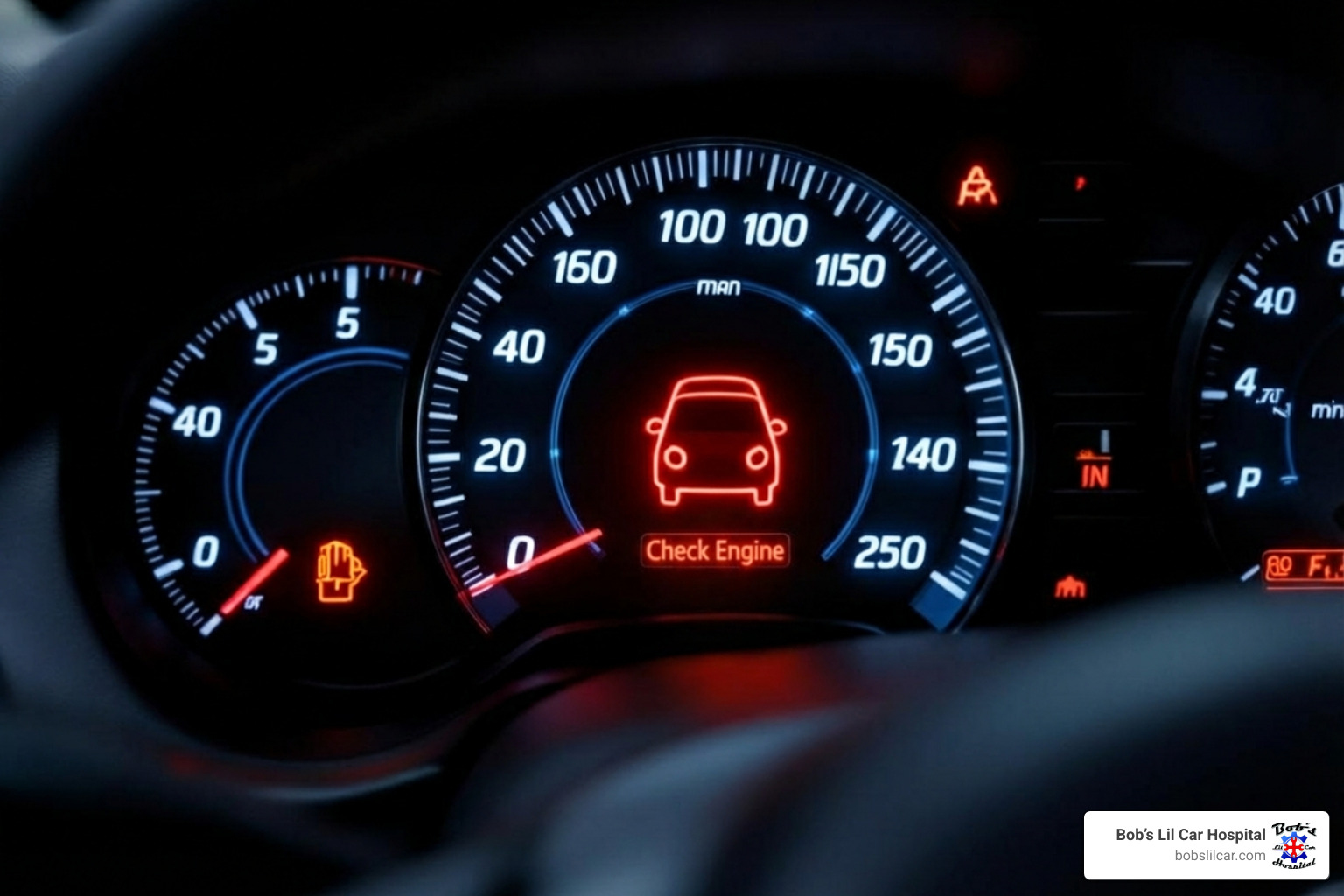
When the check engine light on the Honda Accord dashboard warning appears, it can be stressfulespecially when you’re busy, have family in the car, or are already running late. That worry usually comes from not knowing how serious the problem is, or what it might cost to fix.
To make clear decisions, you need straightforward information and a simple plan.
Here’s what you need to know right now:
- What it means: Your Honda Accord’s onboard computer (OBD-II system) has detected a potential problem with the engine, emissions system, or related components.
- Steady light: Schedule a service appointment soon. It’s usually not an emergency, but it should not be ignored.
- Flashing light: Pull over immediately. This signals a serious problem that can cause expensive damage if you keep driving.
- Most common causes: Loose gas cap ($5$20 fix), oxygen sensor failure ($150$300), worn spark plugs ($200$600), or catalytic converter issues ($800$1,500).
- Safe to drive?: Often yes for a steady light with no other symptoms, but never with a flashing light.
The encouraging news is that many check engine light issues are manageable when addressed early, and some are very simplelike tightening or replacing a gas cap. The key is knowing when you can wait a short time and when you need immediate help.
This guide explains what can trigger the check engine light on your Honda Accord, what the different warning signs mean, what repairs typically cost, and how to respond confidently. The goal is to help you protect your vehicle, your safety, and your budget.
If your check engine light is on and you want clear answers instead of guesswork, call Bob’s Lil Car Hospital today to schedule a diagnostic appointment. Our team will pinpoint the problem and help you get back on the road safely.
What Does the Check Engine Light Mean on Your Honda Accord?
The check engine light on your Honda Accord, also known as the Malfunction Indicator Lamp (MIL), is your car’s way of telling you that its brain—the On-Board Diagnostics (OBD-II) system—has detected something amiss. This sophisticated system constantly monitors your vehicle’s engine, emissions, and other critical components. When it finds a problem it can’t self-correct, it illuminates that familiar amber or yellow light on your dashboard.
The light serves as an early warning system, alerting you to potential issues within the engine or emissions system that, if ignored, could escalate into more severe problems. Correctly interpreting this light and taking appropriate measures is vital to keep your Accord functioning well and to avoid larger, more expensive repairs down the road. You can learn more about what this light looks like and generally means by checking out this guide on What Does the Check Engine Light Look Like, and What Does It Mean?. For a broader understanding of warning signs, visit our page on warning signs.
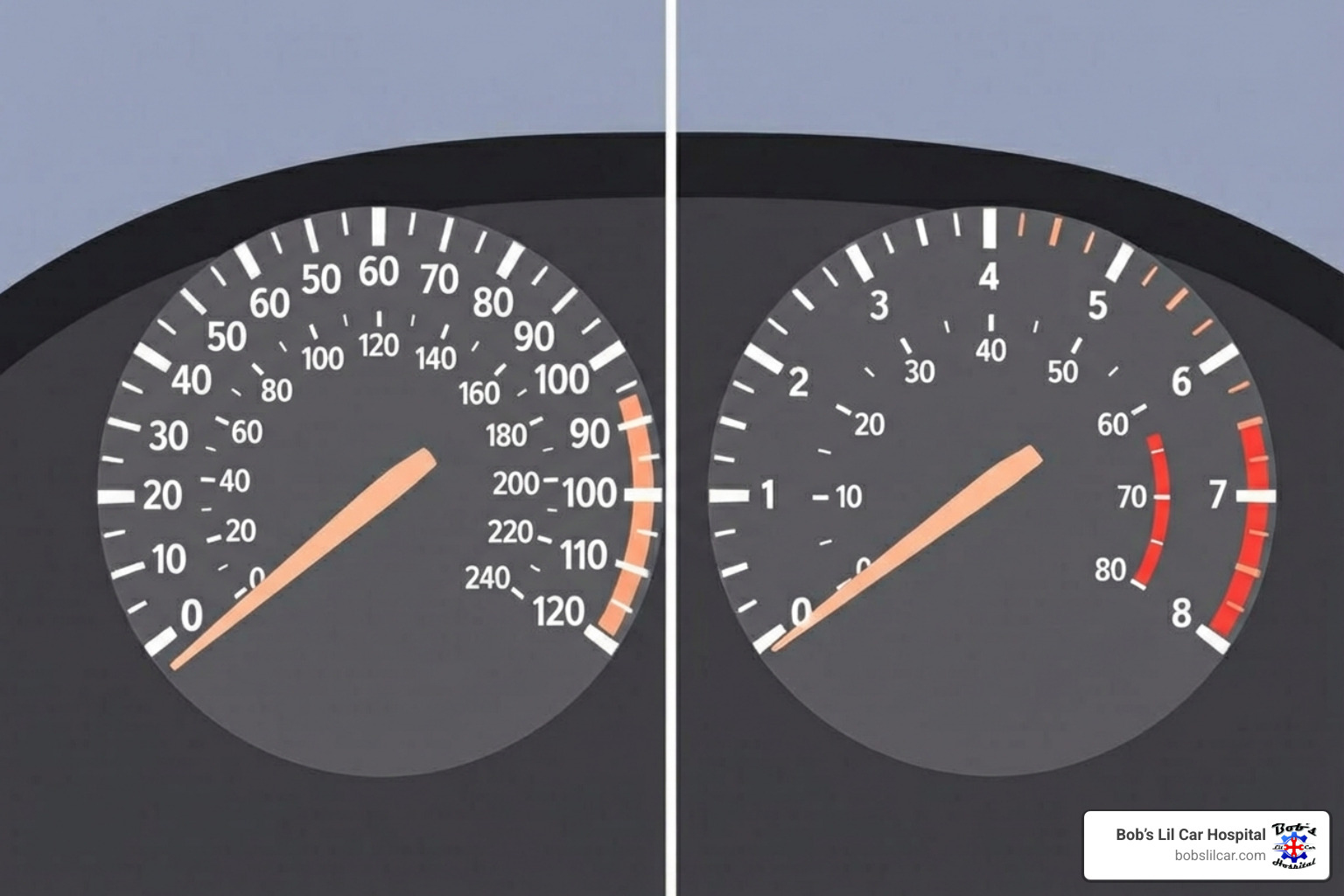
The key to understanding the urgency lies in how the light behaves: is it steady, or is it blinking?
Steady Check Engine Light
A steady, non-flashing check engine light Honda Accord typically signals a less critical issue. While it’s not an emergency that requires you to pull over immediately, it’s certainly a sign that you should schedule repairs as soon as possible. Think of it as your car politely asking for attention.
Even if your Honda Accord seems to be running fine, a steady light can indicate problems that lead to reduced fuel efficiency or increased emissions. Modern automotive computers are quite clever; they often try to compensate when there’s a problem, which means you might not immediately notice a deterioration in performance. However, your fuel mileage might be suffering, and your vehicle could be emitting unacceptable levels of pollutants. Ignoring a steady light can allow a minor problem to develop into something more serious and costly over time.
Flashing Check Engine Light
Now, if your check engine light on your Honda Accord starts flashing rapidly, that’s a different story altogether. This is your car screaming for immediate attention because it indicates a serious problem that can lead to further damage.
A blinking light almost always signifies a severe engine misfire. This means that unburned fuel is being dumped into the exhaust system, where it can quickly damage a very expensive component: your catalytic converter. A catalytic converter replacement alone can cost anywhere from $800 to $1,500, so immediate action can save you a significant amount of money. If you see a flashing light, pull over to a safe location as soon as you can, reduce your speed and load on the engine, and consider having your vehicle towed to our shop in Southwest Washington. Driving with a flashing light is a big no-no!
Top 5 Most Common Reasons for a Check Engine Light
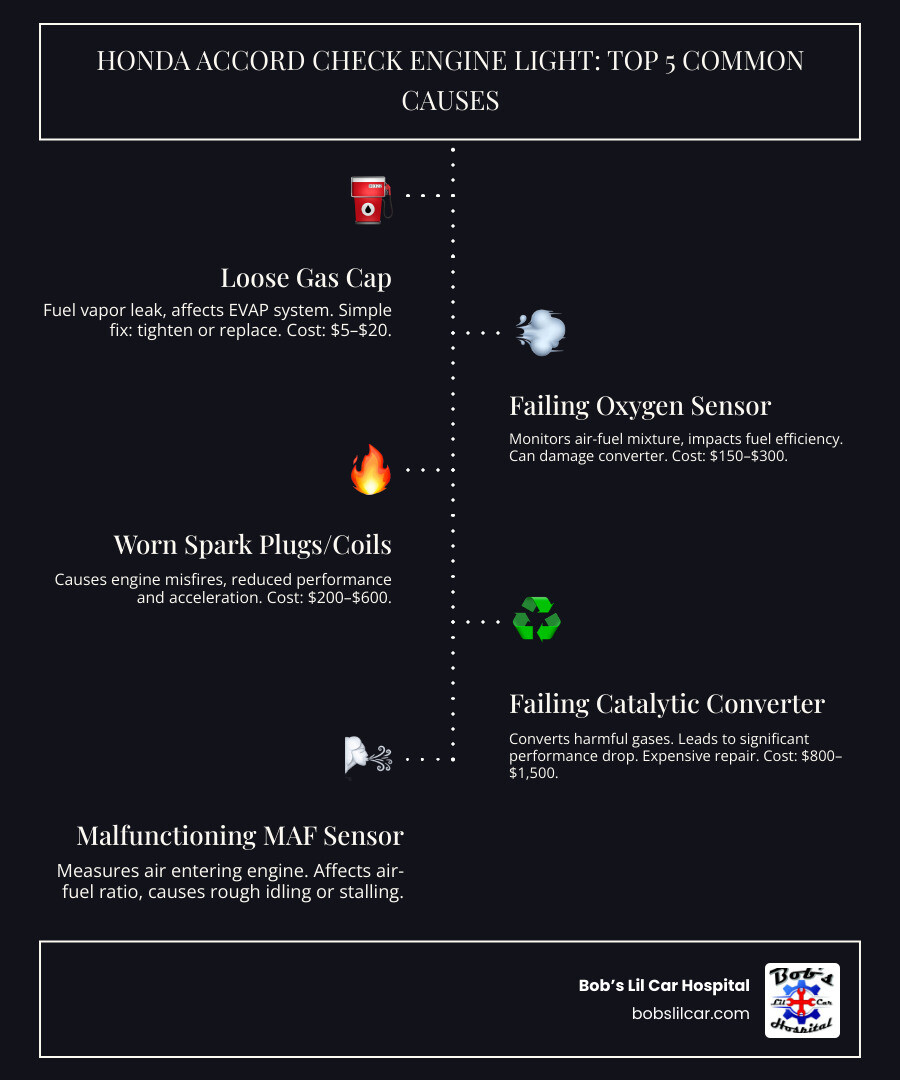
When that check engine light Honda Accord illuminates, it can mean a variety of different things. It can be as simple as your gas cap being loose or as serious as engine knocking. Understanding the most common culprits can help you approach the situation with a little more confidence. Here are the top five reasons we often see for a Honda Accord’s check engine light coming on:
1. Loose or Faulty Gas Cap

This is hands down the simplest and often the most common reason for your check engine light to appear. Your gas cap isn’t just there to keep fuel in; it’s a crucial part of your vehicle’s Evaporative Emission Control System (EVAP). If the cap is loose, damaged, or even missing, fuel vapors can escape, disrupting the emissions control system. The car’s computer detects this leak and triggers the light.
The good news? The fix is usually as easy as tightening the gas cap until you hear a few clicks. Sometimes, the cap itself can be faulty and need replacement, which is typically a very inexpensive repair, ranging from $5 to $20. If you’ve recently refueled, this should be your first check! You can learn more about this by reading about what problems a bad gas cap can cause.
2. Failing Oxygen (O2) Sensor
Your Honda Accord has several oxygen sensors, which act like tiny chemists monitoring the exhaust gases. They measure the amount of unburned oxygen in your exhaust and send this data to your car’s computer. This information is vital for the computer to maintain the optimal air-fuel mixture for efficient combustion.
If an oxygen sensor fails, it can cause the engine computer to supply too much or too little fuel. This not only triggers the check engine light on the Honda Accord but can also lead to reduced fuel efficiency, increased emissions, and, over time, potentially damage your catalytic converter. Oxygen sensor failure can cost between $150 and $300 per sensor to replace. (Call us to find out the exact cost)
3. Worn Spark Plugs or Ignition Coils
Spark plugs are the tiny igniters in your engine’s cylinders, creating the spark that ignites the air-fuel mixture. Ignition coils provide the high voltage needed for these sparks. If either of these components wears out or malfunctions, your engine can experience misfires.
An engine misfire means that one or more cylinders aren’t firing correctly, leading to reduced performance, poor acceleration, and increased emissions. This will definitely cause your check engine light on your Honda Accord to come on. If the misfire is severe, it can even cause the light to flash. Replacing worn spark plugs or faulty ignition coils can range from $200 to $600. Regular maintenance, including spark plug replacement, is key for a healthy ignition system. For more on keeping your car running optimally, check out our auto repair section.
4. Failing Catalytic Converter
The catalytic converter is a critical component of your exhaust system, responsible for converting harmful pollutants in engine exhaust into less toxic gases before they leave your tailpipe. It’s an environmental hero!
However, if your catalytic converter becomes clogged or damaged—often due to other unresolved issues like a continuously misfiring engine or a faulty oxygen sensor—it can trigger the check engine light on your Honda Accord. A failing catalytic converter can lead to a significant drop in engine performance, reduced fuel economy, and a strong sulphur-like smell from your exhaust. This is one of the most expensive repairs, potentially costing $800 to $1,500 (call us to find out the exact cost), and sometimes even more if the problem is severe. This is why addressing other check engine light issues promptly is so important; ignoring them can lead to this costly consequence.
5. Malfunctioning Mass Airflow (MAF) Sensor
The Mass Airflow (MAF) sensor measures the amount of air entering your engine. This information is crucial for the car’s computer to calculate the correct amount of fuel to inject into the engine. If the MAF sensor is dirty or faulty, it can send incorrect readings.
This can lead to problems with the air-fuel ratio, causing issues like rough idling, stalling, poor acceleration, and reduced fuel efficiency. Naturally, these symptoms will trigger the check engine light on the Honda Accord. While not as common as a loose gas cap, a malfunctioning MAF sensor is a significant cause that requires professional diagnosis and replacement.
Your Immediate Action Plan: Diagnosing the Check Engine Light in the Honda Accord
Seeing that the check engine light Honda Accord can be unsettling, but having a clear, simple plan makes it much easier to handle. Start by assessing safety, then decide whether you can take a few basic steps at home or if you should contact a professional right away. The goal is to identify the real issue, which is stored as Diagnostic Trouble Codes (DTCs) in your car’s computer.
Can I Diagnose the Issue at Home?
For some common, less severe issues, you can take a few quick steps right in your driveway in Kelso, Longview, or anywhere in Southwest Washington.
- Visual Inspection (starting with the gas cap): If you recently refueled, make sure your gas cap is tightly secured until it clicks several times. A loose gas cap is one of the most common causes of a check engine light. Also, look for obvious loose or disconnected hoses under the hood.
- Note performance changes: Pay close attention to how your Honda Accord is driving. Do you notice unusual noises, smells, loss of power, rough idling, or hard starting? These symptoms are important clues.
- Using an OBD-II scanner: If you have or can borrow an OBD-II scanner, you can plug it into the diagnostic port (usually under the dashboard on the driver’s side) to read the codes that turned the light on.
- Interpreting basic codes: Once you have a code (for example, P0420 or P0133), you can look up a general description online or in your owner’s manual. Remember, a code points you toward a system or area, not always the exact failed part. Professional testing is often needed to avoid guessing and replacing parts unnecessarily.
These steps can help you understand whether the issue might be simple or more serious. However, precise diagnosis usually requires experience, proper testing procedures, and professional equipment.
When to Seek Professional Diagnosis
There are specific situations where professional help for your check engine light Honda Accord is essential, not optional:
- Flashing light: A flashing check engine light usually means a serious engine misfire that can quickly damage the catalytic converter. If the light is flashing, pull over safely and arrange for help. Do not continue driving.
- Noticeable performance problems: If the check engine light comes on along with major changes in how your Accord drivesike a large loss of power, stalling, loud knocking or popping, heavy smoke, or strong fuel or burning smellshave it inspected immediately.
- Multiple or complex codes: If your OBD-II scanner shows several codes, or codes that are not straightforward, or the light keeps coming back on after a simple fix, it’s time for a professional diagnostic.
- Any safety concern: If you feel unsafe driving the vehicle for any reason, it is better to stop and have it towed than to risk further damage or a breakdown.
The average cost for a professional check engine light diagnosis and testing is typically between $88 and $111(call us to find out the exact cost). This is a smart investment: accurate diagnosis helps you fix the real problem the first time, instead of spending more on guesswork and unnecessary parts.
If your Honda Accord’s check engine light is on, don’t wait for a minor issue to turn into a major repair. Call Bob’s Lil Car Hospital today to schedule a diagnostic appointment. Our certified technicians use modern equipment and proven procedures to identify the cause quickly and explain your options clearly.
Understanding Repair Costs and Long-Term Consequences
When the check engine light Honda Accord comes on, it’s natural to immediately think about the cost of repairs. While some fixes are indeed minor, others can be substantial. However, the financial impact extends beyond just the repair bill; there’s also the cost of procrastination and the potential for long-term vehicle damage if the warning is ignored.
How Much Does it Cost to Fix a Check Engine Light Honda Accord?
The cost to fix a check engine light Honda Accord varies greatly depending on the underlying issue. As we’ve seen, it can range from a few dollars for a simple fix to thousands for a major component. Here’s a quick overview of typical repair costs for some common issues (call us to find out the exact cost):
| Issue Type | Typical Repair Cost (Parts & Labor) |
|---|---|
| Loose Gas Cap | $5 – $20 |
| Oxygen Sensor Failure | $150 – $300 per sensor |
| Worn Spark Plugs/Coils | $200 – $600 |
| Catalytic Converter Failure | $800 – $1,500+ |
| Mass Airflow Sensor | $200 – $400 |
| Vacuum Leak | $100 – $500 |
These figures are averages, and actual costs can vary based on your specific Honda Accord model year, the severity of the problem, and labor rates in our area of Southwest Washington. For more insights into general car maintenance and how it can save you money, check out our car maintenance articles.
Ignoring the Warning Light
Ignoring your check engine light on your Honda Accord is like ignoring a small leak in your roof—it might seem minor now, but it can lead to much bigger, more expensive problems later. Here are some potential long-term consequences:
-
Decreased Fuel Economy:
Many issues that trigger the check engine light, such as a faulty oxygen sensor or MAF sensor, directly impact your car’s fuel efficiency. You’ll be spending more at the pump without even realizing it.
-
Failed Emissions Tests:
In areas with emissions testing (like parts of Washington State), a lit check engine light is an automatic failure. This means you won’t be able to renew your vehicle registration until the issue is fixed.
-
Severe Engine Damage:
A persistent engine misfire, for example, can put excessive strain on various engine components, leading to premature wear and potentially catastrophic engine failure. What started as a simple spark plug issue could become an engine overhaul.
-
Catalytic Converter Failure:
As mentioned, a flashing check engine light indicates a problem that can destroy your catalytic converter, leading to a very expensive repair. Even a steady light caused by a faulty O2 sensor can eventually lead to converter damage.
-
“Limp Home” Mode:
In some extreme cases, if the car’s computer detects a severe problem that could cause significant damage, it may put your Honda Accord into “limp home” mode. This limits engine power and speed to prevent further harm, but it means your car will be barely drivable.
-
Safety Risks:
Some underlying issues may seem minor at first, but can quickly develop into significant problems that compromise your vehicle’s drivability and safety on the road.
Acting quickly when your check engine light in your Honda Accord activates lets you stop minor problems from turning into major, expensive repairs. It’s a proactive step in maintaining your vehicle’s health, safety, and protecting your investment. Keeping your car running strong is what we’re all about, and you can find more tips on our keeping-your-car-running-strong page.
Frequently Asked Questions
We get a lot of questions about the check engine light Honda Accord from our customers in Kelso, Longview, and the surrounding areas. Here are some of the most common ones:
Is it safe to drive my Honda Accord with the check engine light on?
It depends entirely on how the light is behaving and if you notice any other symptoms.
- Steady Light: If the light is steady, and you don’t notice any significant changes in your Accord’s performance (no strange noises, smoke, loss of power, or rough idling), it is often safe to drive it for a short period to our service center. However, we recommend scheduling an appointment as soon as possible.
- Flashing Light or Performance Issues: If the light is flashing, or if you experience any noticeable performance problems, such as a severe loss of power, engine misfires, loud noises, or excessive smoke, it is not safe to drive. Pull over immediately to a safe location and call for assistance. Driving with a flashing light can cause severe, irreversible damage to expensive components like the catalytic converter.
Will the check engine light reset itself on a Honda Accord?
Sometimes, yes, for minor issues. If the problem is something simple, like a loose gas cap, and you fix it (by tightening the cap), the check engine light Honda Accord may turn off on its own after a few driving cycles (typically 20-40 miles). The car’s computer needs to run several diagnostic checks and confirm the issue is resolved before it will clear the light.
However, for most other issues, especially more serious ones, the light will remain on until the underlying fault is properly repaired and the codes are cleared by a professional diagnostic tool. Don’t rely on the light resetting itself for anything other than the most minor, easily fixable problems.
What’s the difference between a steady and a blinking check engine light?
This is a critical distinction for any Honda Accord owner:
- Steady Check Engine Light: A steady, illuminated light indicates a non-critical fault. While it still means something is wrong and should be addressed soon to prevent further issues, it generally doesn’t require immediate roadside action. You have some time to schedule a service appointment.
- Blinking Check Engine Light: A blinking, or flashing, light signals a severe, urgent problem. This almost always indicates a serious engine misfire that could be dumping unburned fuel into the exhaust. This raw fuel can quickly overheat and destroy your catalytic converter, leading to a repair bill of $800 to $1,500 or more. If your check engine light on your Honda Accord is blinking, you need to stop driving as soon as it’s safe to do so and seek immediate professional attention or have your vehicle towed.
Your Trusted Partner for Honda Accord Repairs
This guide is designed to make the check engine light in the Honda Accord easier to understand and less intimidating. While the light can be alarming, it is ultimately a helpful warning system, giving you a chance to address problems before they become serious or costly.
Whether the cause is a simple loose gas cap or a more complex issue like an oxygen sensor, ignition problem, or catalytic converter concern, understanding what your Honda Accord is telling you is the first step. The next step is a precise, professional diagnosis so the issue is fixed correctly and you can drive with confidence.
At Bob’s Lil Car Hospital, we focus on clear communication, honest recommendations, and quality repairs for drivers in Kelso, Longview, Kalama, Castle Rock, Toutle, and across Southwest Washington. We know an unexpected warning light disrupts your day, so our goal is to make the repair process straightforward and stress-free.
If your check engine light on your Honda Accord is on, take action before a small problem becomes a big one. Call Bob’s Lil Car Hospital now to schedule an appointment, and let our team help keep your Honda Accord safe, reliable, and performing at its best for the long term.