
Mercedes GLC brake pad replacement cost 2026: Smart Guide
Your Guide to Mercedes GLC Brake Health
The Mercedes GLC brake pad replacement cost depends on several factors, including your specific GLC model, the condition of your rotors, and whether you choose genuine Mercedes-Benz parts or quality alternatives. While exact pricing varies by location and service provider, understanding what influences these variables helps you make informed decisions about your vehicle’s safety.
Quick Answer – What Affects Your Mercedes GLC Brake Pad Replacement:
- Parts selection – Genuine Mercedes-Benz vs. quality aftermarket options
- Rotor condition – Whether they need resurfacing or replacement alongside pads
- Labor complexity – Standard GLC 300 vs. AMG models with performance brakes
- Front vs. rear – Front brakes typically wear faster and may need service first
- Additional components – Calipers, brake fluid, and wear sensors
If you’ve noticed squealing when you brake, a dashboard warning light, or your GLC pulling to one side, you’re probably wondering what it will take to get your brakes back to safe, reliable condition. The good news is that brake pad replacement is a routine maintenance item. The challenge is that luxury vehicles like the Mercedes GLC have specific requirements that make general estimates less helpful.
Why transparency matters without listing prices: Every GLC is different. Your 2018 GLC 300 with 40,000 miles will have different needs than a 2023 AMG GLC 43 with worn rotors. That’s why the best approach is a conversation with a trusted technician who can assess your specific vehicle.
We’ve learned that understanding Mercedes GLC brake pad replacement cost factors helps drivers make confident decisions about their vehicle’s safety. This guide breaks down what influences brake service needs for your Mercedes GLC, so you know what questions to ask when you call for an assessment.
What Factors Affect Your Mercedes GLC Brake Pad Replacement?
When it comes to maintaining a luxury SUV like the Mercedes-Benz GLC, understanding the nuances of brake service is key. Many elements can influence the overall Mercedes GLC brake pad replacement cost, extending beyond just the pads themselves. We believe in empowering our customers in Kelso, Longview, Kalama, Castle Rock, Toutle, and across Southwest Washington with knowledge, so let’s explore these factors in detail.
First and foremost, the specific model of your Mercedes-Benz GLC plays a significant role.
For instance, a standard GLC 300 will likely have different brake system specifications than a high-performance AMG GLC 43 or AMG GLC 63. AMG models, designed for more aggressive driving, often feature larger, more complex braking systems with specialized pads and rotors, which can naturally influence the service requirements.
The condition of your existing brake components is another major factor. Are your brake rotors still within specifications, or do they need to be resurfaced or replaced? Are the brake calipers functioning correctly, or are they sticking? Even smaller details like the brake fluid condition and the state of wear sensors contribute to the overall picture.
Your driving habits also weigh heavily on how often you’ll need brake service. Frequent city driving with lots of stop-and-go traffic, driving in mountainous areas, or consistently braking abruptly will accelerate wear on your brake pads and rotors. Conversely, predominantly highway driving with less braking can extend their lifespan.
Finally, the choice between genuine Mercedes-Benz parts and quality alternative options will impact your brake service. Each option comes with its own set of characteristics regarding performance, longevity, and overall value.
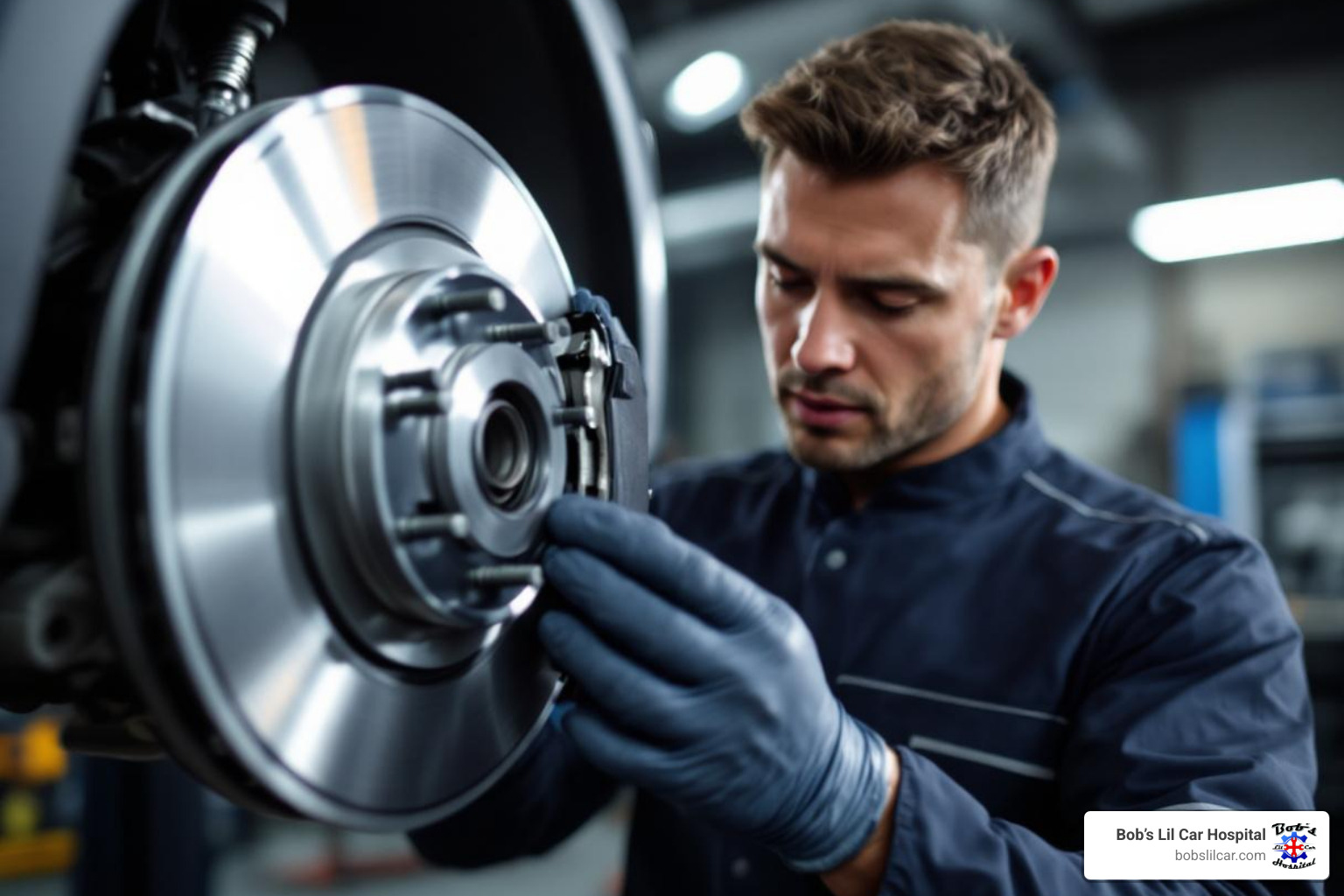
The Difference Between Genuine and Alternative Brake Pads
When it’s time for a Mercedes GLC brake pad replacement, you’ll typically encounter two main categories of parts: genuine Mercedes-Benz parts (often referred to as Original Equipment Manufacturer or OEM) and alternative (or aftermarket) options. Understanding the distinction is crucial for making an informed decision for your GLC.
Genuine Mercedes-Benz Parts:
These are the brake pads specifically designed and manufactured by Mercedes-Benz or their approved suppliers for your exact GLC model. They are engineered to meet the stringent performance, safety, and durability standards set by the manufacturer. Using genuine parts helps ensure maximum safety and stability, as they are a direct match to the original components installed when your vehicle left the factory. For many Mercedes-Benz owners, the peace of mind that comes with maintaining original specifications is paramount. These parts are designed to integrate seamlessly with your GLC’s advanced braking system, including its electronic wear indicators and ABS.
Alternative Options (Aftermarket Parts):
Aftermarket brake pads are produced by companies other than Mercedes-Benz, often offering a range of materials and performance characteristics. These can include ceramic, semi-metallic, or organic compounds, each with different attributes regarding noise, dust, and braking feel. While some high-quality aftermarket brands offer excellent performance and can be a suitable choice, understand that they are designed to fit a range of vehicles, not just your specific Mercedes-Benz GLC. This means their compatibility with your vehicle’s precise engineering might not be as exact as genuine parts.
When considering alternative pads, we always advise our customers to prioritize quality and reputation. Inferior aftermarket parts might compromise your GLC’s braking performance, lead to increased noise, or even accelerate wear on other brake components. Moreover, using non-genuine parts could potentially impact your vehicle’s warranty, depending on the specific terms.
At Bob’s Lil Car Hospital, we understand the importance of quality. When we discuss your Mercedes GLC brake pad replacement cost, we’ll walk you through the pros and cons of each option, ensuring you make a choice that aligns with your safety priorities and your vehicle’s needs. We believe in using high-quality components for your Mercedes-Benz to maintain its exceptional performance and safety standards.
Do Rotors Always Need Replacing with Pads?
This is a question we hear quite often at Bob’s Lil Car Hospital, and it’s an important one when considering your Mercedes GLC brake pad replacement cost. The simple answer is: not always, but it’s very common and often recommended.
Let’s explore why.
Brake rotors are the disc-shaped components that your brake pads clamp onto to create friction and slow your wheels. Over time, both pads and rotors wear down. Brake pads are designed to be the sacrificial component, wearing out faster than the rotors. However, if brake pads are allowed to wear down too much and aren’t replaced promptly, they can cause significant damage to the rotors. This can lead to metal-on-metal contact, scoring, and excessive heat, which can warp the rotors.
When we perform a brake service on your Mercedes-Benz GLC, we carefully inspect the rotors.
We look for several signs of wear:
Thickness.
Rotors have a minimum thickness specification. If they’re too thin, they can’t dissipate heat effectively and are prone to warping or cracking.
Runout and Warpage.
Excessive runout (wobble) or warpage can cause vibrations in the steering wheel or brake pedal, indicating uneven wear or heat damage.
Scoring and Grooves.
Deep grooves or scoring on the rotor surface, often caused by worn pads or debris, can reduce braking effectiveness and accelerate new pad wear.
If the rotors are only lightly worn and still above their minimum thickness, they might be candidates for resurfacing. This process involves machining a thin layer off the rotor surface to create a smooth, even contact area for the new pads. Resurfacing can be a more economical option than full replacement. However, if the rotors are too thin, severely warped, or deeply grooved, replacement is the only safe option.
Installing new brake pads on old, worn, or damaged rotors can lead to premature wear of the new pads, reduced braking performance, and annoying noises. This is why we almost always recommend addressing rotor condition simultaneously with pad replacement. Replacing rotors in pairs (both front or both rear) is also a common best practice to ensure balanced braking.
While your Mercedes-Benz GLC rotors will typically last longer than your brake pads, neglecting to replace pads in a timely manner can cause damage to the rotors, leading to a more extensive and potentially higher Mercedes-Benz GLC brake pad replacement cost down the road. Our team in Southwest Washington will provide an honest assessment of your rotors’ condition and recommend the best course of action for your safety and your vehicle’s longevity.
More info about our quality automotive repairs
Understanding the Labor Involved
The labor component of your Mercedes GLC brake pad replacement cost reflects the expertise, time, and specialized tools required to perform the service correctly and safely. A brake job on a Mercedes-Benz, especially a sophisticated SUV like the GLC, is more involved than many might initially think. It’s not just about swapping out parts; it’s about a comprehensive approach to ensure your vehicle’s most critical safety system performs flawlessly.
Here’s a breakdown of what the labor typically involves:
Comprehensive Brake System Inspection.
Before any work begins, our certified technicians will perform a thorough inspection of your entire brake system. This includes checking the brake pads, rotors, calipers, brake lines, hoses, and brake fluid. We’ll assess the thickness of your pads, measure rotor runout and thickness, and look for any signs of leaks, corrosion, or damage. This initial step is vital for identifying all necessary repairs and providing an accurate recommendation.
Disassembly and Cleaning.
The vehicle is safely raised, and the wheels are removed. The brake calipers are then carefully removed, and the old brake pads are taken out. This stage often involves meticulous cleaning of the caliper mounting points and hardware to ensure smooth operation of the new components.
Pad and Rotor Installation (and/or Resurfacing).
New brake pads are installed. If rotors are being replaced, new ones are mounted. If rotors are being resurfaced, they are machined to restore a smooth, even surface. We ensure that brake pads are always replaced as a set (both wheels on an axle) to maintain balanced braking.
Caliper Service and Lubrication.
The brake calipers are inspected for proper function, and any necessary lubrication is applied to the caliper sliding pins. This prevents sticking calipers, which can lead to uneven pad wear and reduced braking performance. For Mercedes-Benz models with electronic parking brakes, specific procedures and diagnostic tools may be required to retract and reset the calipers.
Brake Fluid Check and Bleeding.
The brake fluid level and condition are inspected. If the fluid is old or contaminated, a brake fluid flush might be recommended. After any component replacement, the brake system may need to be bled to remove any air that could have entered the lines, ensuring a firm brake pedal.
Reassembly and Torque Specifications.
All components are reassembled, and crucial bolts, particularly those on the wheels, are torqued to precise manufacturer specifications. This is essential for safety and preventing issues like loose wheels or uneven clamping.
Post-Service Safety Inspection and Test Drive.
After the work is complete, we perform a final safety inspection. Our technicians then conduct a test drive to ensure the brakes are functioning correctly, quietly, and effectively. This also helps “bed-in” the new pads and rotors, optimizing their performance.
For essential safety equipment like brakes, it is strongly recommended to have a certified repair shop perform this job. While replacing brake pads might seem straightforward to some, the nuances of a Mercedes-Benz GLC’s braking system, combined with the critical safety aspect, make professional installation invaluable. At Bob’s Lil Car Hospital, our team in Southwest Washington has the expertise and specialized equipment to handle your GLC’s brake service with the utmost care and precision.
Telltale Signs Your GLC Needs New Brake Pads
Your Mercedes-Benz GLC is designed with advanced systems to keep you safe, and its brakes are paramount to that safety. Paying attention to the subtle (and not-so-subtle) cues your vehicle gives you can help you address brake issues proactively, potentially preventing more extensive repairs and ensuring your safety. Here are the telltale signs that your GLC might be due for a Mercedes GLC brake pad replacement:
Squealing or Screeching Noises.
This is perhaps the most common and earliest warning sign. Many brake pads have a small metal indicator built into them that begins to make a high-pitched squealing or screeching sound when the pads wear down to a certain level. This sound is a deliberate design feature, acting as an audible alert that your pads are getting low and need attention soon. Don’t ignore it!
Grinding Sounds.
If you hear a harsh, metallic grinding noise when you apply the brakes, it’s a more serious sign. This typically means that the friction material on your brake pads is completely worn away, and now the metal backing plate of the pad is rubbing directly against the brake rotor. This metal-on-metal contact can rapidly damage your rotors, significantly increasing your mercedes glc brake pad replacement cost by requiring rotor replacement. Driving with grinding brakes is unsafe and should be addressed immediately.
Dashboard Warning Light.
Many modern vehicles, including your Mercedes-Benz GLC, are equipped with electronic brake wear sensors. When your brake pads wear down to a critical level, these sensors trigger a warning light on your dashboard, often a circular symbol with an exclamation mark or the word “Brake.” This is a clear indicator that your pads need professional inspection and likely replacement.
Vibration in the Steering Wheel or Pedal.
If you feel a pulsation or vibration through the brake pedal or even the steering wheel when you brake, it often points to issues with your brake rotors. This could mean your rotors are warped due to excessive heat, or they have uneven wear. While new pads might temporarily mask the issue, the underlying rotor problem needs to be addressed for effective and smooth braking.
Longer Stopping Distances.
If you notice that your GLC takes longer to come to a complete stop than it used to, or if you have to press the brake pedal harder to achieve the same braking effect, your brake pads are likely worn out. Reduced friction material directly translates to reduced stopping power, which is a significant safety concern.
Vehicle Pulling to One Side While Braking.
If your Mercedes-Benz GLC consistently pulls to the left or right when you apply the brakes, it could indicate uneven wear on your brake pads, a sticking brake caliper, or an issue with your vehicle’s alignment. This can be dangerous as it affects your ability to maintain control during braking.
Visual Inspection.
While not always easy without lifting the car, you might be able to visually check your brake pads. If you can see that the friction material on the pads looks very thin (less than a quarter-inch), it’s a strong indicator they need to be replaced.
At the first sign of any of these symptoms, it’s crucial to have your Mercedes-Benz GLC’s brake system inspected by a qualified technician. Ignoring these warnings can lead to compromised safety and more expensive repairs down the line. Our team at Bob’s Lil Car Hospital is here to help you in Kelso, Longview, Kalama, Castle Rock, Toutle, and throughout Southwest Washington.
More info about vehicle warning signs
Key Brake Maintenance Questions for GLC Owners
Understanding your Mercedes-Benz GLC’s brake system is crucial for both safety and the longevity of your vehicle. Here are some key questions we often answer for our customers in Southwest Washington regarding their GLC’s brake pads.
How long do Mercedes-Benz GLC brake pads typically last?
The lifespan of your Mercedes-Benz GLC brake pads isn’t a fixed number; it’s a dynamic range influenced by several factors. Generally, you can expect your GLC brake pads to last anywhere between 30,000 and 70,000 miles. However, this is a broad estimate, and individual experiences can vary significantly.
Here’s what primarily affects how long your brake pads will serve you:
- Driving Habits: This is arguably the biggest factor. If you frequently drive in heavy stop-and-go city traffic, you’ll be using your brakes much more often than someone who primarily drives on highways. Similarly, if you tend to brake abruptly or drive in mountainous areas that require frequent braking, your pads will wear down faster. Gentle, anticipatory braking extends pad life.
- Vehicle Load: Regularly carrying heavy loads or towing with your GLC puts more stress on the braking system, leading to quicker wear.
- Brake Pad Material: Different types of brake pads (ceramic, semi-metallic, organic) have varying wear characteristics. Genuine Mercedes-Benz pads are designed for optimal performance and lifespan for your specific model.
- Front vs. Rear Brakes: On most vehicles, including the GLC, the front brakes do the majority of the stopping work. This means front brake pads typically wear out faster than rear brake pads. However, some newer luxury SUVs with sophisticated stability control systems can use rear brakes more actively, potentially leading to more balanced wear.
At Bob’s Lil Car Hospital, we emphasize that regular inspections are the best way to monitor your brake pad wear. We recommend having your brakes checked during every service visit, especially if your driving habits fall into the “heavy use” category. We recommend a Mercedes GLC brake pad replacement before minor wear turns into a costly or dangerous problem.
More info on maintaining your car
What is the recommended maintenance schedule?
For optimal safety and performance, following a recommended maintenance schedule for your Mercedes-Benz GLC’s brakes is essential.
While specific intervals can be found in your owner’s manual, here’s a general guideline we recommend at Bob’s Lil Car Hospital:
- Annual Brake Inspection (or every 12,000 miles): We advise a comprehensive brake system inspection at least once a year or every 12,000 miles, whichever comes first. This inspection includes checking the thickness of your brake pads, the condition of your rotors, calipers, brake lines, and hoses. This proactive check allows us to catch minor issues before they escalate and to give you an accurate assessment of when a Mercedes GLC brake pad replacement might be needed.
- Visual Checks During Every Service: Whenever your GLC is in for any service, our technicians will typically perform a quick visual check of your brake components. This helps monitor wear over time and allows us to alert you if your pads are approaching their wear limits.
- Brake Fluid Checks: Brake fluid is crucial for your braking system’s hydraulic function. We recommend checking your brake fluid level and condition periodically, often during routine oil changes or inspections. Over time, brake fluid can absorb moisture, reducing its effectiveness and potentially leading to corrosion within the brake lines. Your owner’s manual will provide specific recommendations for brake fluid flush intervals.
Your Mercedes-Benz GLC is a precision-engineered vehicle, and its brake system is designed to the highest standards. Adhering to manufacturer recommendations and having your brakes inspected by certified professionals in Southwest Washington ensures that your GLC continues to provide the safe and responsive braking experience you expect.
What are the potential risks of not replacing worn brake pads on a Mercedes-Benz GLC?
Neglecting to replace worn brake pads on your Mercedes-Benz GLC isn’t just an inconvenience. Doing so poses several significant risks that can compromise your safety, damage your vehicle, and lead to a much higher Mercedes-Benz GLC brake pad replacement cost down the line. At Bob’s Lil Car Hospital, we cannot stress the importance of timely brake service.
Here are the potential risks:
Reduced Stopping Power and Increased Stopping Distances.
This is the most immediate and dangerous risk. Worn brake pads have less friction material, meaning they cannot effectively grip the rotors to slow your vehicle. This directly translates to longer stopping distances, significantly increasing the risk of an accident, especially in emergency situations. It is simply not safe to operate any vehicle with a known deficiency in the braking system.
Damage to Rotors and Calipers.
As brake pads wear down, the metal backing plates can begin to grind against the brake rotors. This metal-on-metal contact rapidly damages the rotors, causing deep grooves, scoring, or even warping due to excessive heat. Once rotors are damaged this way, they often require replacement, not just resurfacing, which adds significantly to the overall repair. Furthermore, severely worn pads can cause the brake caliper pistons to overextend, potentially leading to caliper damage or failure.
Compromised Vehicle Safety and Control.
Beyond just stopping distance, worn brakes can lead to unstable braking. Your vehicle might pull to one side during braking, or you could experience vibrations and pulsations that make it harder to maintain control. In extreme cases, complete brake failure could occur, leaving you unable to stop your GLC.
Increased Future Repair Needs.
A relatively straightforward and routine brake pad replacement can quickly snowball into a more expensive repair if ignored. Neglecting pads can lead to the need for new rotors, calipers, and even other components within the braking system. This means your initial Mercedes GLC brake pad replacement cost will be dwarfed by the cost of a full brake system overhaul.
Legal Implications.
In the unfortunate event of an accident caused by faulty brakes, you could face legal consequences, especially if it’s determined that you knowingly drove with unsafe braking components.
Your brakes are the most critical safety system in your car. We urge our customers in Kelso, Longview, Kalama, Castle Rock, Toutle, and throughout Southwest Washington to address any signs of worn brake pads promptly. It’s an investment in your safety and the longevity of your Mercedes-Benz GLC.
Getting a Clear and Honest Assessment for Your GLC
Understanding the factors that influence your Mercedes GLC brake pad replacement cost is the first step toward making informed decisions. However, knowing these details is only part of the equation. The next crucial step is getting a clear, honest, and transparent assessment from a trusted automotive repair service.
At Bob’s Lil Car Hospital, we pride ourselves on exceptional customer service, genuine care, and professionalism. We know that car issues can be stressful, and our goal is to turn those stressful experiences into pleasant ones, even when it comes to something as important as brake service.
When you bring your Mercedes-Benz GLC to us, here’s what you can expect:
- Thorough and Transparent Inspection: Our certified technicians will perform a detailed inspection of your GLC’s entire braking system. We’ll show you exactly what we find, explaining the condition of your pads, rotors, calipers, and fluid in clear, easy-to-understand language. We’ll use visual aids and answer all your questions.
- Personalized Recommendations: We understand that every driver and every vehicle is unique. Based on our inspection, your driving habits, and your specific GLC model, we’ll provide custom recommendations for your brake service. We’ll discuss whether your rotors need resurfacing or replacement. The benefits of genuine Mercedes-Benz parts versus high-quality alternatives. And any other related maintenance that could extend the life of your brakes.
- No Pressure, Just Honest Advice: We don’t believe in pushy sales tactics. Our priority is your safety and the health of your vehicle. We’ll give you all the information you need to make the best decision for your GLC, without any pressure.
- Expertise in Luxury Vehicles: Our team in Southwest Washington is experienced in servicing luxury vehicles like your Mercedes-Benz GLC. We have the specialized tools and knowledge to ensure your brake service is performed to the highest standards. This helps us maintain the integrity and performance you expect from your Mercedes-Benz.
We know you want to keep your running strong on the roads of Kelso, Longview, Kalama, Castle Rock, and Toutle. That’s why we’re committed to providing quality automotive repairs and ensuring you understand every aspect of your vehicle’s maintenance.
For a transparent breakdown and to discuss your GLC’s specific needs, our team is ready to answer your questions. Call us at (360) 577-1187 or visit our services page.