

Normal Tire Rotation: 3 Essential Steps for Happy Wheels
Why Your Tires Need to Play Musical Chairs
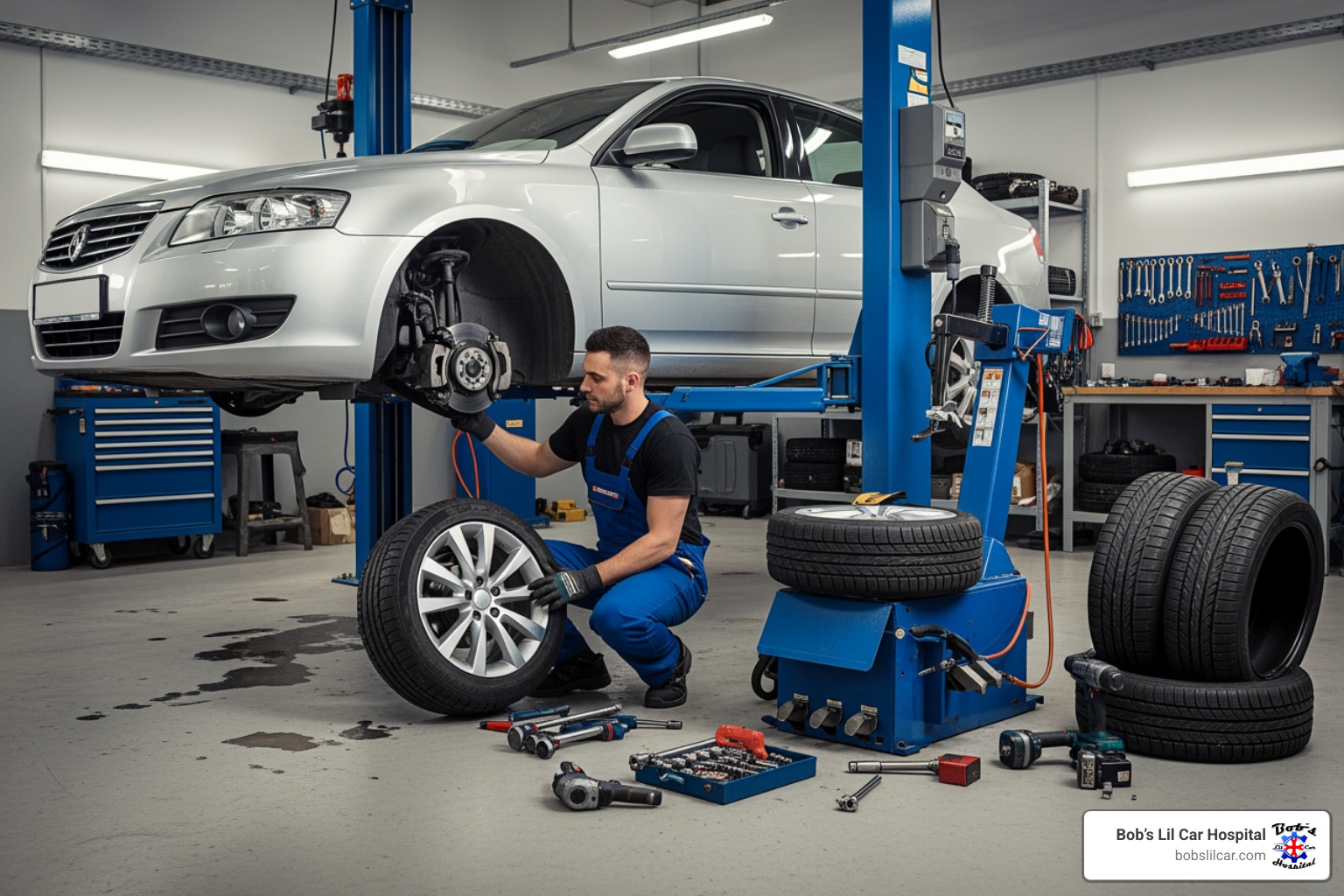
Normal tire rotation is the practice of moving your tires to different positions on your vehicle every 5,000 to 8,000 miles to ensure they wear evenly and last longer. Think of it as giving each tire a turn at every job—because front tires work harder than rear tires, and without rotation, your tires will wear out much sooner than they should.
Quick Answer: What is Normal Tire Rotation Frequency?
- Every 5,000-8,000 miles (or every 6-12 months)
- Check your owner’s manual for vehicle-specific recommendations
- During seasonal tire changes (winter to summer)
- When you notice uneven tread wear or vibrations
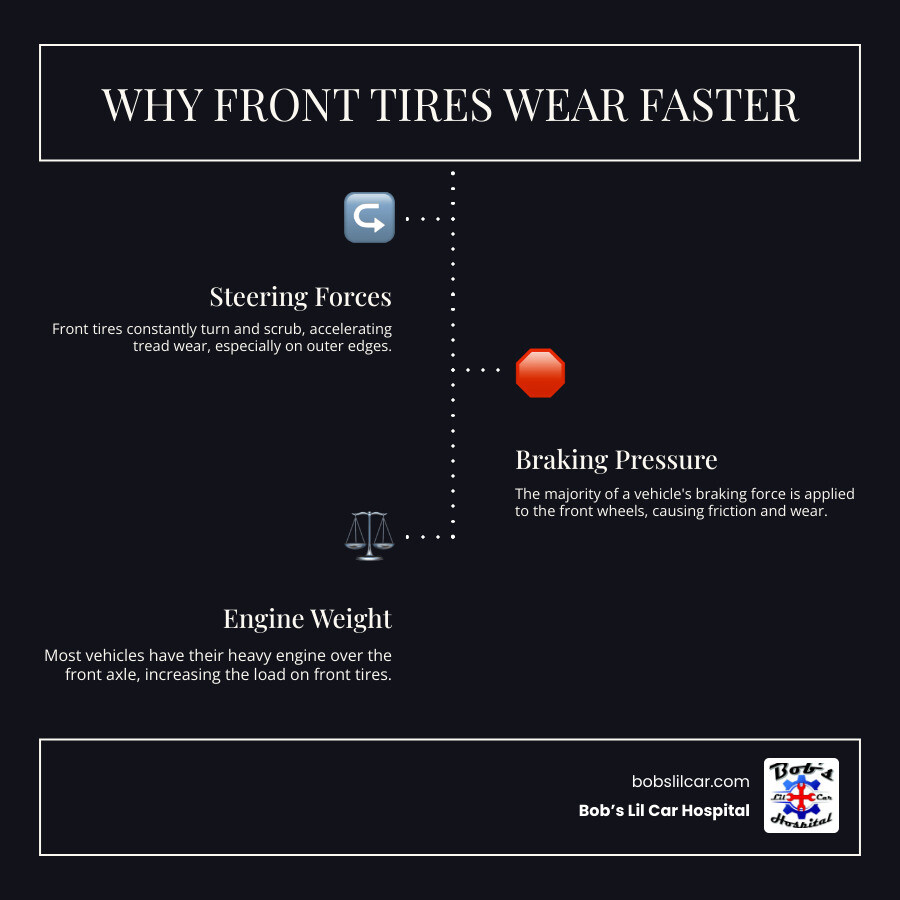
Without rotation, tires might not wear evenly. Front tires play a larger role in braking, and on front-wheel-drive vehicles, they must claw for traction, causing them to wear out more quickly than rear tires. It’s not just about tread—uneven wear affects your car’s handling, your fuel efficiency, and most importantly, your safety when you’re driving with your family on board.
Here’s the thing: your tires don’t all do the same work. The front ones steer, brake, and (on most cars) power your vehicle forward. The rear ones? They mostly just tag along for the ride. This unequal division of labor means unequal wear—and that’s where rotation comes in.
I’m William the Webmaster at Bob’s Lil Car Hospital, and over my 20+ years helping businesses connect with customers, I’ve learned that understanding simple maintenance like normal tire rotation can save you stress when you least expect it. Whether you’re planning a family road trip or just trying to keep your daily driver reliable, knowing when and why to rotate your tires is one of those small things that makes a big difference.
Your Rotation Schedule
So, you’ve grasped the “what” of tire rotation. Now, let’s tackle the “when” and the “why.” While your owner’s manual is the ultimate authority for your specific vehicle (and always worth consulting your owner’s manual), a general rule of thumb for normal tire rotation is every 5,000 to 8,000 miles, or roughly every six months to a year. Think of it as your tires’ biannual check-up. Some manufacturers might suggest a slightly wider range, like 6,000 to 8,000 miles (9,500 to 13,000 kilometres), but the core idea remains: regular rotation is key.
Why are we so insistent on this routine?
It’s not just about keeping our technicians busy at Bob’s Lil Car Hospital; it’s about a host of benefits that keep you safer in the long run.
Firstly, a proper rotation ensures that all four tires wear down at a similar rate.
Without this, some tires might be bald while others still have plenty of life left, forcing a premature replacement of the entire set. This maximizes your tire life, getting every last mile out of them.
Secondly, you’ll experience improved fuel efficiency.
Unevenly worn tires create more rolling resistance, meaning your engine has to work harder to keep you moving. When your tires wear evenly, they maintain a smoother contact patch with the road, reducing this resistance and potentially boosting your gas mileage.
Finally, and most importantly, regular tire rotation significantly contributes to improved safety.
Even tread depth across all tires means consistent grip, handling, and braking performance. This is crucial for maintaining vehicle control, especially in challenging weather conditions that we sometimes see in Kelso, Longview, or Kalama. It minimizes the risk of tire failure, like a blowout, which can happen more easily with severely unevenly worn tires. Plus, it gives our expert technicians a chance to inspect your tires for any potential hazards or damage that might otherwise go unnoticed. It’s all part of Keeping Your Car Running Strong.
Your Tires are Crying for a Rotation
Your car, like a grumpy teenager, might not always tell you directly what it needs, but it certainly gives off signals. When it comes to tires, these signals are often subtle at first, but if you pay attention, you’ll know when it’s time for a normal tire rotation.
One of the most obvious indicators is uneven tread wear. This can manifest in different ways:
- Feathering: When the tread blocks are worn higher on one side and lower on the other, giving a feathered appearance.
- Cupping or Scalloping: A series of alternating high and low spots around the circumference of the tire, often indicating an issue with balancing or suspension, but also exacerbated by lack of rotation.
- Wear on the edges or center: Over-inflation typically causes wear in the center, while under-inflation leads to wear on both edges. Lack of rotation can allow these patterns to become severe.
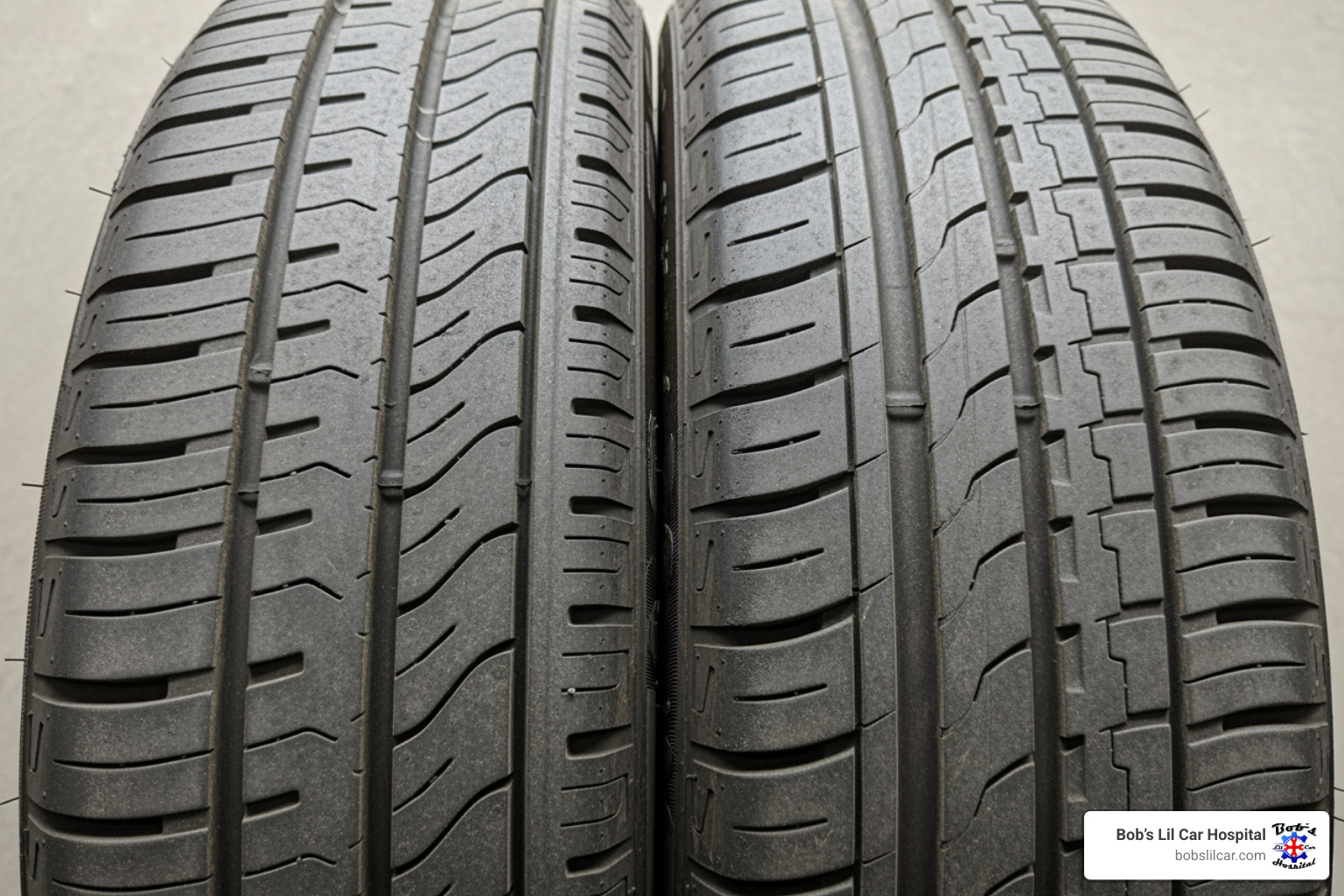
Another common sign is vehicle vibration, especially felt through the steering wheel or the floorboards. If your steering wheel starts doing the cha-cha at highway speeds, it’s often a sign that your tires are unevenly worn or out of balance. This vibration can be subtle at first but becomes more pronounced as the wear worsens. A steering wheel shimmy at high speeds is a classic symptom of tires begging for attention.
While less direct, if you notice your car pulling slightly to one side on a level road, it could be an alignment issue, but uneven tire wear can certainly contribute to this sensation.
Ignoring these signs isn’t just about reducing tire life; it leads to significant consequences. Beyond the obvious need for early tire replacement, uneven wear can compromise your vehicle’s handling, traction, and braking capabilities. This directly impacts your safety and the safety of your passengers. It can also put undue stress on other suspension components, leading to other repairs down the line. So, when your tires start complaining, listen up! It’s far better to address it with a simple rotation than to wait for a bigger problem.
The Tire Rotation Dance: Patterns for a Normal Tire Rotation
Now for the choreography!
The way we rotate your tires isn’t a random shuffle; it’s a carefully planned “dance” based on your vehicle’s drivetrain. Why? Because Front-Wheel Drive (FWD), Rear-Wheel Drive (RWD), and All-Wheel Drive (AWD) vehicles distribute power and stress differently, leading to distinct wear patterns.
Understanding these patterns is key to performing a truly normal tire rotation.
- FWD vehicles: The front tires handle the steering, braking, and engine power, leading to significantly faster wear on the front axle.
- RWD vehicles: The rear tires are responsible for propelling the vehicle, so they often wear faster than the front tires, which primarily steer and brake.
- AWD/4WD vehicles: All four tires share the workload, but even here, slight differences in weight distribution and cornering forces mean that an even wear pattern is crucial.
Our goal with any rotation pattern is to move each tire through all the different positions on the vehicle over its lifespan, ensuring that the wear is as uniform as possible. Here are the common patterns we use:
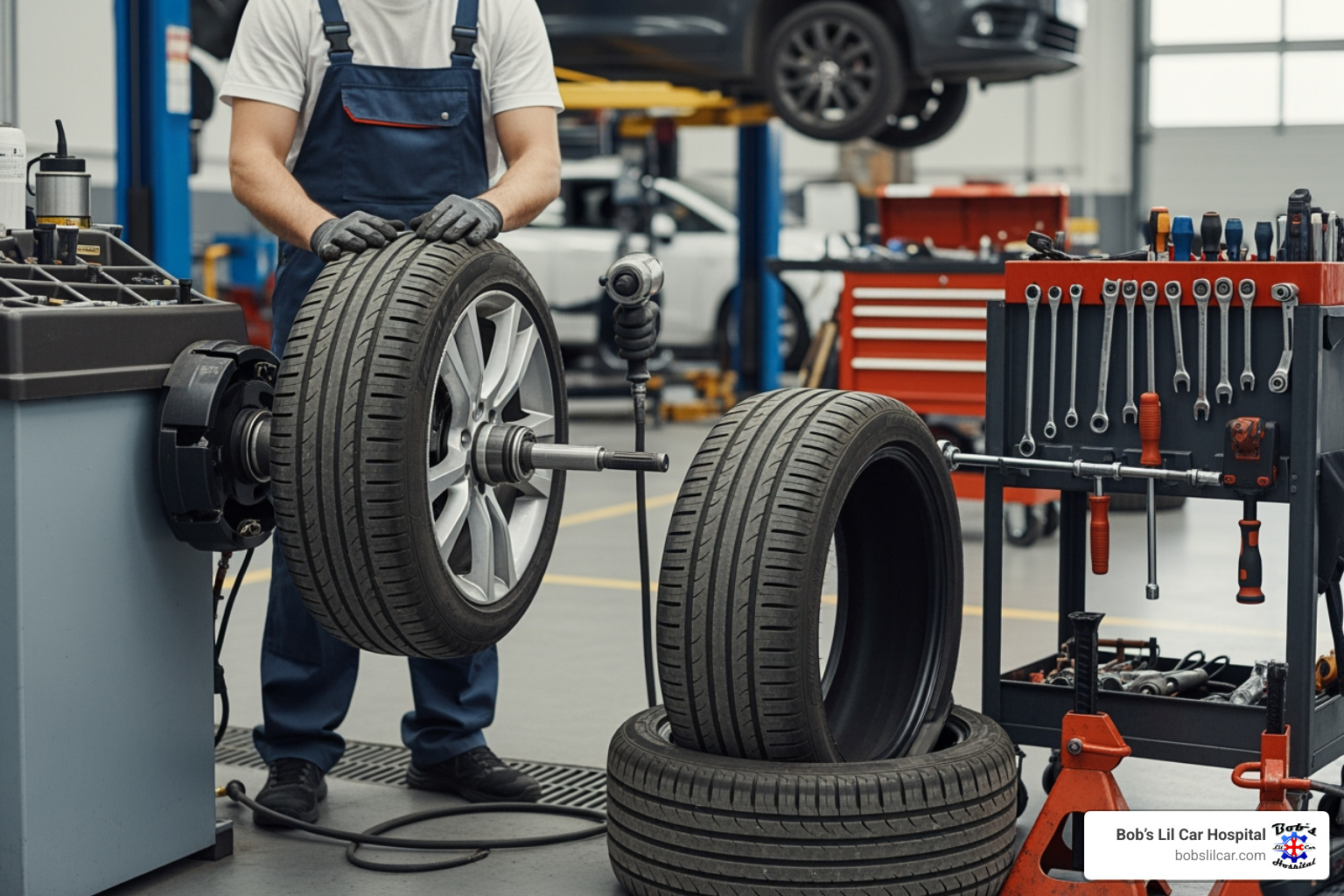
The Forward Cross: A Normal Tire Rotation for FWD Vehicles
For most FWD vehicles driving around Toutle or Castle Rock, the Forward Cross pattern is the go-to for a normal tire rotation. Here’s how it works:
- The front tires move straight back to the rear on the same side.
- The rear tires are crossed to the opposite front positions. So, the left rear tire moves to the right front, and the right rear tire moves to the left front.
This pattern is specifically designed to combat the heavy wear experienced by front tires on FWD vehicles. By moving the more worn front tires to the less stressful rear positions and bringing the less worn rear tires to the front (and crossing them to encourage even wear), we ensure a balanced distribution of wear across the entire set. It’s like giving your hardest-working employees a well-deserved break!
The Rearward Cross & X-Pattern: For RWD and AWD/4WD
When it comes to RWD and AWD/4WD vehicles, the rotation dance changes slightly to accommodate their unique wear characteristics.
For RWD vehicles, we often employ the Rearward Cross pattern:
- The rear tires move straight forward to the front on the same side.
- The front tires are crossed to the opposite rear positions. So, the left front tire moves to the right rear, and the right front tire moves to the left rear.
This pattern helps to distribute the wear from the drive axle (the rear) to the front, and then brings the front tires to the rear in a crossed pattern to ensure even wear.
For AWD or permanent 4WD vehicles, where all four wheels are constantly driving, a “Double X” or X-Pattern is typically recommended for a truly normal tire rotation. This pattern involves crossing both the front and rear tires:
- The right front tire moves to the left rear.
- The left front tire moves to the right rear.
- The right rear tire moves to the left front.
- The left rear tire moves to the right front.
Essentially, each tire moves diagonally to the opposite corner of the vehicle. This comprehensive pattern ensures the most even wear possible across all four tires, which is vital for the longevity and performance of AWD systems.
Special Cases: Directional Tires and Spare Tire Inclusion
While the standard patterns cover most vehicles, some tires and setups require a bit of special attention for a normal tire rotation.
Directional tires
Tires are designed to rotate in only one direction, indicated by an arrow on the sidewall. This design is often for optimal water dispersion or high-performance handling. Because of their specific rolling direction, these tires can only be rotated front-to-back on the same side of the vehicle. You can’t cross them over, or you’ll be asking them to work backward, which defeats their purpose and can lead to rapid, uneven wear. Similarly, asymmetric tires (which have an “Outside” marking) also have specific mounting requirements, but if they are non-directional, they can be crossed.
Then there are vehicles with staggered wheels, where the front and rear tires are different sizes (common on some sports cars). In these cases, a true rotation is often impossible without demounting and remounting tires, or it might be limited to side-to-side swaps if the tires are non-directional and the same size on each axle. Always check your owner’s manual for these specialized setups.
What about that fifth wheel in your trunk?
If you have a full-size spare tire that matches your other four, you can (and should!) include it in your rotation pattern. This is called a 5-tire rotation, and it extends the life of all five tires, ensuring they all wear evenly. A common 5-tire rotation pattern involves moving the spare to the right rear position, and the tire that would have gone to the right rear then becomes the new spare. This ensures all five tires accumulate similar mileage and wear.
However, temporary spare tires (the small “donut” spares) should never be included in a rotation. They are designed only for short-term emergency use and have different specifications that would compromise your vehicle’s handling and safety if used as a regular tire.
Rotation’s Best Friends: Balancing and Alignment
Tire rotation doesn’t work in a vacuum; it’s part of a trio of services that keep your wheels happy and your ride smooth. Its best friends are tire balancing and wheel alignment. While often confused, these are distinct services, each playing a critical role in your vehicle’s health and your safety.
Tire balancing addresses weight distribution.
Even brand-new tires and wheels aren’t perfectly uniform in weight around their circumference. These tiny imbalances can cause vibrations, especially at higher speeds. During balancing, our technicians use a specialized machine to detect these heavy spots and then attach small weights to the rim to counteract them. The goal is to ensure even weight distribution around the entire tire and wheel assembly.
- Tire balancing vs. rotation. Rotation moves tires to new positions to even out wear. Balancing corrects inherent weight discrepancies in the tire and wheel itself.
- Correcting weight imbalance. This process eliminates those annoying vibrations you might feel in your steering wheel or seat.
- Eliminating vibrations. Beyond comfort, balanced tires prevent uneven wear patterns like cupping, which can prematurely shorten tire life and impact handling. We recommend balancing your tires every time you rotate them, or whenever you get new tires installed, or even after a significant impact like hitting a pothole in Longview or Kalama.
Wheel alignment, on the other hand, deals with the angles of your wheels relative to each other and to the vehicle’s body.
Over time, bumps, potholes, and even normal driving can knock these angles out of whack. When your wheels are out of alignment, your tires will drag or scrub against the road, leading to rapid and uneven tire wear.
- Wheel alignment vs. rotation. Rotation distributes existing wear evenly. Alignment adjusts the vehicle’s suspension components to ensure the wheels are pointing in the correct direction. This prevents future uneven wear.
- Adjusting suspension angles. A proper alignment involves adjusting components like camber, caster, and toe to factory specifications.
- How alignment prevents uneven tire wear. By ensuring your wheels are perfectly straight and parallel, alignment prevents the scrubbing that causes premature wear on tire edges or shoulders. If your car pulls to one side, your steering wheel isn’t centered, or you notice rapid, unusual tire wear despite regular rotations, it’s definitely time to consider an alignment.
Both services are vital for tire longevity, vehicle performance, and overall safety. You can think of tire rotation as managing the wear you already have. While alignment and balancing prevent new, uneven wear from developing. We always recommend having these services performed together during your routine Auto Repair visits at Bob’s Lil Car Hospital.
Frequently Asked Questions about Normal Tire Rotation
We hear a lot of great questions about tire maintenance at Bob’s Lil Car Hospital. Here are some of the most common ones we get, answered simply and directly.
Can tire rotation really improve my gas mileage?
Yes, absolutely! It might not be a dramatic boost, but consistent, even tire wear directly contributes to better fuel efficiency over the lifespan of your tires. Here’s why:
- Reduced rolling resistance: When tires wear unevenly, they don’t roll as smoothly. The distorted shape or varying tread depths can increase friction with the road, meaning your engine has to work harder to overcome this resistance. Evenly worn tires, maintained through regular rotation, keep their intended shape and tread profile, reducing rolling resistance.
- Smoother contact patch: A uniform tread depth ensures a consistent and optimal contact patch with the road. This smooth contact requires less energy to maintain momentum.
- Long-term benefits: While you might not notice a huge difference on a single tank, these small efficiencies add up over thousands of miles. By maintaining your tires and extending their life, you can enjoy slightly better fuel economy throughout their service.
Should a spare tire be included in the rotation?
This depends entirely on the type of spare tire you have:
- Full-size spare benefits. If your spare tire is a full-size wheel, then yes, it absolutely should be included in the rotation! This is called a 5-tire rotation. The main benefit is that all five tires wear down at roughly the same rate. Instead of having one unused spare and four worn tires, you’ll have five tires that age together, which is ideal for vehicle handling and maintaining consistent traction.
- Temporary spare exclusion. However, if you have a “donut” or temporary spare tire, it should never be included in a normal tire rotation. These spares are designed for emergency use only, typically rated for short distances and low speeds. Their construction, size, and tread are very different from your regular tires, and including them in a rotation would severely compromise your vehicle’s handling, braking, and safety.
- 5-tire rotation pattern. A common 5-tire rotation pattern involves bringing the full-size spare into the right rear position, and the tire that would have gone to the right rear then takes the spare’s place. This ensures a balanced distribution of wear across all five tires.
What’s the difference between tire rotation and wheel alignment?
This is a fantastic question, as both services are crucial for tire health but serve different purposes:
- Rotation evens out wear. Tire rotation is the process of physically moving your tires from one position on your vehicle to another. Its primary goal is to promote even wear across all four (or five) tires. This helps maximize their lifespan and maintain consistent performance. It’s a preventative measure against the natural differences in wear that occur at different wheel positions.
- Alignment corrects wheel angles. Wheel alignment, on the other hand, involves adjusting the angles of your vehicle’s wheels. They need to be properly angled with respect to each other and to the road. Factors like hitting potholes, curbing, or even general wear and tear can knock your alignment out of specification. When your alignment is off, your tires will “scrub” against the road, or your vehicle will pull to one side. Alignment corrects the cause of certain types of uneven wear.
- Key to Car Maintenance.
- Think of it this way. Tire rotation is like brushing your teeth daily to keep them clean. While alignment is like visiting the orthodontist to make sure your bite is correct. Both are essential for optimal oral health, just as both are essential for optimal tire health and vehicle safety. Neither can fully compensate for the other’s absence.
Conclusion: Keep Your Ride Smooth and Safe
Well, there you have it! The ins and outs of normal tire rotation. It might seem like a small detail in the grand scheme of vehicle maintenance. But extending the life of your tires and improving your fuel efficiency to improves your overall driving safety. The benefits of regular tire rotation are undeniable.
At Bob’s Lil Car Hospital, we believe in proactive maintenance. It keeps you safer on the roads. Whether you’re in Kelso, Longview, Kalama, Castle Rock, or Toutle. Tire rotation saves you from unexpected repairs. A little attention now can prevent a lot of headaches later. It’s not just about turning wrenches; it’s about providing genuine care and professionalism, turning stressful car issues into pleasant experiences.
A happy car makes a happy driver. If you’re unsure about your vehicle’s specific rotation needs, your tires are crying for attention; don’t hesitate. Our expert technicians in Southwest Washington are always ready to help.
Call us with your questions, or simply schedule your next service with us today. We’re here to ensure your wheels stay happy, and your journeys are smooth and safe.